
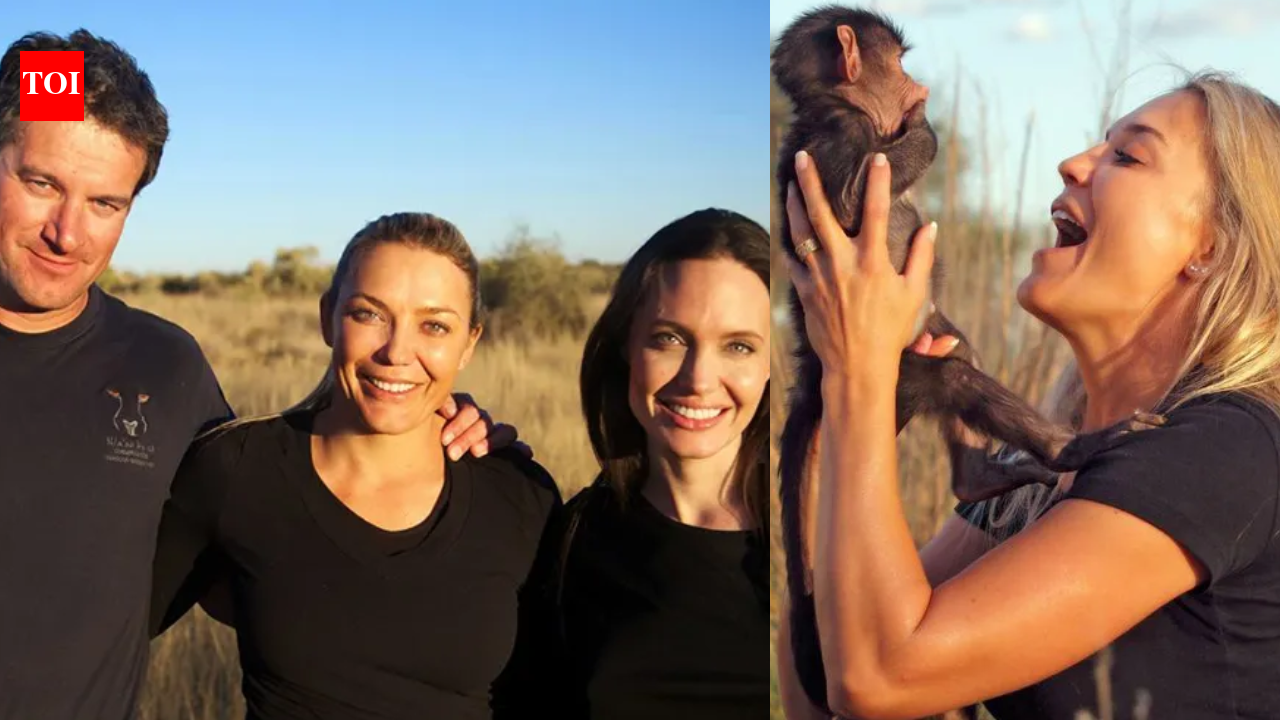
 PC: The Namibian Investigative Unit At a wildlife sanctuary east of Namibia’s capital, the fate of more than 200 animals became entangled in a dispute over permits, captive breeding and the rules governing rescued wildlife. N/a’an ku sê Foundation, an organisation known for taking in injured, orphaned and problem animals, was facing scrutiny from the Ministry of Environment, Forestry and Tourism in 2020. The government’s inspections raised questions about how some lions, leopards, cheetahs and African wild dogs were being kept and moved, while the foundation disputed that it had broken wildlife laws. Then came a more immediate concern.As reported by The Namibian Investigative Unit, N/a’an ku sê approached the High Court after claiming authorities wanted 217 animals in its care released or killed. The group refused to accept that outcome, arguing that the animals had been entrusted to its care and should not be destroyed because of a dispute over regulatory compliance.
Angelina Jolie-backed wildlife sanctuary N/a’an ku sê faced scrutiny in 2020
N/a’an ku sê had built an international reputation around wildlife rescue and rehabilitation since it was established in 2006 by Rudie and Marlice van Vuuren. Its work also attracted attention outside Namibia through its links to Hollywood, including Angelina Jolie and Brad Pitt.By 2020, however, the sanctuary was dealing with a series of investigations involving the country’s Ministry of Environment, Forestry and Tourism. The government raised questions about whether the foundation had obtained the necessary permissions for certain wildlife activities.The dispute was particularly sensitive because the sanctuary was holding animals that were not necessarily considered suitable for release. Government inspections were examining whether the organisation was complying with regulations governing captive wildlife, particularly large carnivores.The foundation rejected the suggestion that it had deliberately broken wildlife laws.
217 animals became the focus of the foundation’s legal battle
Reportedly, the immediate legal dispute concerned 217 animals being kept by N/a’an ku sê. According to the foundation, officials had indicated that animals should either be released or destroyed, a position the organisation opposed.As reported by The Namibian Investigative Unit, the group listed 24 African wild dogs, 80 baboons, five lions, five leopards, 10 caracals, 17 meerkats, 70 tortoises and six vervet monkeys among those affected.For N/a’an ku sê, the issue was not simply whether individual animals had the correct documentation. The foundation argued that forcing it to kill animals in its care would conflict with the purpose for which the sanctuary existed.Rudie van Vuuren said the organisation would not agree to killing the animals. He maintained that the foundation had never intentionally violated wildlife legislation and argued that outstanding paperwork was partly the result of applications that had not been processed by the ministry.The government did not publicly provide the full details of the ongoing investigations at the time.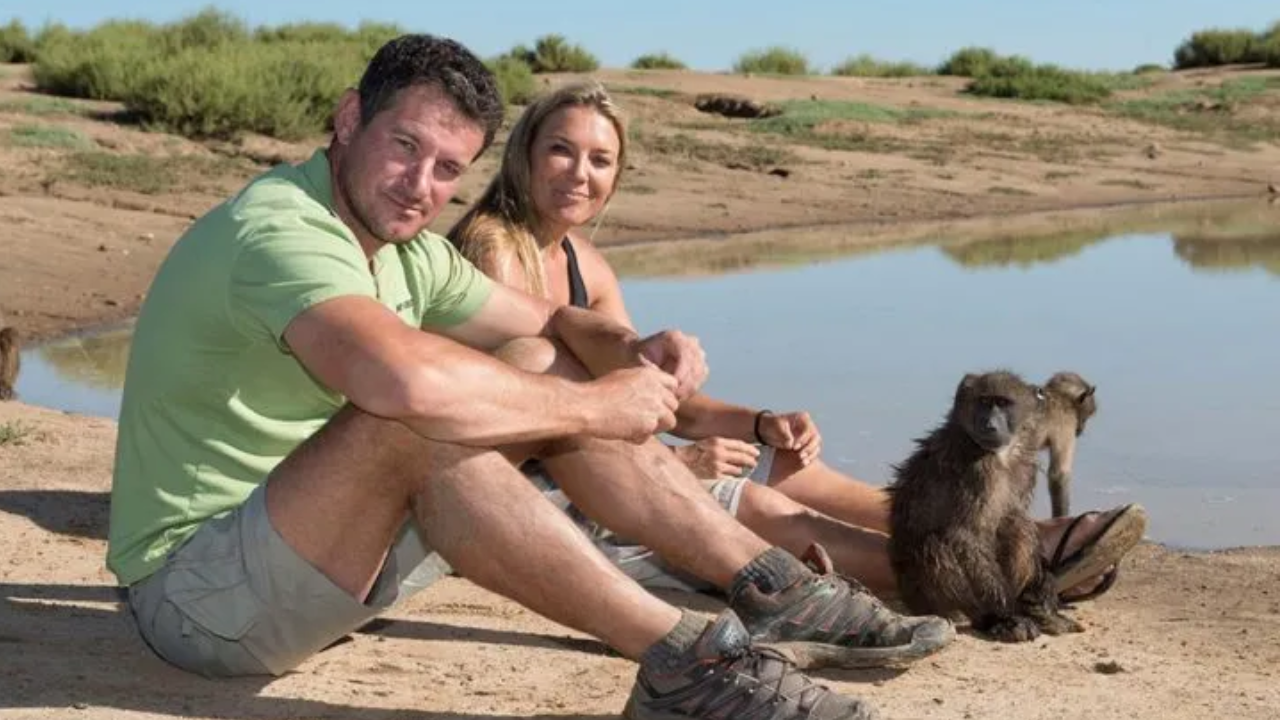
PC: The Namibian Investigative Unit
Inspection found gaps in records for lions, leopards and cheetahs
A ministry inspection in May 2020 raised a separate set of concerns about large carnivores held at the sanctuary.N/a’an ku sê had applied to operate as a captive holding facility for five lions, six leopards, 24 cheetahs, 29 African wild dogs and a brown hyena. Inspectors said the numbers they encountered did not match the animals listed in the application.Three leopards, eight cheetahs and 10 African wild dogs were reportedly unaccounted for in the records examined by investigators.The inspection also considered the movement of cheetahs between different holding facilities. Government regulations required permission from the environment minister before large carnivores could be transferred between facilities, released or allowed to roam freely.The ministry’s report said 14 cheetahs had been moved between facilities at Neuras, Kanaan, Solitaire and N/a’an ku sê without the required permission.
Wildlife officials questioned breeding of cheetahs at captive facilities
Captive breeding was another point of contention. The regulations cited in the inspection report prohibited the breeding of large carnivores in captivity. Inspectors said they had found evidence that eight cheetahs had been born in captivity; six at Solitaire and two at N/a’an ku sê.The inspection also recorded an unusual incident involving a wild male cheetah. According to the ministry’s findings, the animal had entered a facility and bred with a female cheetah being held there.The foundation’s position was different. Van Vuuren disputed the allegations of unlawful wildlife activity and said the organisation had made applications, undergone inspections and paid the relevant fees, but had been left waiting for paperwork from the authorities.
Earlier investigations had already raised concerns
The 2020 inspection was not the first time N/a’an ku sê had come under investigation.The organisation’s name had appeared in a case dating back to around 2017 involving six elephants captured in the Grootfontein area. The animals were allegedly being illegally captured, transported and sold for eventual movement to Europe, with N/a’an ku sê said to have served as a transit point.The case had not resulted in charges against the foundation’s owners. It was provisionally withdrawn while awaiting a decision from the prosecutor general.Van Vuuren denied that N/a’an ku sê had been involved in the illegal capture, transport or sale of the elephants.A second investigation concerned a cheetah that had been killed after reportedly preying on livestock in the Nauchas and Rehoboth area. Officials examining the incident found that the animal had been fitted with an electronic monitoring collar.The investigation then turned towards a cheetah enclosure at Solitaire, where authorities alleged that Van Vuuren had been keeping and breeding cheetahs without the necessary authorisation. Officials alleged that three cubs born there were later moved to N/a’an ku sê.
Van Vuuren blamed delayed paperwork for the regulatory dispute
Van Vuuren’s response to the allegations centred heavily on the sanctuary’s dealings with the ministry.He said N/a’an ku sê had applied for the necessary documentation and had complied with inspections and payments, but that some paperwork dating back to 2016 had remained outstanding.From the foundation’s perspective, the absence of final documents did not mean that it had deliberately operated outside the law.The ministry, meanwhile, was examining whether animals had been transferred, kept or bred in circumstances where formal approval was required. The distinction mattered because Namibia’s rules placed specific restrictions on the keeping and movement of large carnivores in captivity.The disagreement left the sanctuary caught between its role as a wildlife rescue organisation and the regulatory requirements governing animals held in captivity.
Questions over the president’s doctor added to the controversy
There was another layer to the controversy. Rudie van Vuuren was President Hage Geingob’s personal doctor, and reports had raised questions about whether that relationship had helped N/a’an ku sê receive favourable treatment from the environment ministry.Van Vuuren rejected the suggestion. He said his relationship with Geingob was strictly that of doctor and patient. In his account, the ministry had not treated the sanctuary favourably.The implication of political influence was therefore disputed by the foundation, which said references to the president were being used to damage its reputation.
The dispute raised questions over the future of rescued wildlife
The case also exposed a difficult practical issue for wildlife sanctuaries: what should happen to animals that have been rescued but cannot safely be released?Some captive wildlife can be rehabilitated and returned to suitable habitat. Others may have injuries, behavioural problems, human dependence or other circumstances that make release unsuitable. Keeping such animals requires land, food, veterinary care, staff and regulatory approval.That is where the N/a’an ku sê dispute became particularly complicated. The foundation viewed itself as a refuge for animals that needed protection. The ministry was responsible for enforcing Namibia’s wildlife rules, including those governing captive carnivores and the movement and breeding of animals.
The two positions collided over the 217 animals
N/a’an ku sê went to the High Court seeking to prevent what it described as government efforts to have the animals killed. The ministry, through its spokesperson Romeo Muyunda, declined to disclose details about the ongoing investigations.At that stage, the allegations remained contested. The foundation denied wrongdoing, while government inspectors had recorded a series of alleged breaches and discrepancies.For the animals themselves, the legal dispute meant their future was tied to a question that extended well beyond the sanctuary gates: whether a wildlife rescue operation can continue caring for animals when the authorities responsible for regulating them believe the organisation has not complied with the rules.