
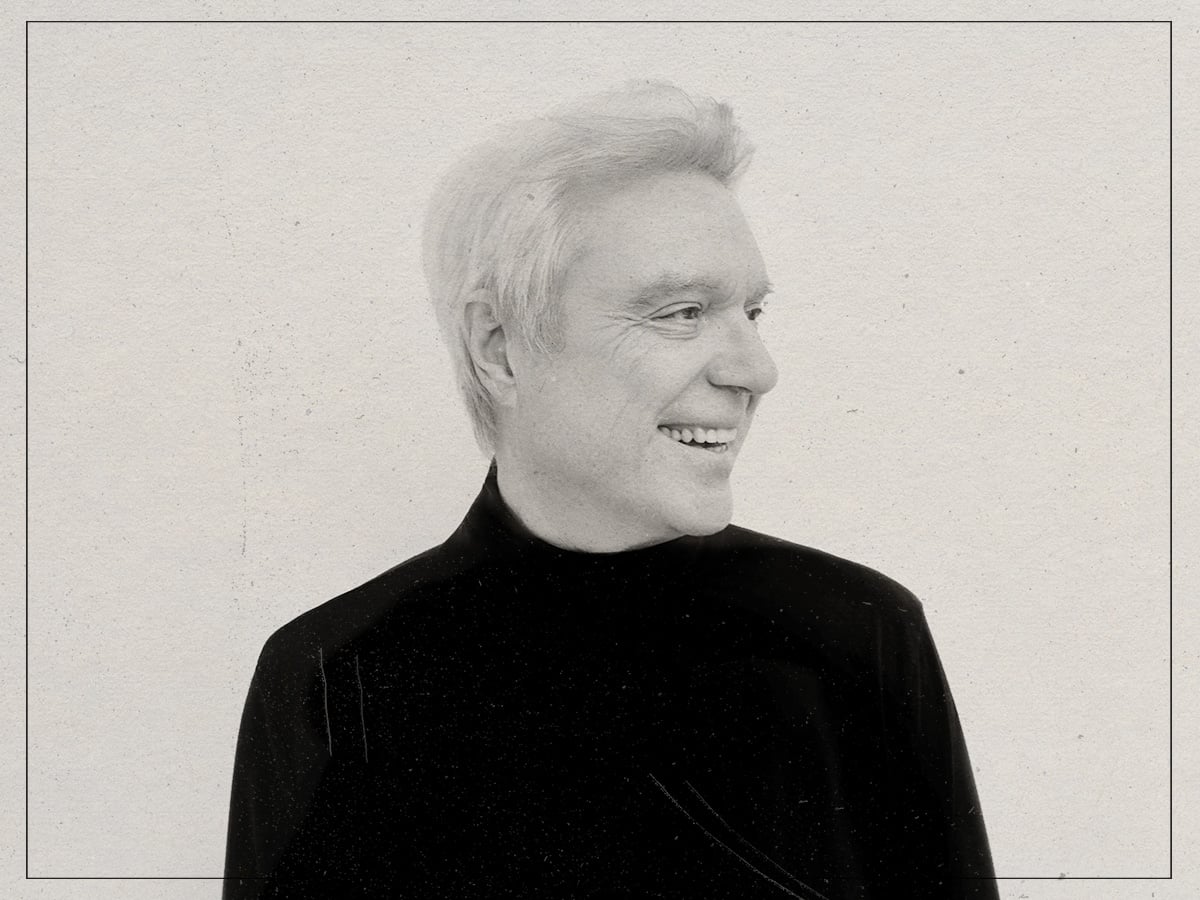
Credit: Far Out / Shervin Lainez
Thu 3 September 2026 21:54, UK
Emotional impact is one of those concepts in music that you either get or you don’t, especially when it comes to the innovative soundscapes of bands like Talking Heads and the ways David Byrne sought to create a world based on feeling, not logic.
The reason why most people look to the band’s remarkable 1984 live concert film, Stop Making Sense, is just that: what Byrne once described as songs and performances that “have some kind of emotional resonance”, but “literally they don’t make any sense”.
Suppose that’s also the crux of the film’s lasting appeal. After all, Byrne made the conscious decision to have the entire set play out as DIY as possible, showing the audience how their songs and performances come together step-by-step rather than something overly polished or stringently rehearsed.
And that’s also what continues to make Talking Heads and, by extension, Byrne’s solo material and recent performances, resonate. His latest run of shows as part of his Who Is the Sky? promo proves all the reasons why he is and has always been the leading figure in modern, experimental music and live spectacle, which is that he knows what the people want, and has always had a masterful streak when it comes to mixing contemporary themes and societal paranoia with fun, accessible melodies and danceable, joyful rhythms.
And all of it comes back to the simple art of feeling. Way back when, during a time when Byrne was figuring out what he had to offer as the frontman of one of new wave’s future leading groups, he sought inspiration from a variety of people and concepts whose strangely endearing bodily movements communicated something more visceral. Like Twyla Tharp, for instance, along with the stiff, off-kilter style of dance moves he saw in people who’d go into strange, biblical-like trances.
 Credit: A24
When it came to his singing style, namely, that erratic, theatrical type of talk-singing that makes Talking Heads’ music instantly recognisable, he looked to some of his own personal heroes, like Lou Reed’s vocals in The Velvet Underground, and all those who “acknowledged a different part of the world” in their music and lyrics, and not the usual cycle of “peace and love” that Byrne often came across instead.
Two other significant touchpoints when it came to Byrne’s sound were German composer Kurt Weill and Bert Brecht, especially the way they crafted songs involving that familiar talk-singing style that became Byrne’s forte. “Those songs where they had sometimes these beautiful melodies interspersed with kind of talking, talk-singing parts,” the frontman told NPR, discussing Weill and Brecht.
On other sources of inspiration behind his vocal delivery, he continued, “I’d also heard things like preachers, whether it was on the radio or in a church, where the sermon would start and the energy would get higher and higher and higher. And then it would cross over a line, and it became like singing.”
He expanded, “It became like an incantation, a rhythmic incantation that then kind of the band or organist or whoever is playing along, and it was crossing over a line and becoming music. It started, and it kind of gradually transformed from one thing into another.”
Most people, whenever they listen to Talking Heads or David Byrne, struggle to put into words exactly what it is that makes the music venture deeper beneath the surface. Mainly, this is because it’s so unique and quirky compared to everything else you hear in the current landscape that it seems to occupy a lane all on its own.
But when you consider all the things that Byrne used to craft their weirdly wonderful world, it makes more sense why it always immediately grasps your attention: because not only does it mix world music with catchy, infectious melodies, it also authentically and honestly captures the mindset and spirit of an entire generation in turmoil who just want a moment’s respite, encouraging enjoyment through facing fear and uncertainty.
