
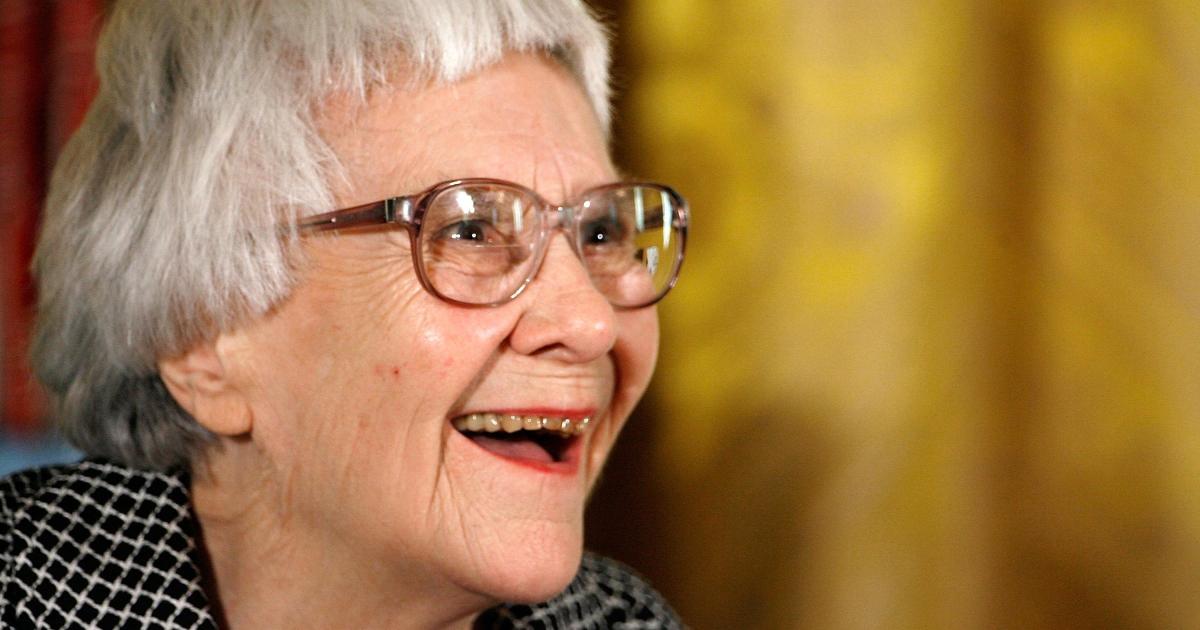
The writer was Harper Lee, author of the novel To Kill a Mockingbird. If ever there was proof of the benefit of giving an artist time and space in which to create, this is it. Those who believe anyone serious about their art can cram it into their spare time outside office hours might find this instructive.
It is to the Scottish Government’s credit that the culture secretary, Màiri McAllan, has announced it is to follow Ireland’s lead and put its faith in the country’s artists. To this end, a £30m pilot scheme is planned, offering eligible artists an annual income of around £15,000.
Read more:
Naturally, the news has been met with as many howls of dismay as delight. £30m is a considerable sum to find at a time when the Government’s budgets are under almost intolerable strain. For some it represents an odd priority, not least because for every poet, sculptor, dramatist or composer who produces their work without the security of paid employment, there are dozens who have regular jobs that fund their artistic career and pay the bills. Getting by as best they can, they make no claim on the public purse.
Indeed, some artists I know actively resist the idea of being beholden to the state, seeing that as an infringement of their independence. But they are rare. Most, I suspect, will be grateful for the breathing space, the imaginative space, a minimum income for a defined period of time will afford.
Announcing this new initiative, Màiri McAllan spoke of the conflict many creative people face. The obligation to do another job solely to fund their art, she says, “almost begins to feel that their incredible talent is a hobby. I want us to support them to have a career, and for it to be something that contributes fulsomely to Scotland’s culture and economy.”
The model she’ll be following is the Basic Income for the Arts (BIA) scheme, trialled in Ireland in 2022. This three-year pilot offered 2,000 artists an annual income of around £14,500 and has now been made permanent.
Ireland has often been in the vanguard of backing the arts, to the envy of onlookers. Long before the BIA scheme, it was famous for its academy of writers and artists. Aosdána, founded in 1981, has 250 members, who are selected by their peers. Membership is for life and allows artists to apply for a five-year grant of around £17,000 per annum when they feel the need.
What shape the Scottish Minimum Income initiative will take is not yet clear, but it is thought it could assist a similar number of artists to Ireland’s BIA. How heartening that Scotland aspires to offer a safety net for creative practitioners, and how long overdue.
Back in 2010, I was chair of a committee commissioned by the then culture secretary Michael Russell to produce a report into the funding of Scottish literature. This was on the eve of the Scottish Arts Council morphing into Creative Scotland. Among our recommendations was an Aosdána-style academy for Scottish writers, to give authors financial stability and public recognition.
Mairi McAllan (Image: PA)
Nothing came of that, sadly, except wails of elitism and gravy trains. So what has changed in the intervening years to give Holyrood the confidence to embrace this enlightened new scheme? Ireland’s example is surely a factor. So too a culturally devastating pandemic and a cost of living crisis, both of which have significantly reduced the country’s income from the arts. But I’d like to think there’s also a greater awareness of the value of a thriving arts scene, not merely for its substantial contribution to the nation’s economy, but to our sense of ourselves and our unique place in the world.
Read more:
Nevertheless, I sympathise with those who cannot fathom why one group should be given financial help when so many others are struggling. That is the core problem with funding the arts: it can feel hard to justify when there are so many other needy individuals and causes. For them, the money awarded to a theatre company, say, or to a youth orchestra would represent a bonanza. In the end, I suppose, you either believe art deserves generous support, or you don’t.
Doubtless there will be many challenges in getting this scheme afloat, not least gaining public approval. One thing that will be essential to its success and integrity is complete transparency about who is assessing applicants. Without knowing who is taking decisions, and what their credentials are, confidence in the system risks being compromised from the start.
Equally important is a commitment to maintaining an arm’s-length distance between the funding of artists and their work. Not a nominal distance but one that allows confident freedom of expression.
As the deputy editor of the late Scottish Review of Books, I remember the trouble caused by an editorial that criticised Creative Scotland, from whom at that point we received an annual grant. Quick to make their displeasure known, they intimated that in biting the hand that fed us we had gone too far.
That is now ancient history, but I would still caution that, with the Scottish artists’ minimum income pilot, it should be a given, perhaps even written into the contract, that artists can bite whatever hand they see fit. Government funding must come with no conditions or constraints. Otherwise there’s a danger of creating an environment in which artists feel subtly pressured to self-censor, for fear of jeopardising future funding.
In today’s haywire political and cultural climate, true freedom of expression is priceless. It is something the Scottish Government should take pride in fostering, along with the artists in its care.
Rosemary Goring is a columnist, historical novelist, and author of books on Scottish history. Her latest is Exile: The Captive Years of Mary, Queen of Scots.