
Credit: Alamy / John Barrett
Sat 5 September 2026 21:30, UK
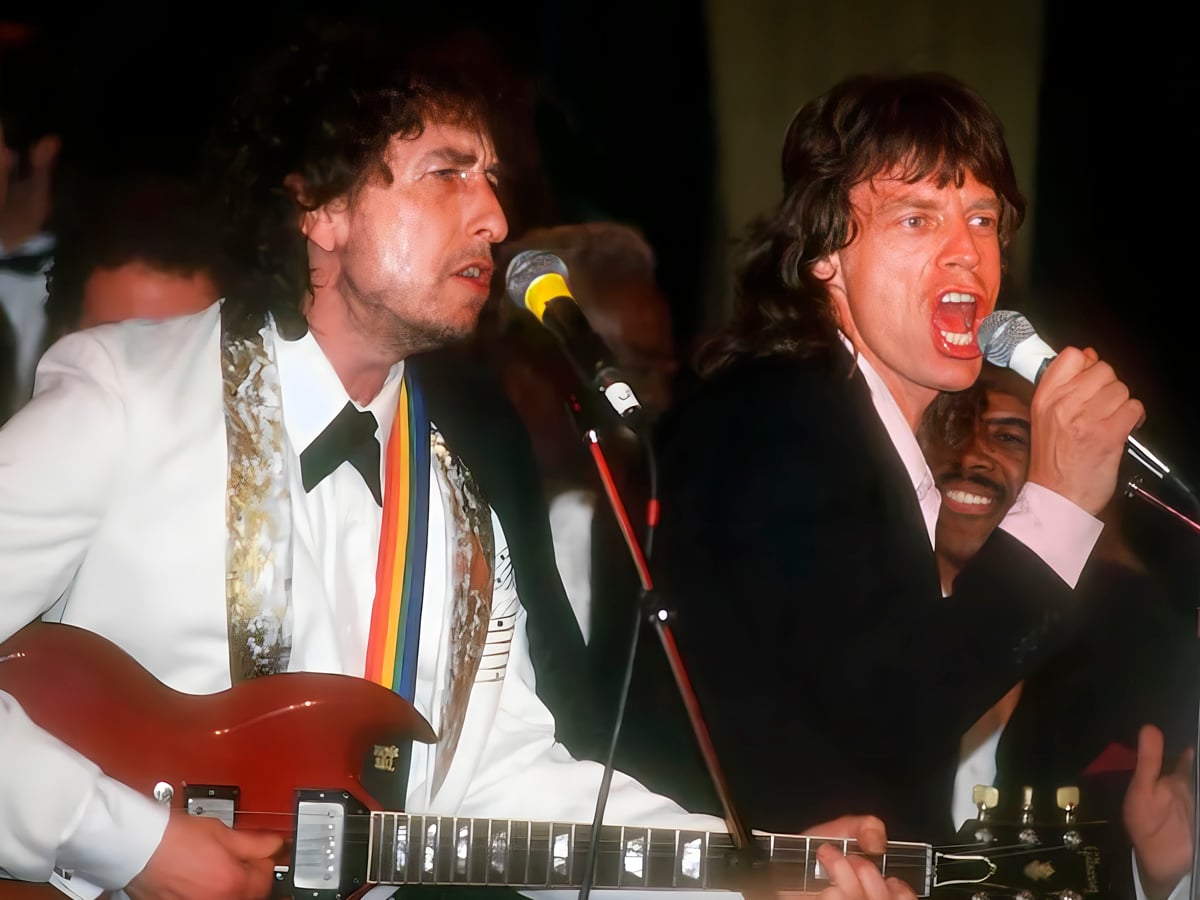
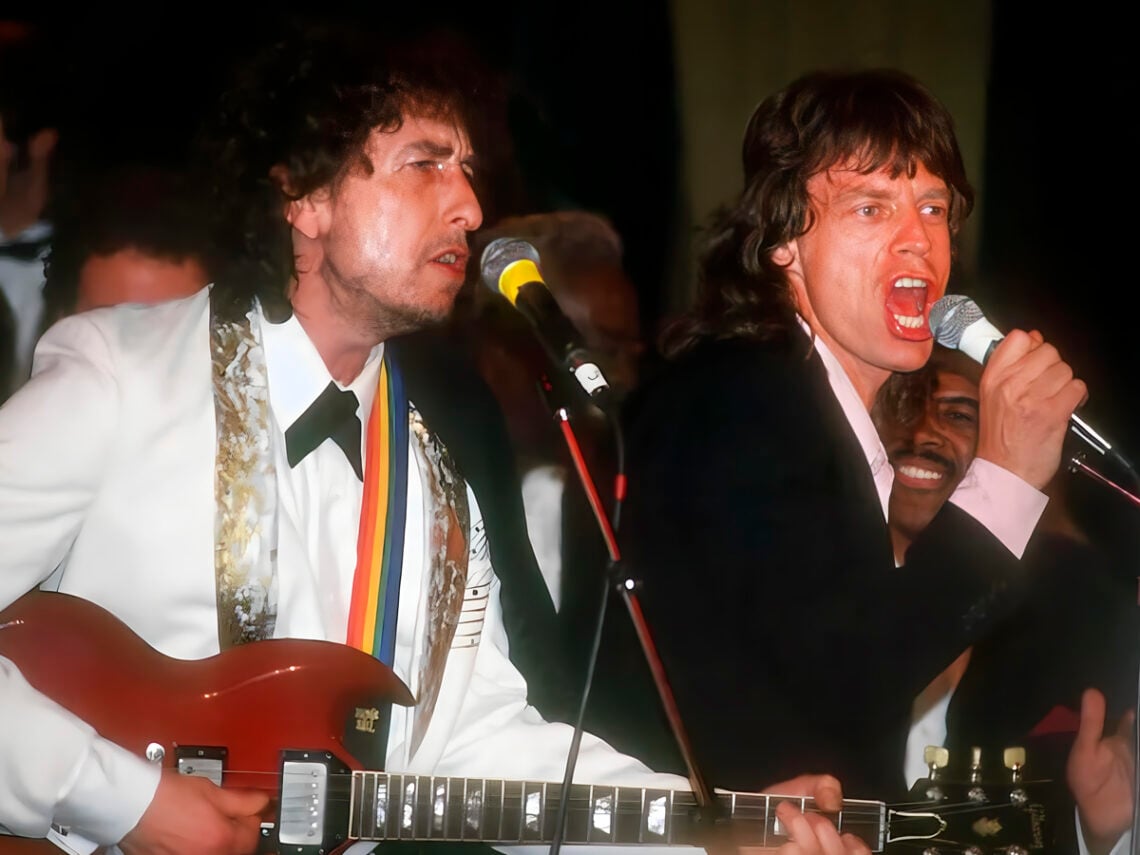
Rock and roll’s archetypal frontman, Mick Jagger, has amassed a rather distinctive stagecraft over his many decades of rooster-dancing across the globe’s biggest stages. The spectacle of Jagger is key to the enduring success of The Rolling Stones, but that didn’t stop Bob Dylan from handing some advice to his rock and roll comrade.
Like Jagger, Dylan has his individualistic stagecraft, even if it has never quite reached the same energy levels as the Stones’ frontman. During the heyday of ‘electric Dylan’, admittedly, the folk star’s shows cultivated a similarly unpredictable, trailblazing quality, but with both cultural icons of the 1960s now in their twilight years, Jagger is still darting around stages like a runaway bouncy ball, while Dylan is resigned to a stripped-back, seated performance style, altering many of his most iconic tracks to fit that atmosphere.
Seemingly, though, that laidback spirit is something that he has long since maintained as a superior form of live music performance. During a 1987 interview with Rolling Stone, which goes to show just how long both Dylan and Jagger have been in the later days of their careers, the songwriter shared, “I love Mick Jagger. I mean, I go back a long ways with him, and I always wish him the best. But to see him jumping around like he does…”
Dylan was quick to qualify that it wasn’t Jagger’s age that he had a problem with. If anything, jumping around onstage post-40-years-old is an endorsement of the rock and roll lifestyle adopted by the Stones. “I don’t give a shit in what age,” Dylan went on, “From Altamont to RFK Stadium, you don’t have to do that, man”.
There was a time, very early on in the career of the blues rock outfit, that The Rolling Stones didn’t jump around, but within the saturated rock and roll scene of the 1960s, it took that wild performance style, itself inspired by the likes of James Brown, to help set the Stones apart from the rest. In doing so, the energy of the performance inspired the sound of the songs in a cyclical trend of pure rock energy.
Nevertheless, Dylan reckons it would be a lot cooler if the frontman took his cues from an altogether different kind of performer. “It’s still hipper and cooler to be Ray Charles, sittin’ at the piano, not movin’ shit,” he declared, “And still getting across, you know? Pushing rhythm and soul across, it’s got nothin’ to do with jumping around. I mean, what could it possibly have to do with jumping around?”
While it is impossible to denounce the incredible performance style or groundbreaking material of Ray Charles, being the greatest R&B artist who ever lived, Bob Dylan’s suggestion that Jagger should adopt his style is rather easy to poke holes in.
Further reading: From The Vault
For starters, Charles didn’t sit stoically behind a piano all the time; there was definitely movement and energy in his performance, but ultimately, he had to remain behind the piano. Jagger, not being tethered to any instrument, let alone one as cumbersome as a piano, is not restricted in that way.
Perhaps, had Ray Charles not been a pianist, he would have been jumping around in a Jagger-esque way; there is no telling. Either way, though, Bob Dylan doesn’t seem likely to adopt Jagger’s performance style anytime soon.
ADD AS A PREFERRED SOURCE ON GOOGLE  The Far Out Classic Rock Newsletter
All the latest Classic Rock content from the independent voice of culture.
Straight to your inbox.