
To be dogged or not? To what end is the question.
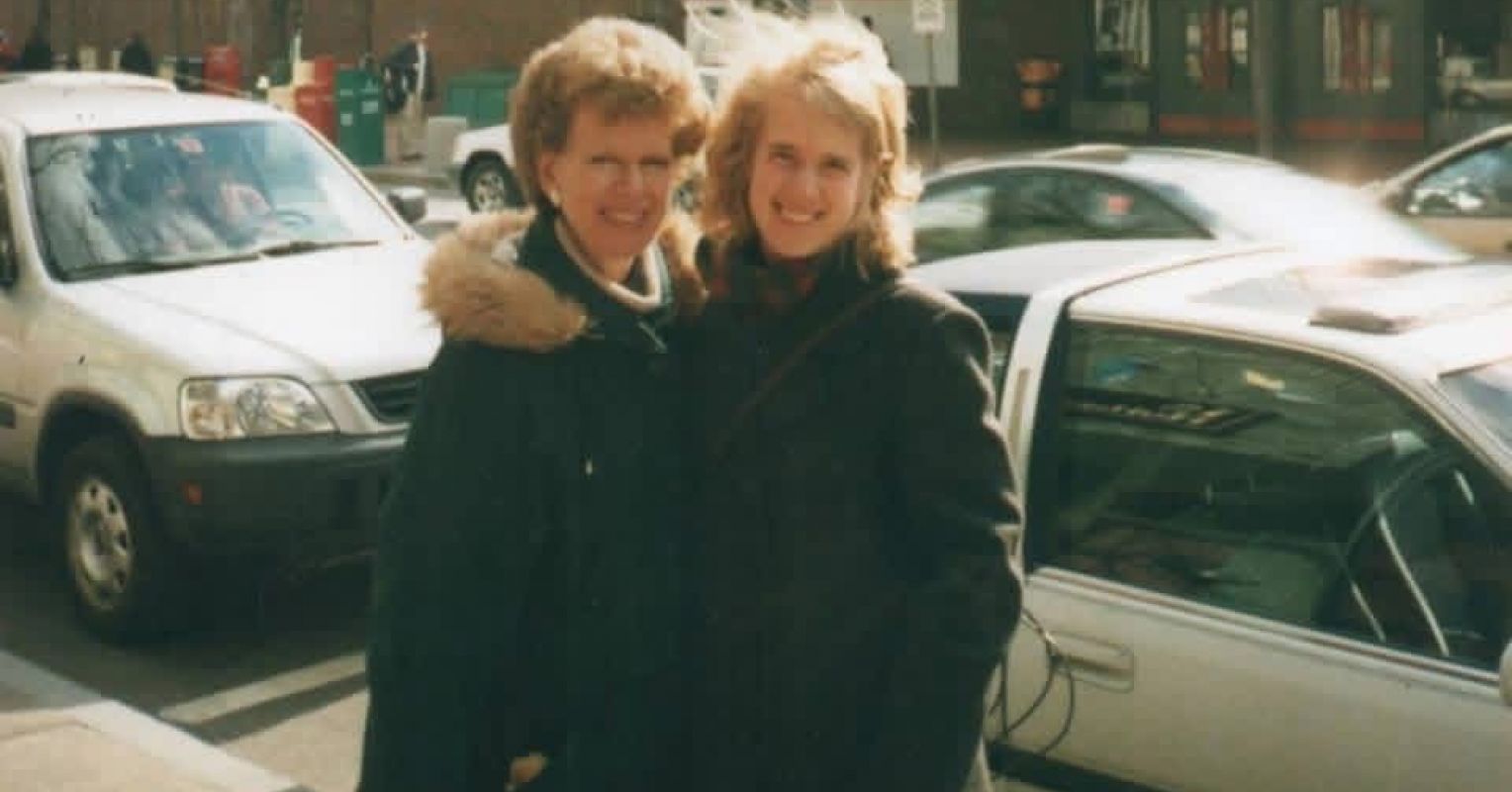
On Labor Day 2011, my mother died from the doggedness of ovarian cancer.
All her life, my mother was dogged about maintaining her good health, so the news of her Stage IIIC ovarian cancer diagnosis at the age of 65 was a shock—but not really. My mother’s older sister had died of ovarian cancer, which prompted my mother to go for additional yearly screenings for the disease known as “the silent killer.”
Six months before her cancer diagnosis, a routine pelvic exam and ultrasound showed a “white spot” in my mother’s uterus. My mother’s doctor promptly recommended an MRI. But my mother refused, explaining she wouldn’t be able to go through with the procedure, because the tube she’d have to lie in would make her feel as if she were “in a coffin.”
Denial As a Defense
My mother’s fear was dogged. So was her denial. According to The National Library of Medicine, denial can be a helpful defense for cancer patients, but it can also be dysfunctional, and life-threatening.
Many months after the ultrasound, my mother began to experience ovarian cancer symptoms. Soon, she would find out that the “white spot” was a malignancy, which spread into her lymph nodes and abdomen.
In the hospital post-surgery, my mother asked me to log in to her work email account so that I could respond to any pressing emails for her without anyone finding out she was sick.
For the next year, my mother passed off her work absences as “a stomach issue.” To her co-workers, she introduced her cancer wig as “a new hairstyle,” for which she received many compliments. Even after the chemo treatments ended and my mother’s thick curly hair regrew, she continued wearing the wig to work. When she died and I informed her boss and colleagues that my mother would not be coming back to the office, they were in disbelief.
My mother doggedly kept up appearances. Her worst fear was the truth. Her dogged denial had great consequences.
The Cost of Denial
When I was diagnosed with complex PTSD in 2003 and disclosed to my mother that my father had sexually abused me when I was growing up, my mother said, “I know it happened, there were signs.” And yet at the same time, during all those years of my childhood, she’d turned her back on what was happening in our house, including the spousal abuse she was suffering. In 2003, she explained that if she’d faced what was happening to me then she “wouldn’t be able to function.”
According to renowned trauma expert and psychiatrist Dr. Judith Herman, in her book Trauma and Recovery, “the ordinary response to atrocities is to banish them from consciousness. Certain violations of the social compact are too terrible to utter aloud: this is the meaning of the word unspeakable.”
A week before my mother’s death, I asked her if I could visit. She doggedly declined. “There’s no urgency,” she said over the phone. “I have a lot to do: shopping, cleaning, laundry.”
“I can help you with that,” I said.
My mother doggedly refused my help. “I can do it myself,” she said.
“Then I’ll just keep you company,” I said.
“We’re having a hurricane this weekend,” she said.
My mother and I had a complicated relationship, but my love for her was dogged, and I wasn’t going to let anything stop me from seeing her, especially as something deep within me was telling me there wasn’t much time left. “The storm isn’t until Sunday,” I said. “I’ll come on Friday.”
I spent the weekend with my mother, noticing her difficulty breathing in the morning and the way she waved me off when I asked if she was OK, her dogged insistence that she was fine and that I needed to go home before the hurricane hit. I told my mother I loved her. I told her I forgave her for not protecting me as a child. I hugged her goodbye. She told me she loved me, too.
I drove home in the middle of the hurricane, which had been downgraded to a tropical storm, my car hydroplaning on the highway. The rain came down in torrents and, as with intense grief, for a while I couldn’t see where I was going. The road appeared before me as a fuzzy wall of gray-white. Increasingly disoriented, I thought about pulling over but I was afraid that might be more of a hazard. I was determined to make it home safely, and somehow, four hours later, I did.
The Aftermath of Denial
Labor Day weekend, my mother checked herself into the emergency room, carrying a manila folder with her medical records, the whole truth of her cancer journey, facts she’d doggedly kept to herself. She’d refused to sign the HIPAA form to allow her doctors to speak with me about her condition or her prognosis. On Labor Day, my mother put down the exhaustive work of her denial. She told the nurse she knew it was the end, and then went into respiratory failure.
Throughout her crisis, my mother directed her doggedness toward what she thought was the road to survival, even as she knew—as I’d come to discover when I read the contents of the manila folder after her death—that her cancer was aggressive and terminal.
Anyone—and anything—can be dogged. But the question is, to what end?
Every Labor Day that I can remember, my mother doggedly cleaned out her walk-in closet, which always looked like a jungle. She’d spend hours going through her clothes, determined to accomplish her task, preening what no longer fit, making room for a new life.
We can doggedly wall off the truth, or the facts of our life, or our feelings, but all that does is create more suffering. Instead, we need to figure out what, and who, is more important, and put our attention there, because the obstacles that get in the way of our deepest connections, and a meaningful life, aren’t worth the cost.