
Additional reporting by Sophie Denny
Many people can relate to feeling dissatisfied with their appearance – perhaps wishing they had a smaller nose, or were a little taller or thinner.
But when do concerns about how you look become more than just a passing insecurity and start to have a debilitating impact on your everyday life to the point you can’t leave the house, or even look in a mirror? We speak to the parents of a young woman suffering with body dysmorphic disorder (BDD) to learn more…
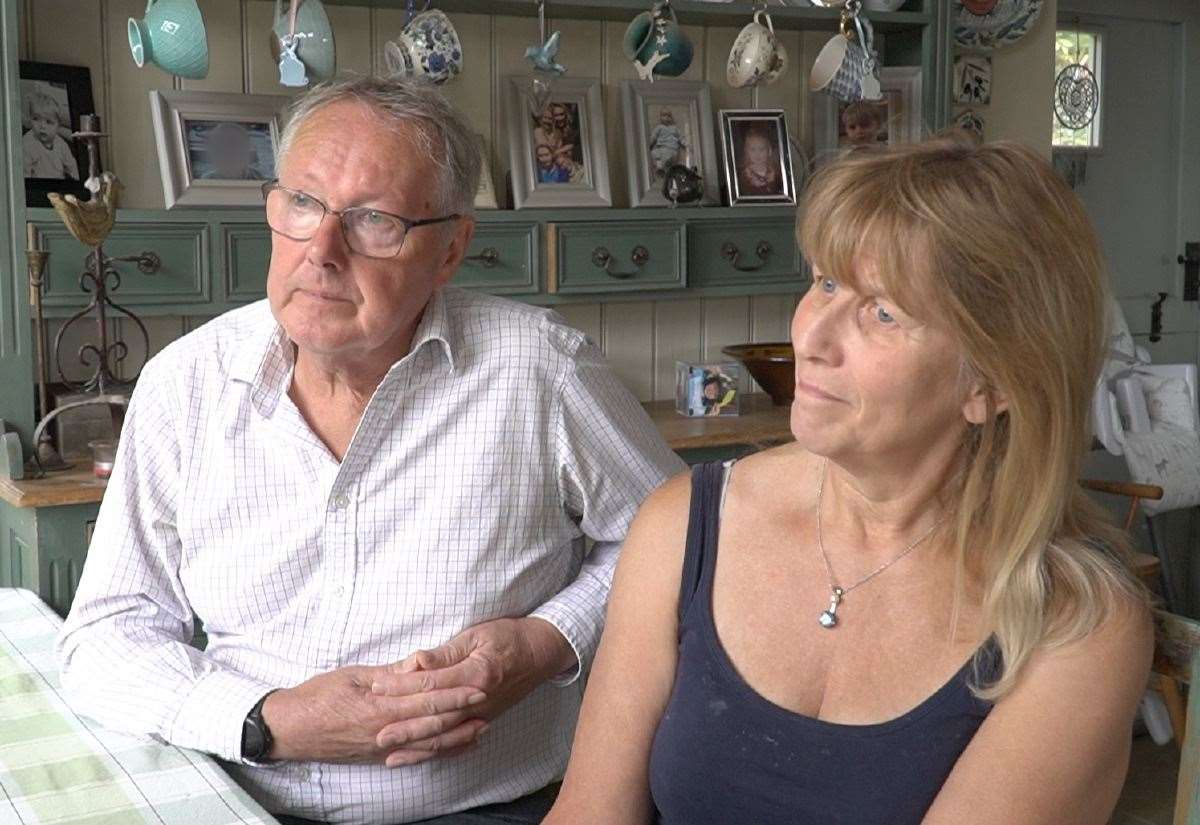
 Mike and Holly Pounsford from Tonbridge are raising awareness of body dysmorphic disorder (BDD) after it impacted their daughter Emily. Picture: Sophie Denny
Emily Pounsford, from Tonbridge, was only 14 when her mum and dad noticed a change in her behaviour while on a family holiday.
The teen had started to become “very nervous” about her nose, before concerns spread to her eyes and other parts of her body.
But very quickly, Emily’s perceived flaws and associated distress became so severe that her behaviour changed, and the impact on the family followed.
“She would actually be frightened of even things like aeroplanes going over; she’d tend to sort of want to hide because she’d be so frightened that it might make people feel sick to look at her,” recalls Emily’s mum, Holly.
“Sometimes she’d actually think that people in the street were being sick because they could see her.”
The condition, which can affect people of all genders and makes sufferers excessively self-conscious, prompted Emily to cover up to the extreme, even putting blankets around the car windows to stop herself from being observed.
Holly, a gilder, says her daughter then started applying “heavy makeup”, wearing a lot of hair extensions that prompted hair loss, as well as wearing wigs, which helped her get out the house and socialise.
“We all worry a bit about what we look like but with BDD it’s much more than just a worry, it real emotional distress,” Emily’s dad Mike explains.
“It’s normally about a perceived flaw that people wouldn’t recognise. So, an imagination that my nose is huge and ugly or there’s something wrong with my lips or hair, which you or I wouldn’t notice.”
The 68-year-old, who is a trustee of the BDD foundation, which aims to relieve sufferers, while advancing research, treatments and awareness of the condition, says the illness can prevent many from living a normal life, going to school or work, and having relationships.
In their own experience, when Emily became ill, they’d often notice she’d spent around four hours getting ready, to the point they’d have to abandon plans altogether because it would take too long to get out the door.
In addition, the condition makes their daughter seek out constant reassurance, although the Pounsfords say there is temptation to reply and tell your child they look lovely, from experience, they say it’s not the most helpful thing to do.
The condition can make the person spend excessive time looking at mirrors or often avoid reflective surfaces altogether
“What’s much more helpful if you have somebody living with you with BDD is to validate their feelings and to pay attention, care and be compassionate about their feelings but not necessarily talk about their appearance,” Mike advises.
Speaking of their family’s experience around the time of the inaugural BDD awareness day, which took place on September 3, the husband-and-wife are keen to raise awareness and understanding for the condition, and highlight the support available to those living with it, in the hope it helps reduce the stigma and shame around the illness.
“It’s an illness, it’s nothing to be ashamed of. If anything, it’s the opposite,” the management consultant adds.
“It’s a completely different condition from just a little bit of worry about what I look like. It can be completely disabling.”
The pair say one of the ways you can spot BDD is observing repetitive behaviours, from constantly looking in the mirror, grooming or brushing your hair, and worrying about covering yourself up.
Despite misconceptions that the behaviour stems from vanity, the family are quick to dispel this myth, instead stating that the checking behaviours are linked to low self-esteem.
Now 31, the family say Emily has come a long way, and although she is not pictured in the article because of her condition, “gradually” her covering-up has lessened.
Emily Pounsford started showing signs of the condition around 14 and wore heavy makeup and hair extensions
“Now she’s actually learned not to wear makeup, which is a sort of amazing achievement really when you look back 15 years ago when she got ill,” Holly adds.
Despite this, the 65-year-old says checking in mirrors remains an ongoing behaviour, from looking in car wing mirrors to reflective surfaces on a passing building. Although, she notes that some people with BDD avoid mirrors and their reflection altogether.
“It just affects your life so much, we find it hard to go on holidays,” she adds.
“You have to think carefully about what sort of situation you are in, like if there are reflective surfaces in an airport, Emily tends to get very upset when she sees herself in reflective surfaces.
“You suddenly become aware nowadays how much glass is everywhere. So that’s a real problem.”
Although one in four people with BDD will attempt suicide in their life, the parents say there are challenges getting people to understand the seriousness of the condition.
According to charity trustee, Mike, around 1 in 50 people have the condition, but many don’t realise they have it, or feel too ashamed to talk about it – therefore it remains undiagnosed and untreated.
Dr Martin Anson, clinical psychologist and lecturer in psychology at the University of Kent. Picture: Sophie Denny
“It’s complex and other people don’t necessarily get it, and that’s a big challenge. So the more you can help educate yourself and other people about it, the better.”
While Holly adds: “It’s very isolating for people. Because you shut yourself off from everything and then you shut yourself off from life. It’s very hard.”
If you think you, or someone you know, suffers from BDD, the family want people to know that help is available.
Mike encourages people to talk to someone about what they’re feeling, seek help through their GP and the BDD foundation, and take part in the screening test on the website, alongside accessing other resources to get help.
“I think recovery is possible. I think…there’s hope,” Mike says.
According to Dr Martin Anson, clinical psychologist and lecturer in psychology at the University of Kent, a “very significant proportion” of people with BDD will attempt suicide at some point in their life.
‘Sometimes she’d actually think that people in the street were being sick because they could see her.’
“Not just because of depression associated with BDD, because they just feel so disturbed and depressed about their perceived unattractiveness. So, it really can be a very severe condition. But it is very treatable,” he said.
Explaining the difference between the condition and general dissatisfaction with one’s appearance he explained: “The key is that it [BDD] causes very significant interference in their daily life and very severe distress and impairment.”
He describes the condition as “under-recognised” and reiterated that although some people mistake it for being vain, “it’s almost the opposite of that”.
“It’s where people are not having a high opinion. They’re having a very negative opinion. And that’s what’s leading to them being so preoccupied and concerned.”
Dr Anson says recovery is possible as treatment trials for cognitive behavioural therapy (CBT) have been shown to be effective.
The university lecturer says that if you spend several hours a day checking your appearance, avoiding being in public or the presence of others, and carry out “excessive grooming over and above typical” and it’s causing lots of distress, then it may be BDD and would be worth seeking help.
If you need support visit the BDD foundation website here.
Despite this, he believes more longer term studies are needed to explore whether social media use is linked to developing BDD symptoms.