
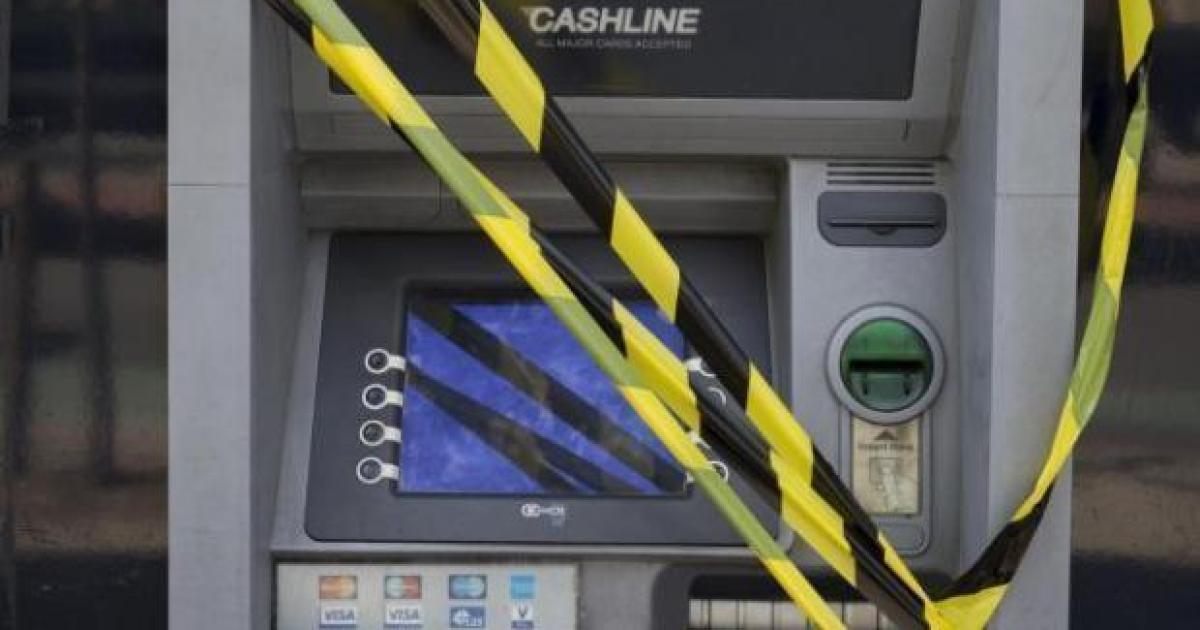
The findings provide fresh backing for campaigners seeking to protect access to cash as bank branches and cash machines disappear from communities across Scotland.
Campaigners warn that Scotland’s cash network is being steadily dismantled despite continued public demand for notes and coins, with thousands of communities losing access to bank counters and round-the-clock cash withdrawals.
Industry figures seen by The Herald show the number of free-to-use cash machines fell from 5,171 at the end of 2018 to around 3,729 at the end of last year adding to concerns about how easily people will be able to withdraw cash as the move towards digital payments continues.
Analysis by consumer group Which? shows that 740 of Scotland’s 1,041 bank and building society branches have closed since 2015, with further closures already announced.
Read More by Martin Williams:
Cash cut off: Government concern as 75% of Scotland’s banking network is wiped out
Plea to review ATM fee and protect cash access
Taxpayers fork out £45m on Scotland’s most notorious road after years of closures
Secret dossier exposes blame culture, conflict and deep failure at ferry fiasco yard
The Payment Choice Alliance is campaigning for the right to use cash to be protected through UK legislation that would oblige businesses to accept cash for in-person payments. The organisation is also calling for convenient 24-hour cash withdrawal and deposit facilities in every community, together with opportunities for face-to-face banking.
Ron Delnevo, chairman of the Payment Choice Alliance, said: “Now we see one of the reasons why most Scots are very much against cashless, with more Scots using cash to budget when on a night out than in any other part of the UK. Scots are wise to use cash to budget – there’s a lot of evidence that using cards or digital payments increases the risk of overspending and, ultimately, getting into expensive debt.
An abandoned Santander branch in Peterhead
“This YouGov research clearly underlines that the majority continue to see cash as a common sense way to control their spending. This in itself explains why so few people have entirely stopped using cash and why, contrastingly, so many told YouGov in May 2026 that that they support legislation to oblige businesses to accept cash.”
The research also found a stark difference in how Scots view the risk of overspending depending on how they pay. Just 11% of Scots said they considered there to be a high risk of overspending when using cash, compared with 54% for cards and 61% for digital wallets such as Apple Pay, Google Pay and similar services.
It come as the debate over the future of cash intensifies, with the Payment Choice Alliance arguing that the decline in cash facilities risks making it harder for people to use a payment method that remains important for managing their spending.
The alliance says cash provides a straightforward way for people to decide in advance how much they can afford to spend, rather than making purchases electronically and seeing the total only after the money has left their account.
That use of cash as a spending-control measure is particularly evident in Scotland. Four in ten Scots said they sometimes, often or always take out a set amount of cash for a social activity specifically to limit their spending, while only just over a quarter said they never do so.
But data from the cash industry shows the average Scot withdrew £1,550 in cash during 2025, compared with £2,553 in 2019 before the pandemic.
While supporters of digital payments point to that decline as evidence that fewer people need cash, campaigners argue that shrinking access inevitably affects how much money people are able to withdraw and spend.
Ron Delnevo
Under reforms introduced in recent years, banking hubs have been established in some communities affected by branch closures, while the Post Office network has taken on a growing role in providing cash services.
However, campaigners argue that these measures do not fully replace the convenience of widespread free-to-use ATMs.
The Payment Choice Alliance points to a Treasury policy statement published in 2023 which highlighted the role of Post Office counters in future cash access arrangements but did not specifically reference ATMs, despite cash machines accounting for the overwhelming majority of withdrawals.
The fight over cash comes despite new protections introduced by regulators in recent years.
The Financial Conduct Authority now has powers designed to ensure people and businesses can continue to access cash withdrawal and deposit services where they are needed.
However, campaigners argue those rules stop short of guaranteeing access to a nearby ATM or requiring businesses to accept cash payments.