
The team analysed 20 fossils, representing nine species of ancient katydid ancestors that probably lived together in what is now Inner Mongolia. They then created a model based on the sounds made by the insects’ similar living counterparts.
By combining the species, researchers believe they have created a Middle Jurassic soundscape that is close to what would have been heard 165m years ago.
Fernando Montealegre-Zapata, a professor of sensory biology at the University of Lincoln, said: “The most extraordinary moment was hearing all the calls together.
“These species likely lived side by side, and for the first time we could listen to a soundscape that may have filled Jurassic forests, much like the chorus of chirping insects we hear in tropical rainforests today.
“Jurassic forests may have been filled with a diverse chorus of calls including clear, pure tones, and in some species they were so high-pitched that they would have been ultrasonic – beyond the range of human hearing.”
Scientists found that one species probably communicated above 20 kHz, suggesting some insects had developed ultrasonic communication to avoid giving away their location to predators.
That in turn may have influenced the evolution of early mammals, including bats, which use echolocation to find insects.
‘A very noisy place to inhabit’
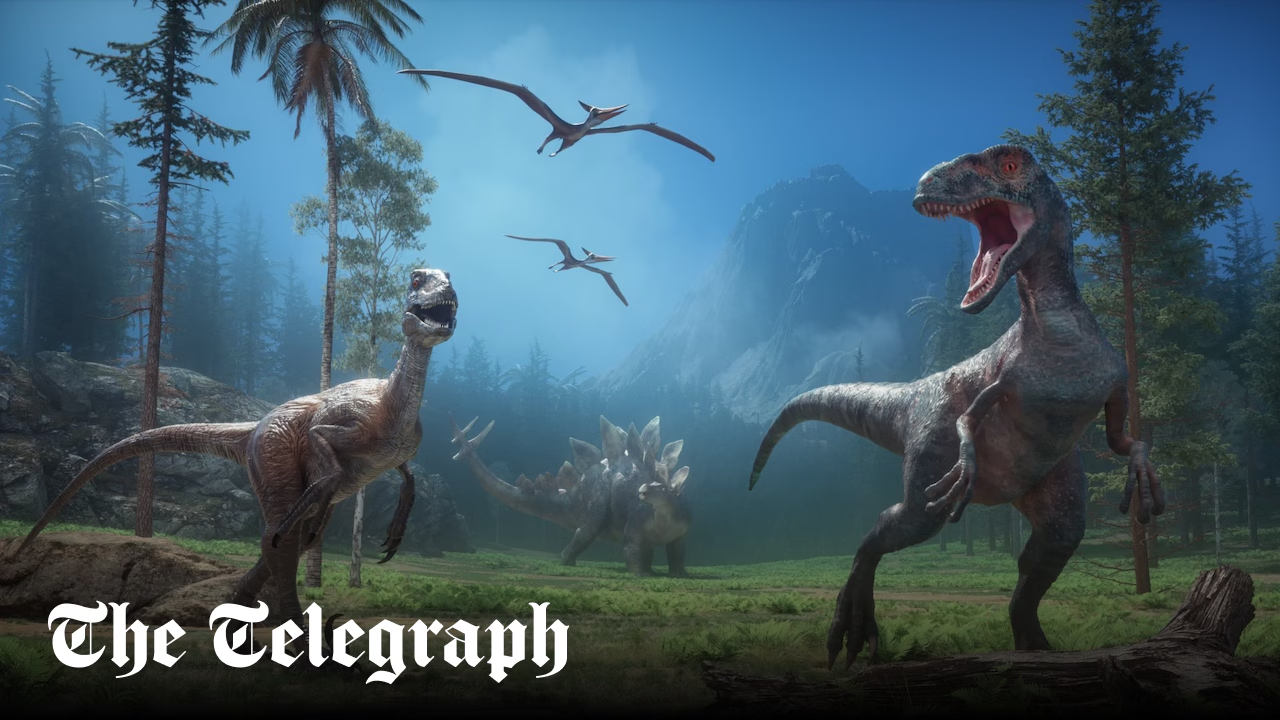
Prof Montealegre-Zapata said: “Rather than a silent world occasionally interrupted by dinosaur footsteps, these forests were likely alive with complex insect songs, creating a rich soundscape that may even have influenced the evolution of early mammals, as they also listened, communicated, and detected prey.”
The team is hoping to expand the Jurassic soundtrack with further animals, including arthropods such as beetles, and even vertebrates, although it is harder because soft tissue and vocal organs rarely fossilise.
Charlie Woodrow, an associate lecturer at the University of Lincoln, said: “The Jurassic was probably a very noisy place to inhabit.
“Much like modern forests and tropical ecosystems, it would have been filled with a rich soundscape generated by a wide variety of animals. Forests would have resonated with the calls of early vertebrates and insects, creating a complex acoustic environment that varied between day and night.
“While we can only reconstruct it indirectly, there is good reason to think that Jurassic ecosystems were filled with sounds, many of which would have been completely inaccessible to our ears. But of course, there were no humans in the Jurassic to hear audible signals.”
The research was published in the Proceedings of the National Academy of Sciences.