
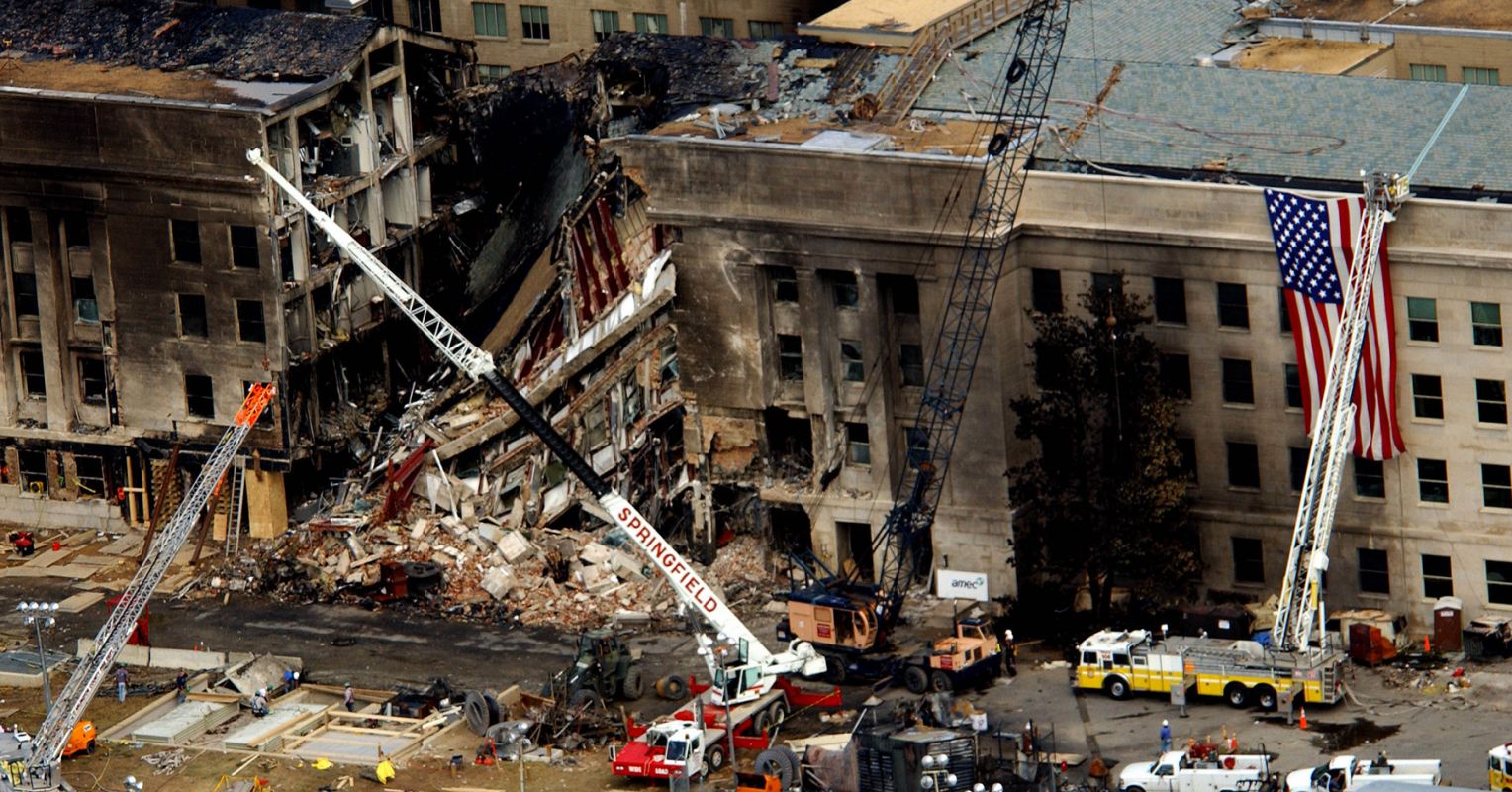
Survivors of the 9/11 attacks on the World Trade Center and the Pentagon have now dealt with their aftereffects for a quarter of a century. Their personal stories are diverse. Some continue to suffer emotionally with trauma and stress-related disorders. Others who were adversely impacted emotionally eventually recovered and now live stable and well-adjusted lives. Some were able to resume their lives with little or no effect on day-to-day adjustment. And others, over time, grew from their experiences on that fateful day.
Four Trajectories Following Trauma
These four outcomes—pathology, resilience, invulnerability, and personal growth—are common responses to adversity and trauma.[1] By necessity, mental health professionals focus on understanding and treating pathologies such as post-traumatic stress disorder, anxiety, and depression. It is worth noting, however, that trauma survivors, especially over time, may experience multiple trajectories. With treatment and social support, pathology may be followed by resilience or even personal growth. It is unwise and unfair to categorize anyone’s response to trauma with a single label. The human response to major trauma is complicated and highly personal.
A 9/11 Survivor’s Personal Story
Army Lieutenant Colonel Marilyn Wills, a survivor of the Pentagon attack, was working in the section of the Pentagon struck by American Airlines Flight 77. In the chaos that followed, she was able to escape through a second-floor window when Commander Craig Powell, a Navy SEAL assigned to the Pentagon, caught her in a fall. Although she bravely assisted others in evacuating the building, many of her colleagues did not survive the attack.[2]
In the recent National Geographic documentary series 9/11: Reunited, Col. Wills and Cmdr. Powell were reunited for the first time since the attack.[3] Sharing their memories of that day, 25 years later, was part of the long healing process. After viewing the documentary, I had the honor of interviewing Col. Wills about her long journey to recovery. What follows are insights she shared.
In our conversation, we discussed the trajectory of Col. Wills’ recovery journey. She related that she faced major struggles in the months and years following the attack. Although highly motivated to continue her Army career, she found that her chain of command showed little empathy for her traumatic experience, telling her to “soldier up” and do her job. Col. Wills reported she did not get much professional help in coming to terms with her trauma. “I think I may have seen a psychiatrist once. The chaplain may have come by once or twice, and that was it.” In retrospect, she firmly believes that regular mental health support would have speeded her recovery. “That would have helped move me forward quicker than I did. Honestly, I had no growth. I was surviving. I was treading water.”
For years, Col. Wills was reluctant to speak with anyone, even her family, about the attack. Moreover, she experienced survivor’s guilt. “In my mind, I had a difficult time understanding why I am still here. And that person is not. That person that was right next to me,” she stated. “I wouldn’t even talk about 9/11 for five to seven years.” Now, 25 years later, she can speak openly about her experiences. She says that she has turned her attention outward, away from herself, and more toward others. Family and friends provide social support integral to resilience. “At some point something flipped, and I thought, how can I be externally focused and help others, which was the best therapy of all.”
Drawing on strengths of character helped Col. Wills’ recovery. In the immediate aftermath of 9/11, she mentions several character strengths that helped her cope. “In the days following the attack, the character strength most helpful to me was my spirituality.” She also emphasized that the character strength of courage was of significant importance to her at that time. “I had courage, but I didn’t know because I hadn’t been tested. We go one day forward, that’s when that courage came in to say you can do this.”
Another character strength instrumental in her recovery was forgiveness. For Col. Wills, forgiveness did not come easily at first but was something that developed over time. “I had to ask myself for forgiveness for continuing to live my life, because in my mind, I kept asking, why am I here? Why? Forgiveness was huge for me. And it was a lot I had to work through with that.”
As time passed, courage and the character strengths of humanity—caring for others, kindness, and positive social relationships—played integral roles in her adjustment. Col. Wills firmly believes that, over time, she has become resilient. “I knew I had to bounce back from this tragedy. And the question was, how are you going to do this, Marilyn? What steps are you going to take? What is that going to look like for you? And I think resilience was there all along. It was latent, but that has been there and is my whole thing. And every day I try something new.”
Col. Wills’ response to 9/11 illustrates the complexity of response to trauma. Her mental health was challenged but, over time, her pathology trajectory changed into one of resilience and growth. Hers was not a single trajectory, but several spread over time.
Finally, Col. Wills reflected on advice to others who have experienced trauma. “I would share the following with those victims. First, acknowledge that it did happen, and now how do you move forward? Continue to add tools in your bag to help you move forward. Don’t minimize the event. You had been moving forward in life. Now, reflect back and remember those things that helped you move forward and bring those back to the surface. Finally, bring back those latent character strengths.”
An Object Lesson for Trauma Survivors
As we commemorate the 25th anniversary of 9/11, it is important to remember people like Col. Wills. Because many of us will experience a traumatic event in our lives,[4] Col. Wills’ story provides an object lesson in what we may expect. Adverse psychological reactions may likely occur. But by actively seeking therapy, embracing the social support of family and friends, and harnessing character strengths to build perspective and meaning, more positive trajectories are likely.
Note: The views expressed herein are those of the author and do not reflect the position of the United States Military Academy, the Department of the Army, or the Department of Defense.