
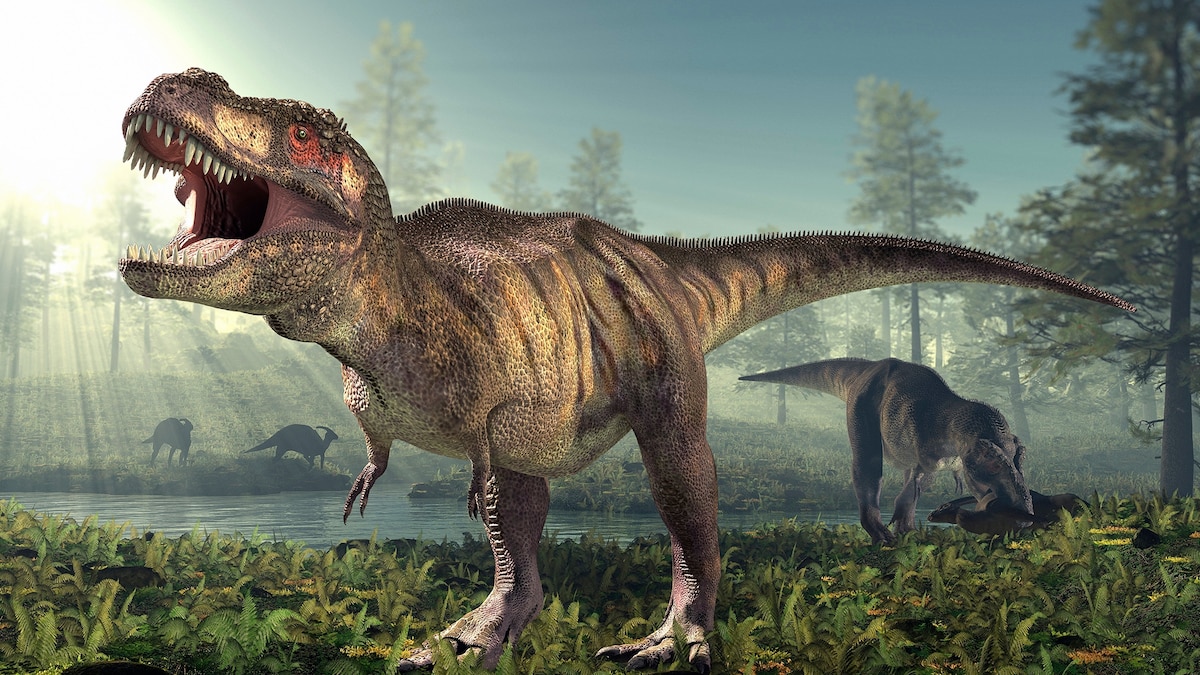
Miller: First, the age of Mandrasuchus is incredible. This species evolved in North America in the immediate aftermath of the asteroid impact and K-Pg mass extinction, the event that wiped out the non-avian dinosaurs. While the Earth was recovering from the worst event in the history of multicellular life, Mandrasuchus was thriving!
What really hits home for me is what this specimen tells us about ecological resilience …It’s a remarkable testament to how life doesn’t just survive catastrophic change, it repopulates, adapts, evolves, and radiates.
Your Suggestions for a New Pterosaur’s Name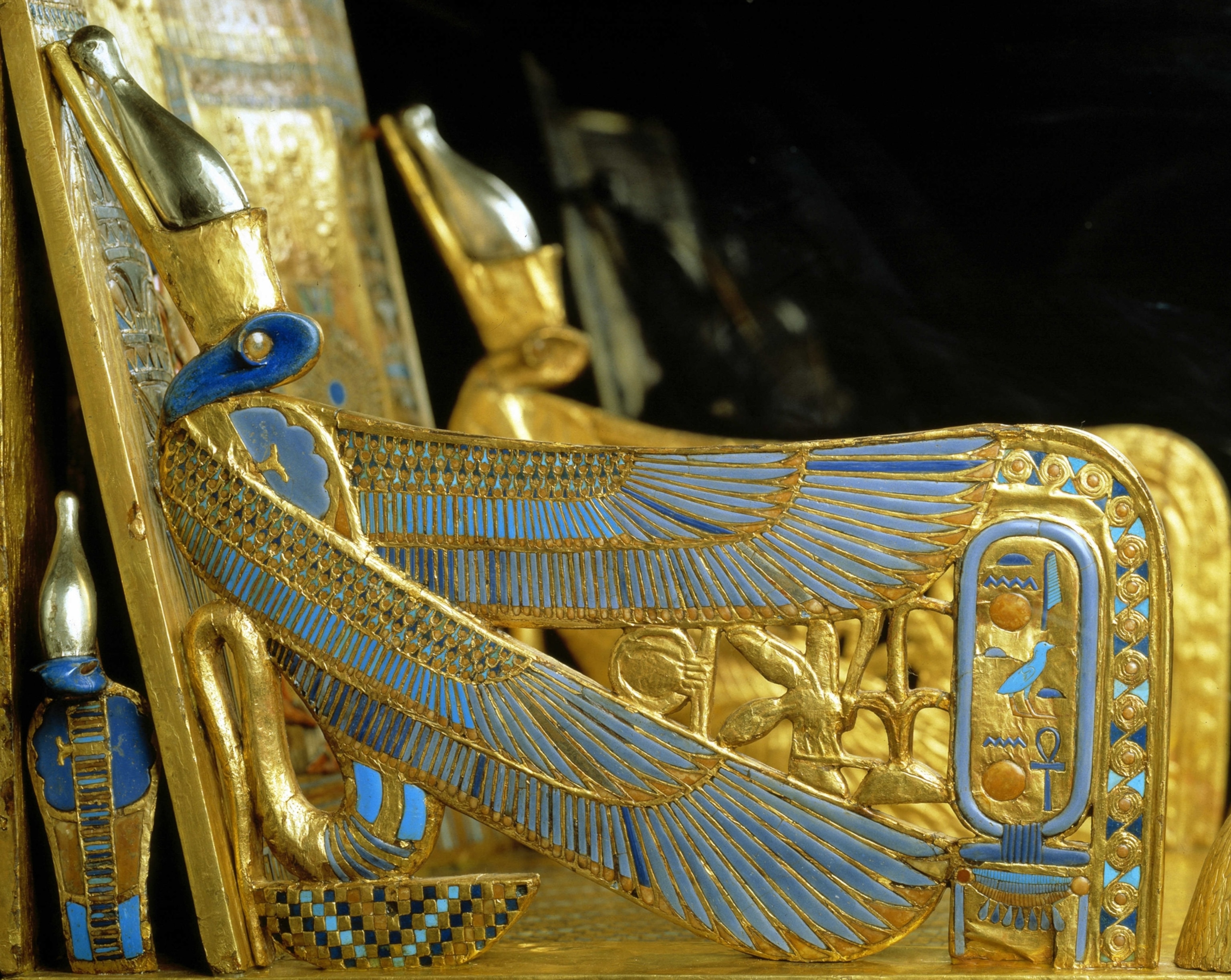
King Tutankhamun’s golden throne was adorned with a winged serpent diety known as a Wadjet.
Andrea Jemolo, Bridgeman Images
Last month I told you about National Geographic Explorer Hesham Sallam and how his team discovered Egypt’s first ever pterosaur fossil while excavating the fabled Bahariya Oasis. Sallam and his team are not sure whether it is a new species, but that didn’t stop us here at Stones & Bones from pondering some potential names just in case.
I suggested they name it after Wadjet, a winged serpent deity depicted in ancient Egyptian hieroglyphs and on King Tutankhamun’s golden throne. Several readers liked that option, and some wrote in their own suggestions.
“Pterosaur aegyptos gets my vote!” said Stones & Bones reader Lois Sprengnether Keel. Other readers sent in names that were a little less taxonomic but still fun, such as Peter, Petra, and Ptolemy. Though I think LeAnn Blasius offered my favorite, a clever portmanteau: Egypterosaur.