
Trump says he has ‘no regrets’ over Iran warYour support helps us to tell the story
From reproductive rights to climate change to Big Tech, The Independent is on the ground when the story is developing. Whether it’s investigating the financials of Elon Musk’s pro-Trump PAC or producing our latest documentary, ‘The A Word’, which shines a light on the American women fighting for reproductive rights, we know how important it is to parse out the facts from the messaging.
At such a critical moment in US history, we need reporters on the ground. Your donation allows us to keep sending journalists to speak to both sides of the story.
The Independent is trusted by Americans across the entire political spectrum. And unlike many other quality news outlets, we choose not to lock Americans out of our reporting and analysis with paywalls. We believe quality journalism should be available to everyone, paid for by those who can afford it.
Your support makes all the difference.Read more
Satellite imagery showed smoke in the area of a crucial oil pipeline in Saudi Arabia, raising fears of another heavy attack by the Houthis on energy infrastructure.
Images verified by Reuters showed smoke in the vicinity of the East-West oil pipeline, as the Houthis captured a strategic island of Perim in the Bab el-Mandeb Strait. The waterway in the Red Sea is key to global oil shipping.
Earlier, two sources from the Saudi-backed, internationally recognised Yemeni government said its forces had withdrawn from Perim and that the Houthis had also taken the mainland Red Sea coastal town of Dhubab, which faces the island.
The developments threaten to bring further chaos for energy exports. The price of oil touched $108 a barrel on Friday for the first time since May after the Houthis captured Yemen’s strategic port city of Mokha.
Saudi Arabia, the world’s largest oil exporter, has relied on the Red Sea route since the Iran conflict effectively closed Hormuz, through which a fifth of global oil used to flow.
Mokha is around 50 miles from Bab el-Mandeb, a geopolitical chokepoint connecting the Red Sea and the Gulf of Aden and through which about 12 per cent of the world’s goods are typically shipped.
Iraq confirms attacks on Saudi pipeline originated from its territory
Attacks on a key Saudi oil pipeline were launched from Iraqi territory, Iraq’s government said on Saturday, pledging to investigate further.
Iraq closed two key border crossings with Iran, halting all passenger and commercial traffic until further notice, in the wake of the attack, Iranian media reported on Saturday.
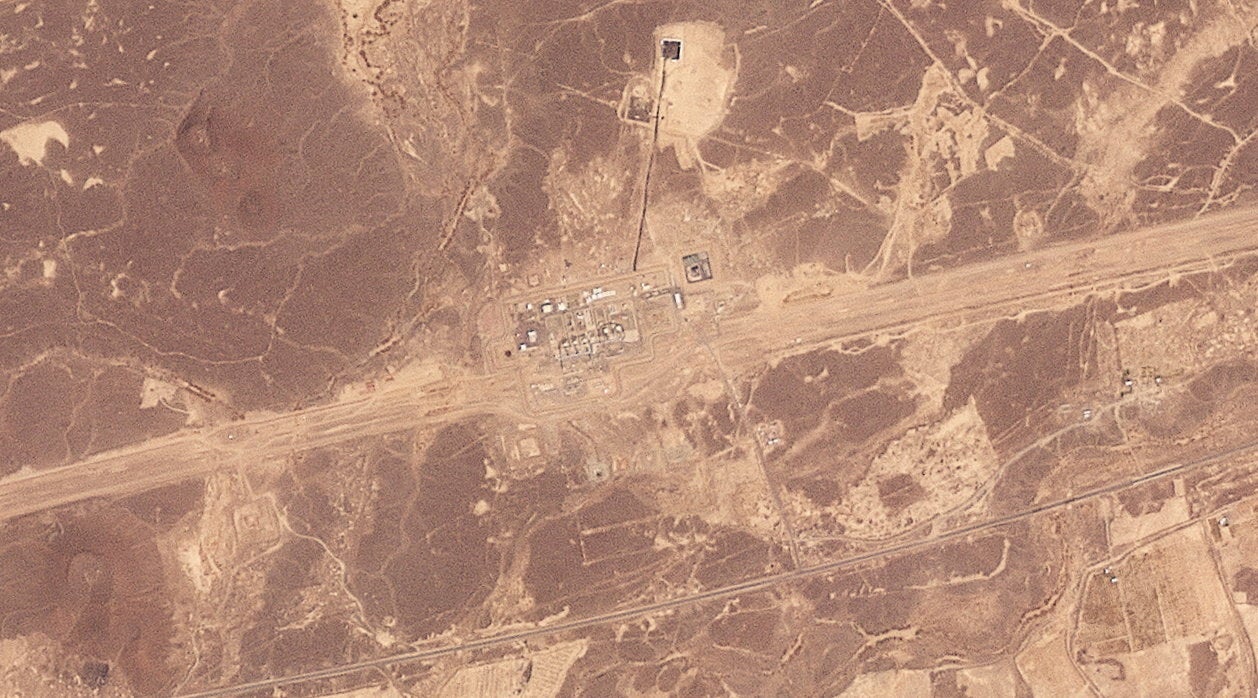 Satellite image shows the East-West pipeline facility in the Hejaz Region, Saudi Arabia, 8 September 2026 (Reuters)
Meanwhile, fears continued to grow that gas and oil prices could rise and international shipping could be further disrupted after Yemen’s Houthis seized a key island and captured a Red Sea port.
Namita Singh12 September 2026 08:25
Anthropic blocks users in Houthi-held Yemen over weapons development
The AI company Anthropic said it blocked users in northern Yemen who were using its AI models to run weapons development programmes, some using commercially available smartphones.
Anthropic said its models were being used to pursue sophisticated precision, long-range ballistic and hypersonic missiles. The company said it identified the users during an internal investigation and banned their accounts.
Iran-backed Houthi rebels who control northern Yemen have been smuggling advanced weapons for years despite a blockade and UN arms embargo. Iran denies arming the rebels.
Anthropic said the accounts used Claude Code to develop software that “steers and stabilises a flying vehicle” and were working to develop weapons including a guided rocket that allows mobile phone users to autonomously track targets.
There is no evidence the users in Yemen succeeded in fielding a weapon, the company said.
Namita Singh12 September 2026 07:14
Houthis capture strategic island as Saudi Arabia targets airport
Houthis in Yemen captured the island of Mayun at the entrance of the Red Sea, a key alternative for shipping Saudi oil and other exports since Iran has been targeting vessels in the Strait of Hormuz.
The island’s seizure was confirmed by a senior military official with Yemen’s internationally recognised government and a Houthi official. Both spoke on condition of anonymity because they were not authorised to talk to journalists.
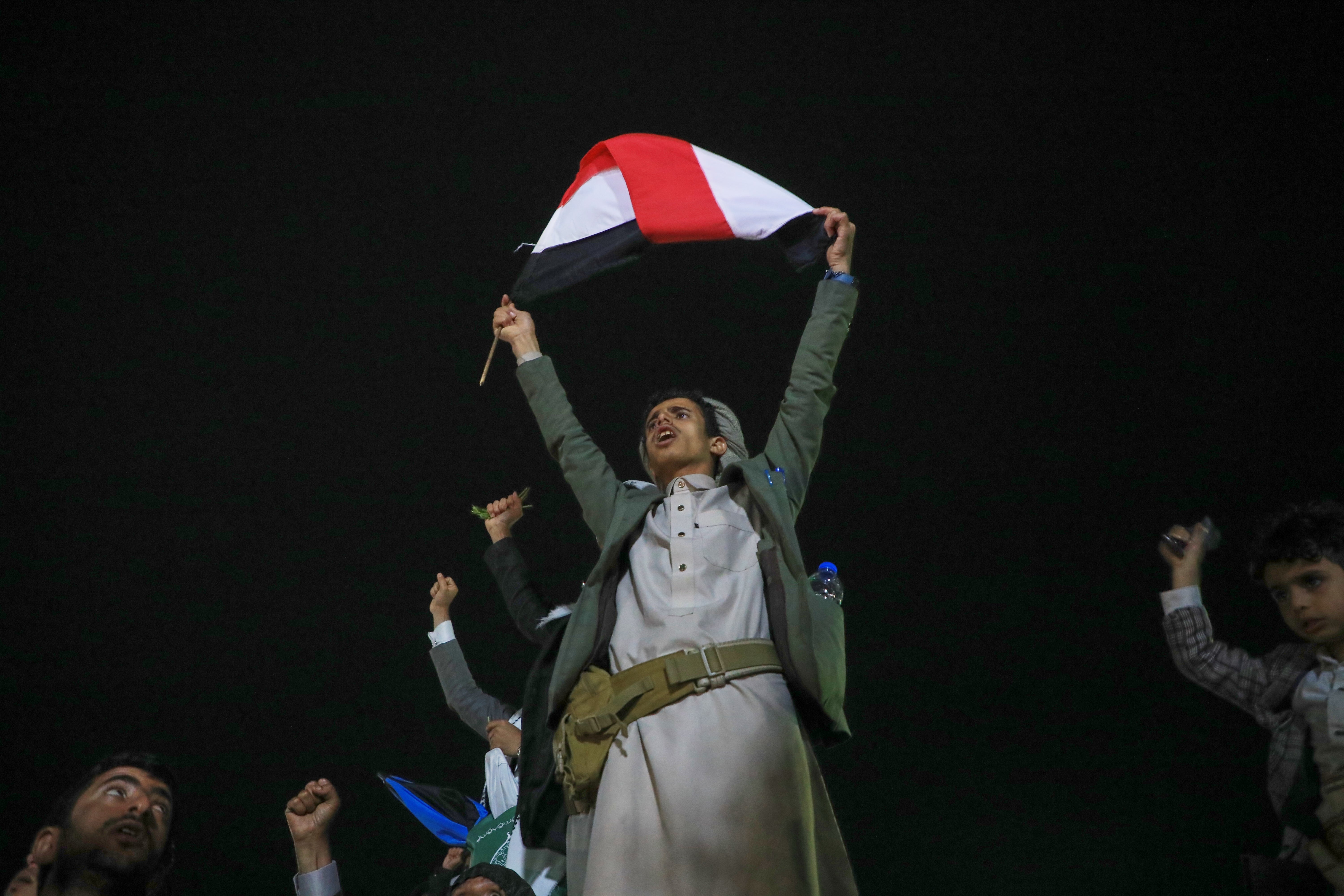 Supporters celebrate as they attend a rally organised by Houthis in Yemen to celebrate the group’s capture of Mayun Island in the strategic Bab el-Mandeb Strait (AP)
About 12 per cent of the world’s goods are typically shipped through the Bab el-Mandeb Strait at the southern end of the Red Sea. It’s especially important to Saudi Arabia, a key US ally.
The Houthis’ military spokesperson, Yahya Saree, said in a statement Friday that “maritime navigation is safe for all companies except for Saudi vessels”.
But markets are nervous, and experts have described the Houthis as highly unpredictable.
A United Nations spokesperson, Farhan Haq, said Houthi rebels in Mokha seized a compound that had housed UN staff, who all fled safely before the city’s capture. Haq said that “no UN personnel remain in Mokha right now”.
Namita Singh12 September 2026 06:44
No political solution in sight
Many residents of Mansouri fled when the latest Israel-Hezbollah war began in March, but returned after the truce in June – only to flee again when the Israeli military issued a call to evacuate the village last month and began striking it again.
Israel said at the time that it was responding to ceasefire violations by Hezbollah. But it’s not clear why it has been demolishing the village since then.
Some of the displaced were taken in by relatives, while others are staying in school shelters in the nearby city of Tyre. At the height of the war, some 1.2 million people were displaced in Lebanon. The ceasefire has allowed most of them to return home, but more than 300,000 remain displaced.
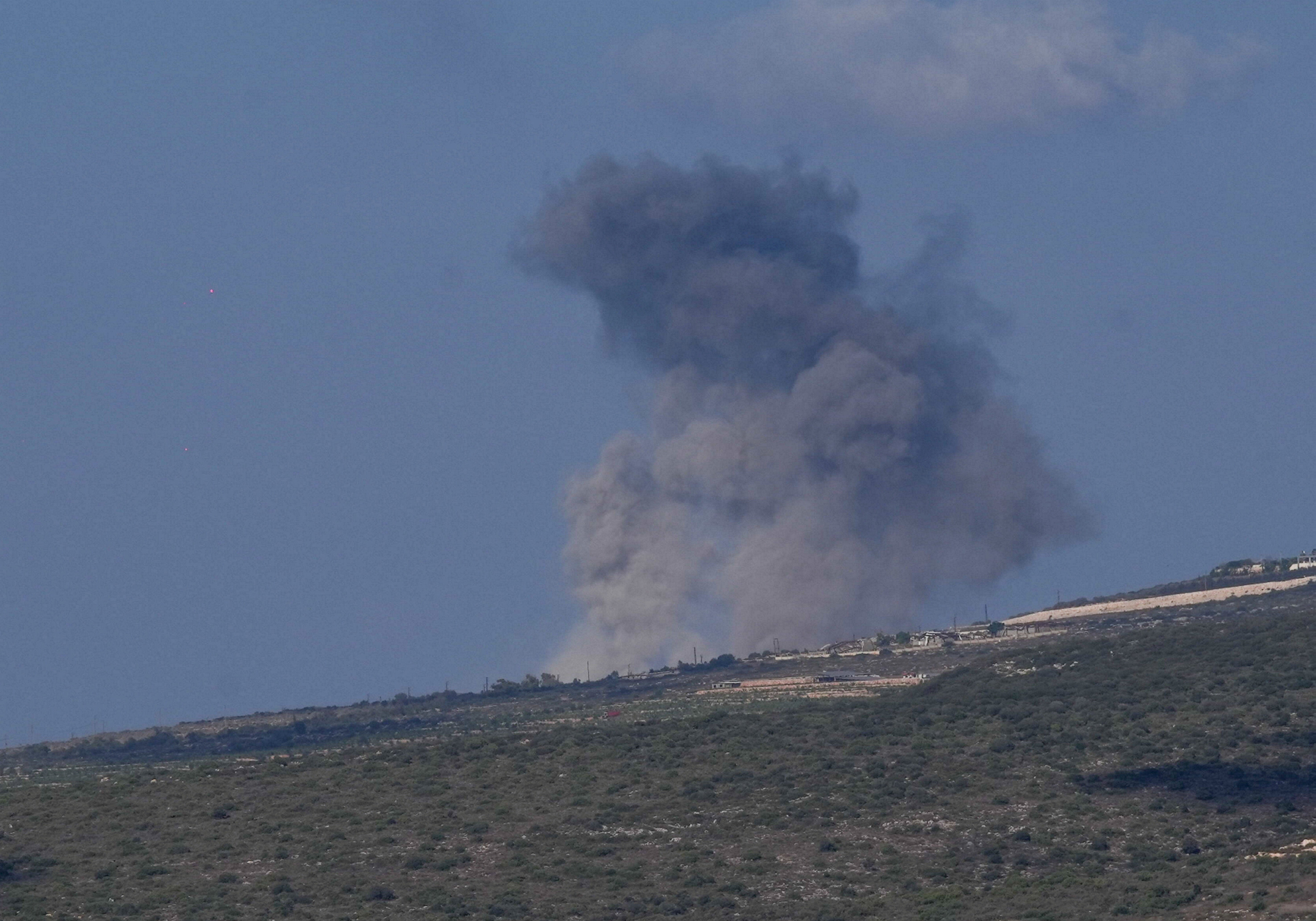 Smoke rises in Mansouri following Israeli strikes as seen from Naqoura, Lebanon, 11 September 2026 (Reuters)
With negotiations between Israel and Lebanon – and between the US and Iran – stalled, there is no political solution in sight that would allow them to go home.
The latest conflict between Israel and Hezbollah began on 2 March, when the militant group fired rockets across the border two days after Israel and the US launched a war on Iran.
The Lebanese government and Israel reached a framework agreement in June stating Israel will withdraw from Lebanon as Hezbollah is disarmed, but there has been little movement on implementing it.
Lebanese and Israeli officials are expected to meet for another round of US-mediated talks in Rome next month, the US State Department said in a statement early on Saturday.
Namita Singh12 September 2026 06:26
Residents of southern Lebanon gather to watch Israeli drones drop explosives on their village
A group of men and children gathered on Friday at a vantage point overlooking their village in southern Lebanon, watching from a distance as Israeli drones descended, carrying boxes laden with explosives to be dropped on houses.
It has become a daily ritual for residents of Mansouri, who fled the village weeks ago and now are watching its destruction from the neighbouring village of Hanniyeh.
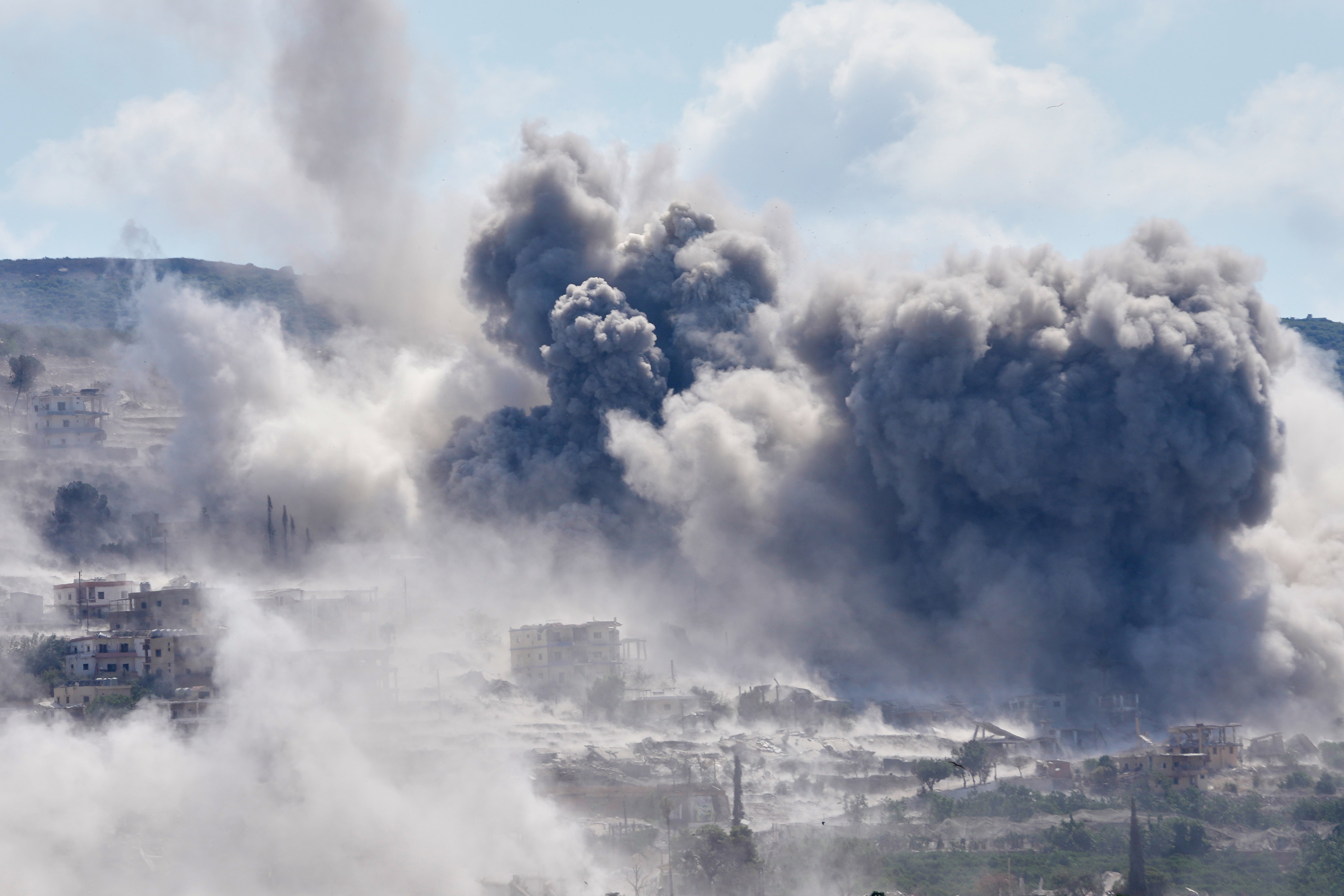 Smoke billow from an Israeli-controlled detonation in the village of Mansouri, as is seen from Hanniyeh village, southern Lebanon, Friday, 11 September 2026 (AP)
Active fighting between Israel and the Iran-backed Lebanese militant group Hezbollah has simmered down since they entered into a truce in June, but the Israeli military now occupies large swaths of southern Lebanon, where it regularly carries out controlled demolitions.
Massive clouds of smoke and dust rise periodically from Mansouri, as the men watching debate which neighbour’s house has been destroyed this time and look for signs of their own.
Early Friday, the Israeli military detonated the village’s public school, Lebanese state media reported.
The Israeli military did not immediately issue a statement on the demolitions.
Namita Singh12 September 2026 06:24
US limits air defence time slots for tankers sailing through Hormuz, FT reports
The US has asked tankers travelling through the Strait of Hormuz to sail only at specific times to guarantee military protection after Iran stepped up attacks on ships travelling at night, the Financial Times reported on Saturday.
Washington has been offering air-based defence since May to ships wanting to sail via a route hugging the Omani coast on the strait’s southern side.
That period during which ships would be protected was cut down to two specific time slots daily around the start of September, the FT reported, citing emails sent by the US naval co-ordination centre to maritime advisers.
Namita Singh12 September 2026 06:11
Why has Saudi Arabia not retaliated against attacks on pipeline
Saudi Arabia has opted against retaliation after the attack on its oil pipeline, so far following a request from the Iraqi prime minister, the Saudi foreign ministry said in a statement, while adding the kingdom reserves the right to “take all measures necessary” to protect its interests.
Iraq’s government condemned attacks. Saudi crude supply fell to the lowest levels in more than three decades, the International Energy Agency said on Friday, partly due to attacks on ships transiting Bab el-Mandeb by Houthi-linked groups.
Iraq responded by ordering the closure of the Shalamcheh border crossing between Iraq and Iran as a precautionary measure, two security sources told Reuters.
The crossing serves as one of the main routes for imports to Iraq of vegetables and other food supplies from Iran. The two sources said a wide-scale operation was under way to find those responsible for the pipeline attack.
Namita Singh12 September 2026 04:41
Days after attack on Saudi pipeline, source of strike unclear
The East-West pipeline was hit on Thursday morning in Saudi Arabia’s Riyadh and Medina regions, the Saudi energy ministry said.
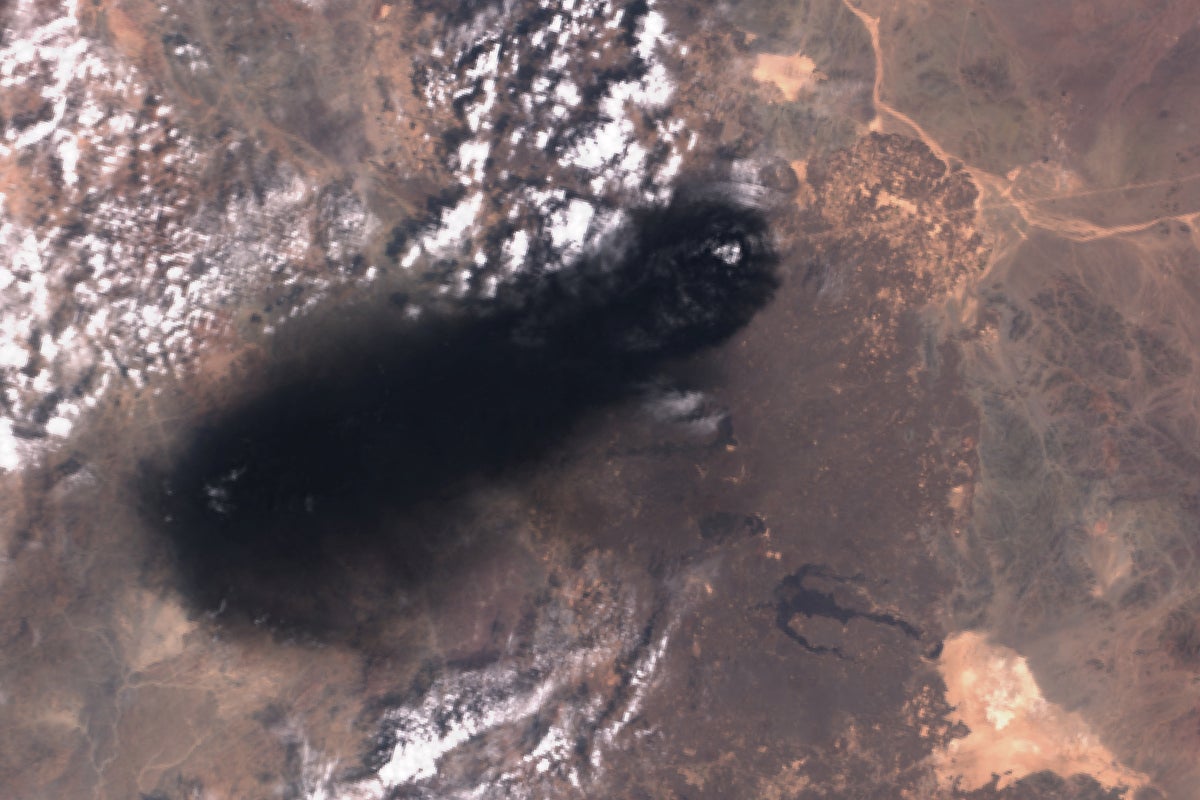
It was not immediately clear who was responsible for the strikes. Satellite images showed black smoke rising from an area of the pipeline south of Medina.
 A satellite image shows black smoke rising from an area of Saudi Arabia’s East-West oil pipeline south of Medina, Hejaz Region, Saudi Arabia 10 September 2026 (Copernicus/Reuters)
The attack resulted in some injuries and damage that was being assessed, the Saudi foreign ministry said without detailing the impact on exports. The cashiered Iraqi military commander had led operations in Maysan province, according to Saturday’s statement by the Iraqi prime minister’s office.
Maysan province, which borders Iran in southeastern Iraq, has long been regarded as an area where Iran-backed Shi’ite militias operate and maintain influence.
Namita Singh12 September 2026 04:12
Oil pipeline shut as a precautionary measure
The Saudi energy ministry said it had shut the pipeline as a precaution.
The line has been moving 4 million to 5 million barrels per day in recent months, amounting to four per cent to five per cent of global supply, according to ship tracking companies and analysts.
The attack comes as Iran-aligned Houthi rebels in Yemen tightened their grip in the Red Sea, which combined with the Strait of Hormuz disruptions has put an energy squeeze on both sides of the Arabian Peninsula and sent global oil prices back above $100 per barrel.
Four Yemeni government sources told Reuters that Houthis had seized the strategic island of Perim on Friday at the mouth of the Red Sea, in the Bab el-Mandeb Strait. The dual attacks reported on Friday – on the pipeline and Perim island – could represent a dangerous escalation while diplomatic efforts to end the war have stalled.
Saudi Arabia has asked Washington for military help with the Houthis, sources said, at a time when higher fuel prices during the war have already exacted a political toll on US president Donald Trump and his Republican Party ahead of November congressional elections.
Namita Singh12 September 2026 04:09
Saudis shut down oil pipeline as Houthis tighten grip on Red Sea shipping
Saudi Arabia has shut down its East-West pipeline after the vital oil conduit came under aerial attack in the widening Middle East war.
The world’s largest crude oil exporter temporarily closed the pipeline after a drone attack that both Baghdad and Riyadh said had originated in Iraq, where Iranian-backed militias operate. Iraq dismissed a military commander on Saturday in response to the attack.
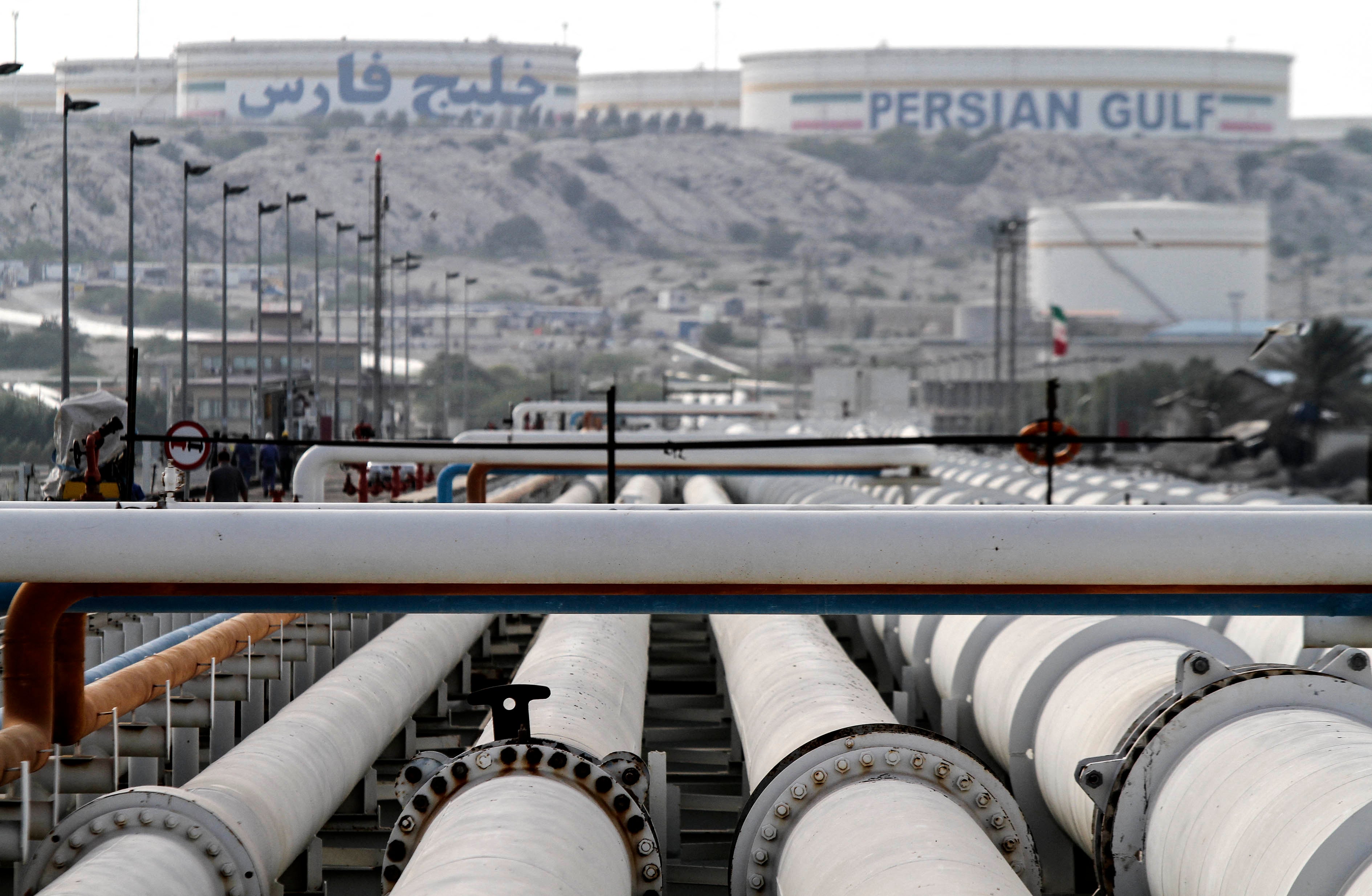 A picture shows export oil pipelines at an oil facility in the Khark Island, on the shore of the Gulf, on 23 February 2016 (AFP/Getty)
The 1,200km pipeline running across the Arabian Peninsula had helped Saudi Arabia to bypass a shipping logjam in the Strait of Hormuz, where tanker traffic has slowed to a trickle due to the war between the US and Iran.
Namita Singh12 September 2026 04:06