
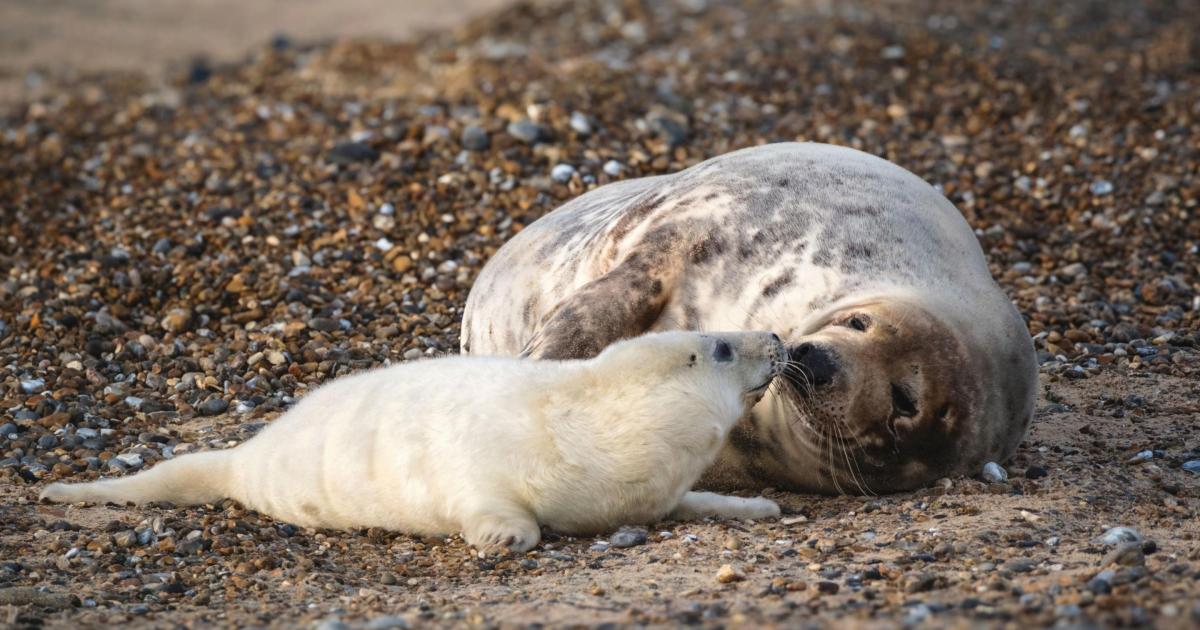
From vast breeding colonies to quieter stretches of sand where the animals can often be seen basking on the shore, these beaches offer some of the county’s most memorable wildlife experiences.
But remember to keep your distance and do not disturb the seals.
1. Horsey Gap
Horsey is one of the best places in the UK to see seals (Image: James Bass)
Horsey Gap is arguably Norfolk’s most famous seal-watching destination.
The beach becomes a hotspot for grey seals in autumn, with numbers increasing ahead of the winter pupping season.
Visitors can often see the animals hauled out on the sand or bobbing in the surf just offshore.
In recent years, thousands of seal pups have been born at Horsey, making it one of England’s most important grey seal breeding sites.
2. Winterton-on-Sea
Seals at Winterton (Image: Denise Bradley)
Just south of Horsey, Winterton offers another excellent chance to spot seals.
The beach and dunes are often quieter than neighbouring Horsey, but the same seal population can frequently be seen along this stretch of coast.
A walk along the shoreline can reward visitors with views of seals resting on the sand or swimming close to shore.
3. Blakeney Point
Blakeney point is home to the biggest colony of seals in England (Image: The National Trust)
Blakeney Point is home to one of the largest seal colonies in England.
While the seals themselves are typically viewed via boat trips from nearby Morston Quay, the area remains one of the most reliable places in Norfolk to see both grey and common seals.
Autumn is a particularly good time as grey seals begin gathering ahead of the breeding season.
4. Waxham
A large seal pup was trapped between rocks at Waxham (Image: Friends of Horsey Seals)
Situated between Horsey and Happisburgh, Waxham Beach is often overlooked by visitors.
Its quieter sands make it a popular spot for those hoping to avoid the crowds while still enjoying a strong chance of seeing seals.
The beach sits close to the wider seal colonies found along Norfolk’s east coast and sightings are common throughout autumn.
5. Hunstanton
Opal the seal found at Hunstanton (Image: SEA LIFE Hunstanton)
Hunstanton may be better known for its striped cliffs and sunsets, but it is also a good location for seal spotting.
Seals are regularly seen on sandbanks in The Wash and can often be viewed on wildlife boat trips departing from the resort.
The area supports both grey and common seals, offering visitors in the area a chance to see the animals without travelling across the county.