
A revelation on the beach at Le Havre. I am here to see how this 16th-century port became a haven of modern art. All I really know is the elementary fact that this is where Monet painted Impression, Sunrise in a hotel room overlooking the harbour. When his burning orange disc, reflected in the dawn waters, was exhibited in Paris in 1874, one bullfrog critic coined the term Impressionism to deride the “unfinished” paintings in the show. Thus, a movement in modern art was born and named after a picture made in Le Havre.
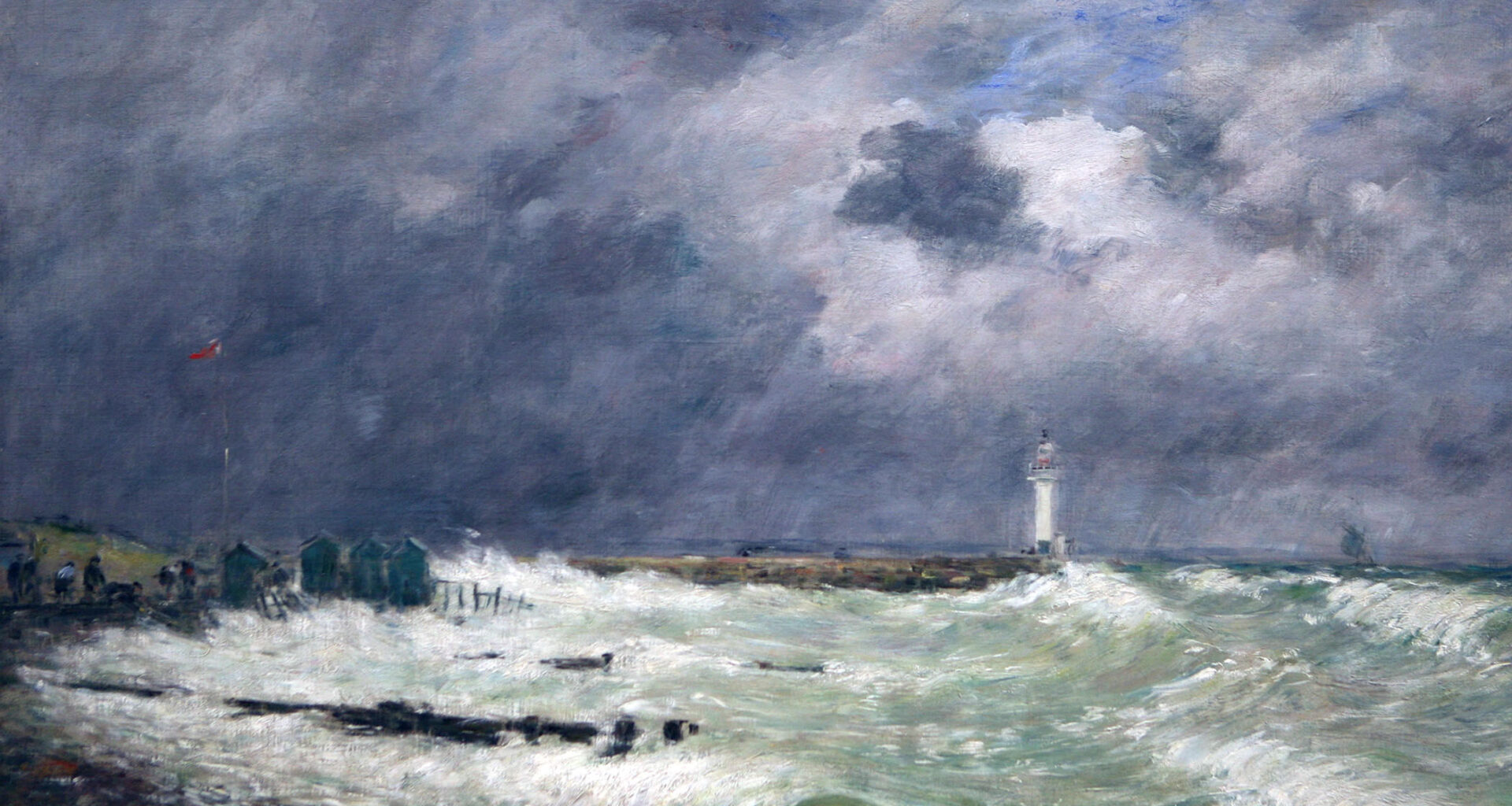
This is Monet’s hometown, where he was raised in comparative comfort. So perhaps I should not have been startled to see reproductions of his paintings mounted on panels along the sea front. His whipped waves roll straight towards you like the real waves of the Channel behind them. His calligraphic masts and cranes, dissolving in hazy blue light, appear directly before the actual harbour. Each is positioned in front of the view that it shows. I come upon the very stretch of beach that appears in one painting, the tide turning over the pebbles in the foreground beneath a stormy sky of flurried brushstrokes – except that this picture is not by Monet.
A double take: the artist is someone else altogether. Namely Eugène Boudin (1824-98), son of a local ferry master and 16 years older than Monet. He was painting these fleeting impressions of the coast in ever-changing light long before his young protege. Yet Monet’s early seascapes so exactly resemble those of Boudin that it is hard to find the right term for this homage: apprenticeship or active imitation?
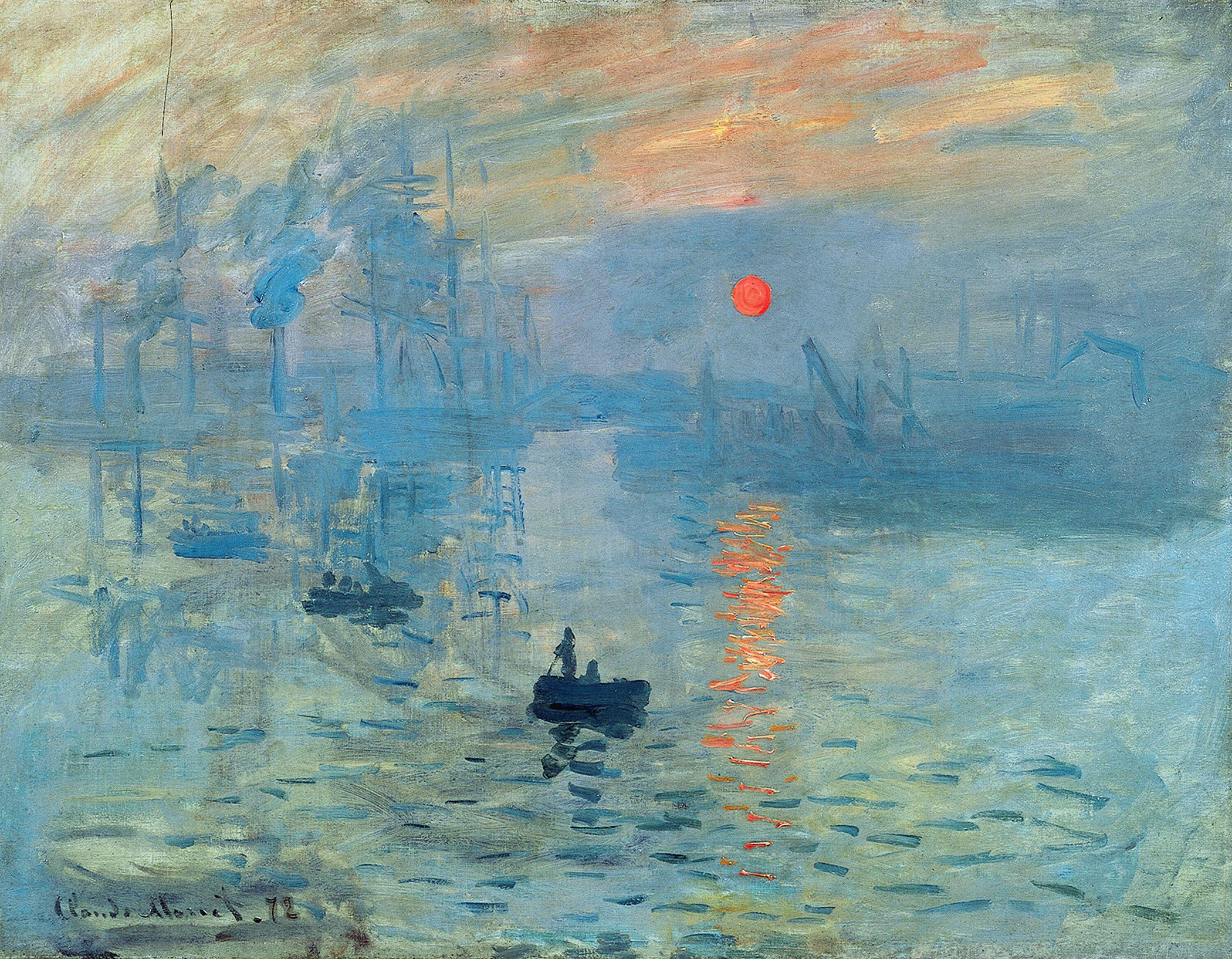
Monet’s Impression, Sunrise (1872)
Boudin, crowned King of the Skies by his near contemporary Camille Corot, is everywhere in Le Havre. You see him here in these panels and in the coastline itself. His paintings have their own beautiful Boudin Wall at Le Havre’s modern art museum, MuMa. There is even a dedicated Boudin museum in his birthplace of nearby Honfleur. And it was here that a painting of the local belltower, pointing up to a brilliant blue imperium of scattered strokes, always attributed to Monet and certainly bearing his backward-leaning signature, was revealed to be a Boudin in the 21st century.
Boudin, it turns out, had given the painting to Monet, who kept it at Giverny. After Monet’s death in 1926, his son came across the picture, assumed it was by his father and added the signature. He later gave the picture to the Boudin Museum in memory of the friendship. But the picture is painted on wood, which Monet rarely used, and very closely resembles another painting by Boudin. Even his own son could not tell the difference.
Monet was 15 when he first encountered Boudin working at his easel on Le Havre beach. Or he was 18 – versions vary – when he ran into Boudin at a frame shop that sold the former’s cartoons (callow) and the latter’s seascapes (tremendously original). Monet – the story goes – did not care for this loose and impressionistic style but was persuaded to go down to the shore to work en plein air with the man who would become his friend and mentor.
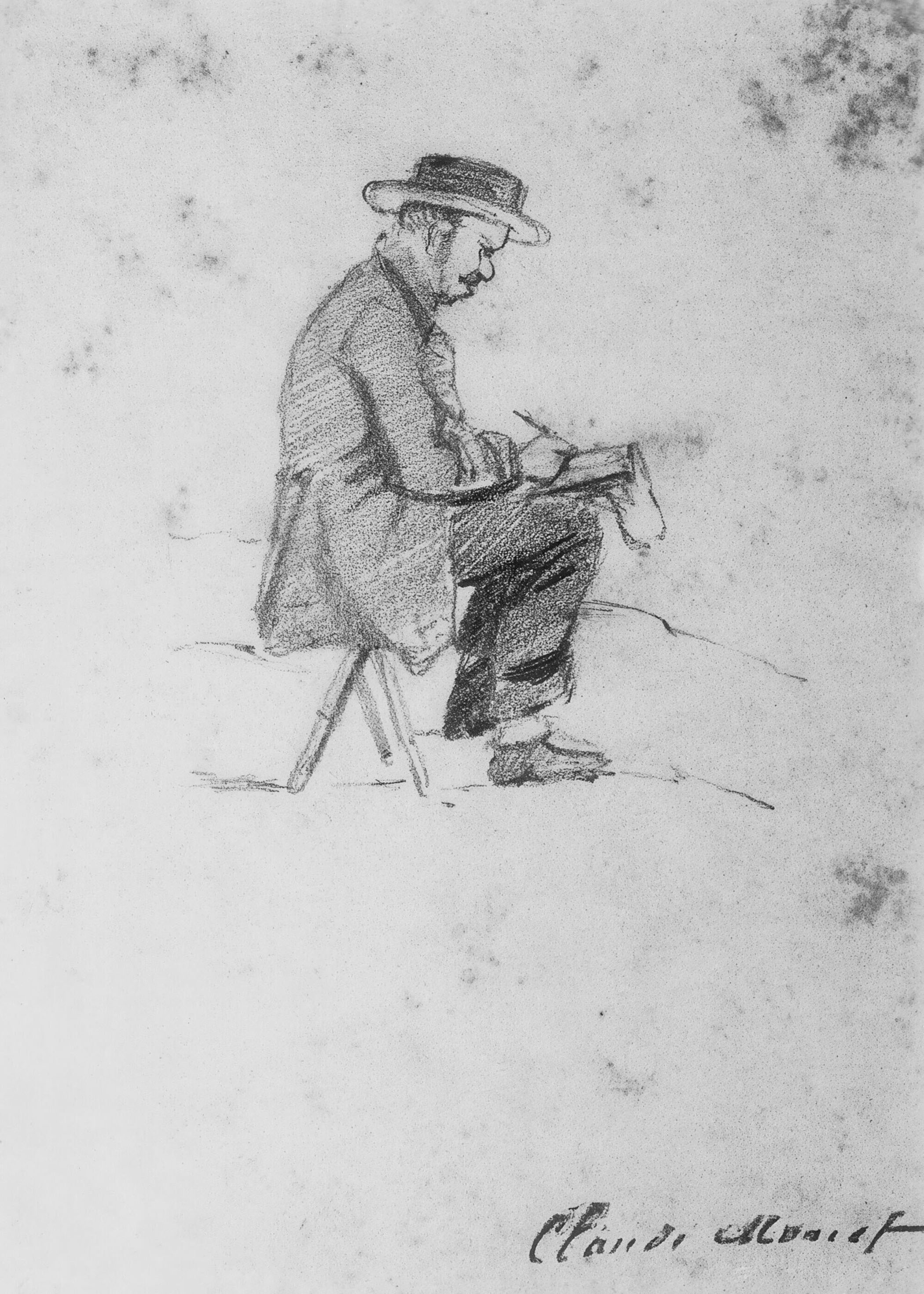
A sketch by Monet believed to show Boudin at work in Le Havre
An exhibition at MuMa tells the story of Monet in Le Havre. At first reluctant, he soon grew fascinated by the rapidly changing light of what is known as the port’s four-season weather. The sea is turbulent, the sky glows, Monet makes rapid oil studies and even a quick drawing of Boudin hunched over his own sketchbook on the beach. And you see what Boudin was making in turn, for this show includes some of his beautiful pastels of the sun going down over the sea, the heavens irradiated by the last rays. It ends with two of the paintings Monet gave to the people of Le Havre: his late waterlilies, bright as fireflies in the darkening dusk and the Houses of Parliament as a ghostly apparition, softened by smoky fog and dusk.
Upstairs, at the museum, there is a permanent Boudin collection. Breathtaking impressions of the sun rising or descending over a sea suffused with light; of wind ruffling the spray along the beach; of the tide disappearing. The paintings are small, darting, spectacular. And several of these Boudins will soon be on their way to Britain, along with paintings by Monet, Pissarro, Sisley and more, on loan from Le Havre to Impressions of Light, an exhibition opening at the Bowes Museum in Country Durham in late September.
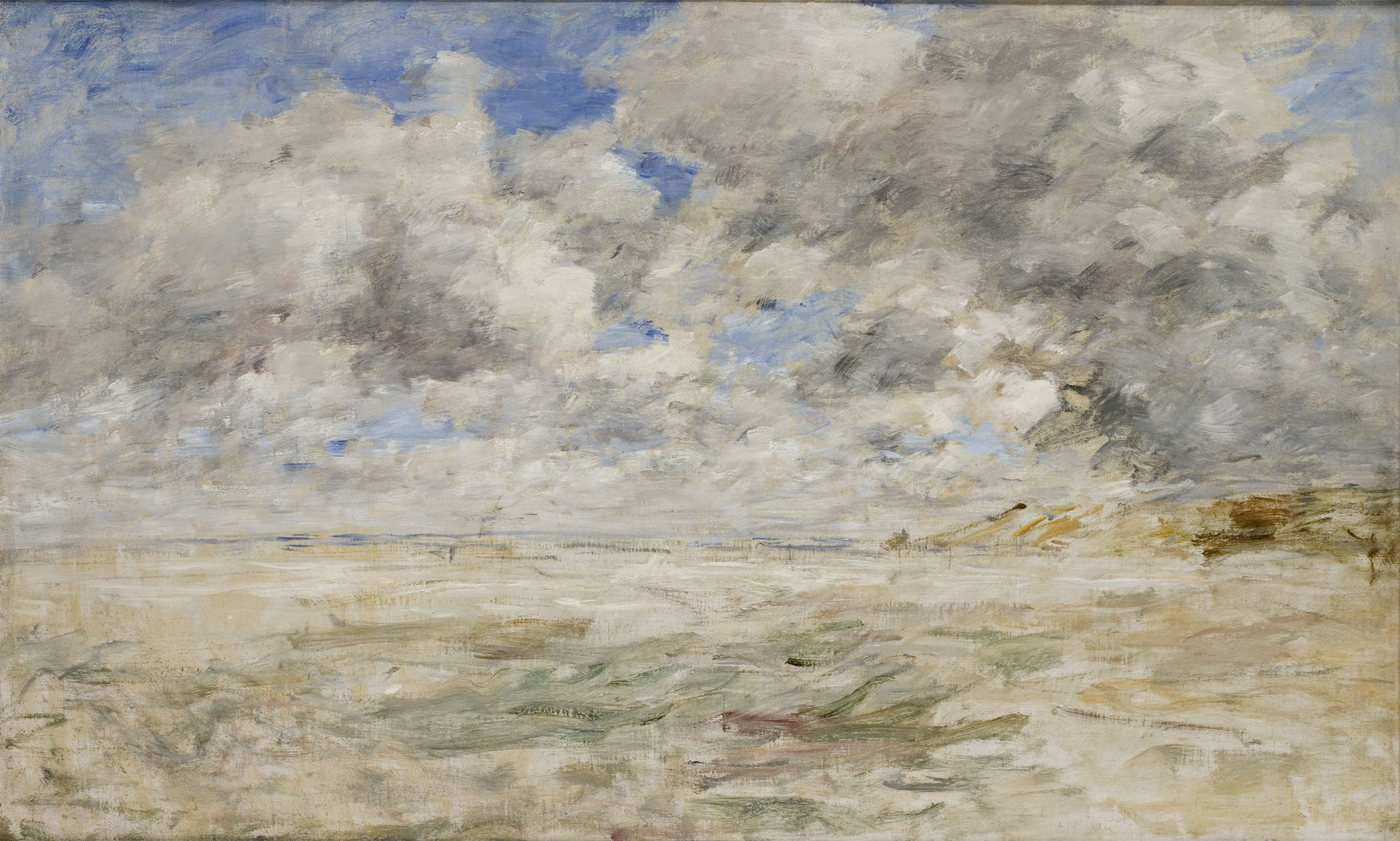
A Boudin painting from a beach in Trouville-sur-Mer
John and Joséphine Bowes often came through Le Havre on business, staying at the grand hotels and buying paintings, including several Boudins. A mine owner and Liberal MP, who barely said a word in the House in 15 years, Bowes fell in love with his actress wife when he saw her perform in Paris. The museum he built for her in Barnard Castle is inspired by Le Havre’s town hall, with all its massive rectitude. But the “Wallace Collection of the north”, as the Bowes is known, is still standing in all its formidable grandeur, whereas the French town hall was blown to bits.
The bombing of Le Havre took place in September 1944, three months after the Normandy Landings. Hitler’s coastal “fortress” was occupied by 12,000 German troops, instructed never to surrender. The British army had intelligence on every backstreet, carefully relayed to the RAF. The Storm of Iron and Fire, as it was known, was so devastating that almost nothing of the city centre survived.
Sign up to newsletters from The Observer
Clear, calm analysis on the stories driving the day’s news.
For information about how The Observer protects your data, read our Privacy Policy
Thousands of French citizens died in the bombing, while the Germans were mainly taken prisoner. British servicemen who refused to participate in what they regarded as a war crime, such as the playwright William Douglas-Home, were court martialled and jailed. The allies needed the port, so the harbour was preserved. But the rest of Le Havre was rubble.
Out of the ashes rose a 20th-century city so inventive it was designated a Unesco World Heritage Site in 2005. Designed by French architect Auguste Perret, the centre of Le Havre is town planning at its most democratic. Buildings of beautiful concrete – if those two words can be united – polished, brushed, tinted or ribbed, are all based on the same 6.2 metre scale. With its slow-moving cars and sweetly level roads, it feels like the model city. The proportions are perfectly human. Shops still sell crab from the dawn catch, ripe peaches, local Neufchâtel cheese. Bakeries specialise in their own pâtisseries. There are no big chains or supermarkets in the centre.
Le Havre remains a magnet for other architects, who come to study Perret’s low-rise apartments but also the huge white rotunda of a building known as Le Volcan, designed by the Brazilian star Oscar Niemeyer, as well as Jean Nouvel’s gorgeous aquatic complex by the sea, inspired by Roman baths.
Gulls and dozing Normans, white apartment blocks shuttered against the noon light: there is no seaside tawdriness in the immaculate flatness. The water is translucent green beneath mackerel skies. Wooden boards run over the pebbles to its edge for canoeists, surfers and all-season swimmers. Dainty cafes run along the boardwalk. You can stride for miles, taking in the briny air.
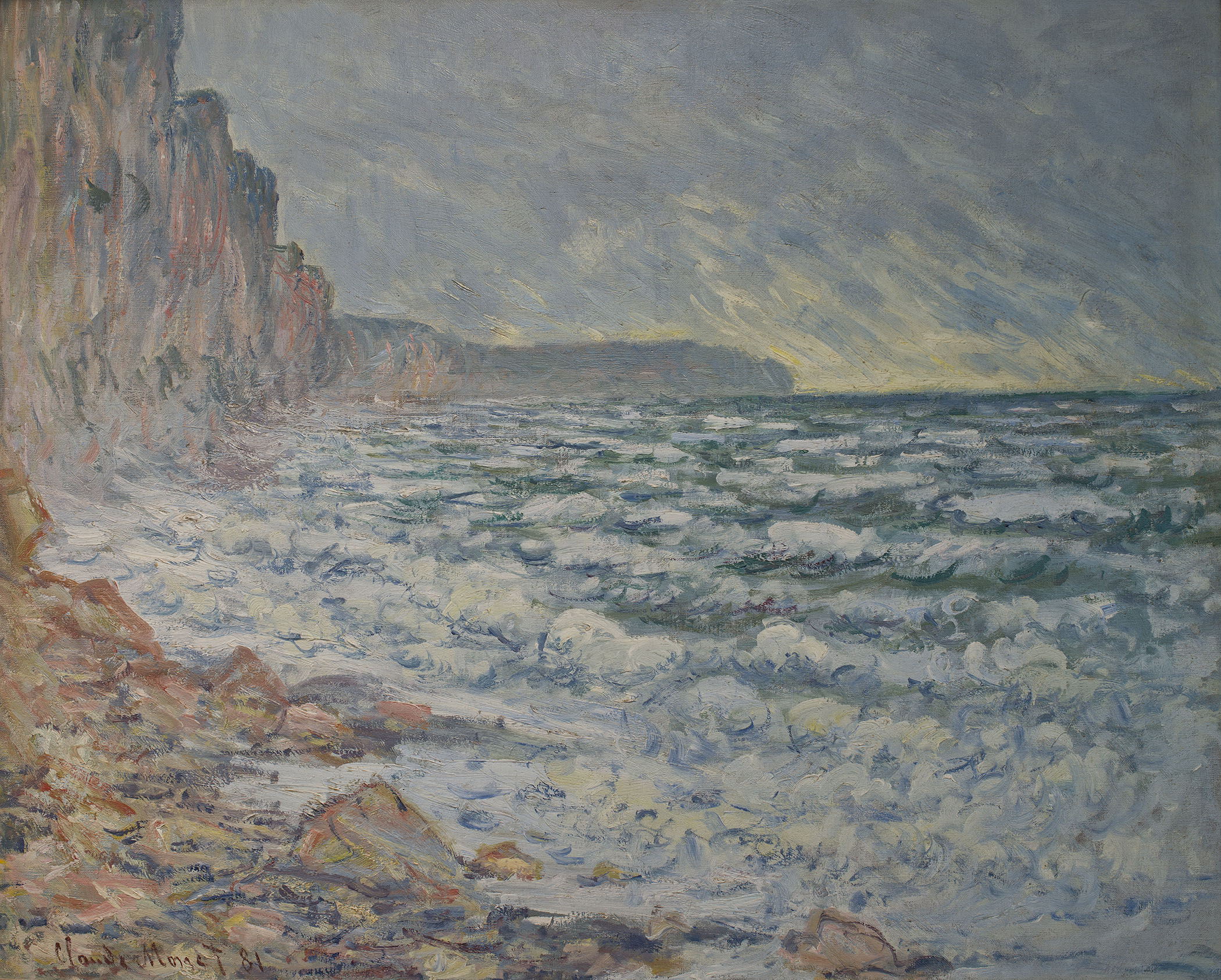
Monet’s Fécamp, Seaside, an oil painting from 1881
At one end of the sea front is MuMa, opened in 1961 by the French novelist and culture minister André Malraux. Outside its shining glass facade, Henri-George Adam’s colossal (concrete) sculpture points like a prow, a figurehead and an anchor all in one. You can see the harbour in Monet’s Impression, Sunrise from the windows of the cafe upstairs. Winding up hardwood ramps through the museum are coastal paintings by Corot, Matisse and Braque. Sisley clifftops will appear in the Bowes show. So will Raoul Dufy’s aerial view of the beach: patches of golden shore, a purple boat on a cobalt sea beneath wild turquoise skies. “Le Havre made me,” the artist once said.
Yet the port remains off the beaten track for some. It is supposedly too far from Paris (two hours by train) and too remote from England (almost seven hours by ferry). My taxi driver apologised for La Morgue, as he called it, wondering why I wasn’t going to livelier Trouville or Honfleur. But isolation is its charm, shifting seas its splendour, for artists as much as outsiders. This is where the early photographer Gustave Le Grey took some of his stupendous gold-tinted photographs of waves in the 1850s, long before the split-second exposure. It is where Zola set La Bête humaine, with its ratcheting tensions in the railway station where trains depart for Paris by night, blood-red lights disappearing like animal eyes into the darkness. It is where Courbet painted dark roiling waves. One of his seascapes is in the collection at MuMa. It, too, will appear in the Bowes show.
Sartre taught at the high school here and hated it, turning Le Havre into the fictional backwater of Bouville in La Nausée. His protagonist, Roquentin, is stricken by existential dread as he stares at the roots of a chestnut tree in a central park, realising that they have no meaning or raison d’etre. Simone de Beauvoir, teaching in nearby Rouen, thought Sartre was lucky to live in such a cosmopolitan port compared to her own city of bourgeois zombies.
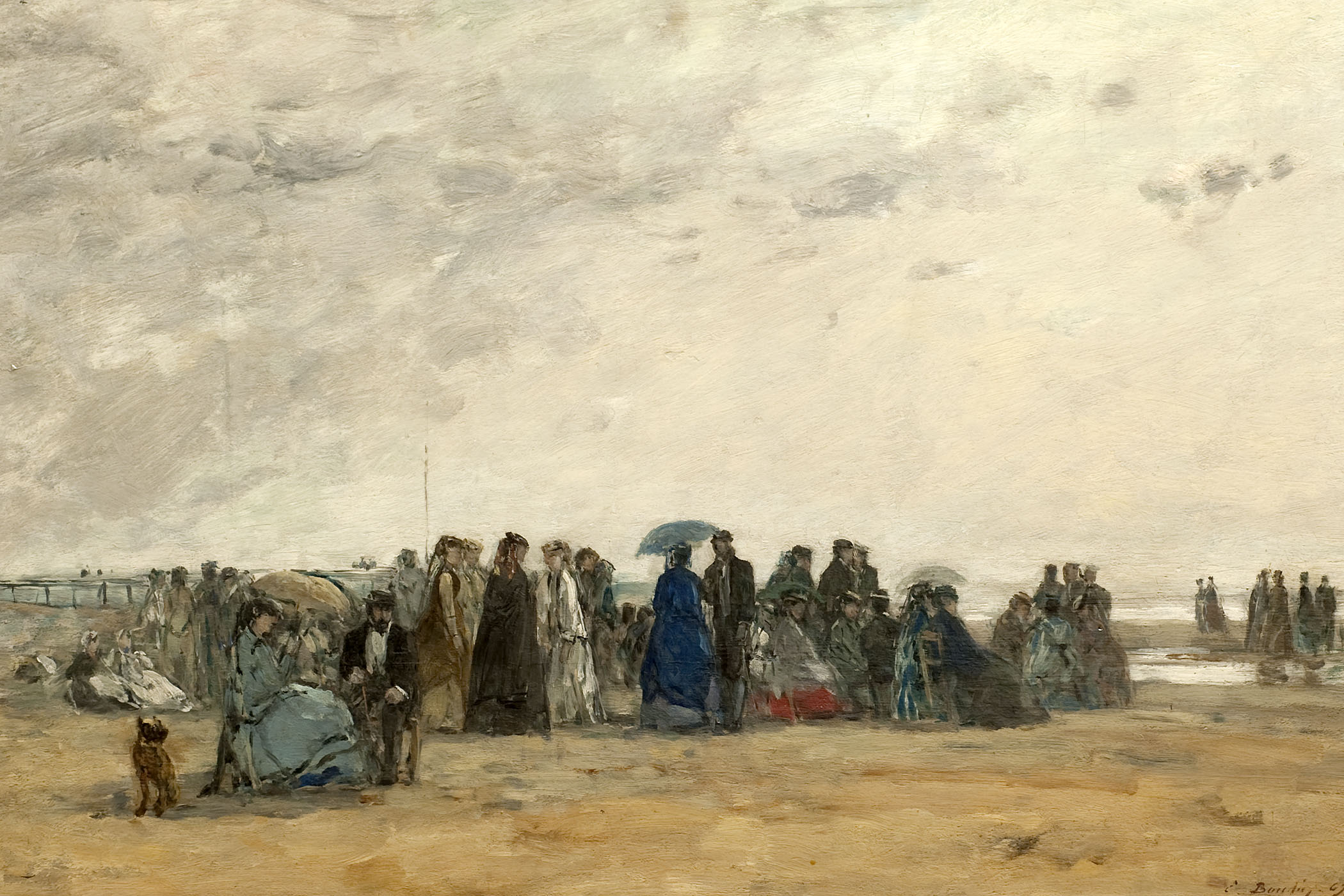
Boudin’s Beach Scene at Low Tide (1867)
Sartre’s tree is gone, but a cheery bench commemorates the old miserabilist as if he hadn’t a bad word to say about the place. The real heroes of Le Havre – Boudin, Monet, Pissarro, Sisley and all – are commemorated in street names. Rue Eugène Boudin may not be quite as central as it should be, but at least it runs, poetically, from Rue Pablo Neruda to Avenue Paul Verlaine.
Monet never ceased to admire and support his first mentor. A new volume of his letters, exquisitely illustrated, includes several excitable accounts of the art scene that Monet sent to Boudin and the two painters exhibited together more than once – by the beach of Le Havre itself, in 1868, and later at the first Impressionist show in Paris. But what the Bowes exhibition will show, with its loans from Le Havre, is a reversal, in which it is the working-class ferry master’s son who becomes the forefather of this movement in art.
Art can take you anywhere; but sometimes you must go and see where it was made. That Monet eventually went his own way is self-evident, yet the debt to Boudin becomes equally clear in Le Havre. The framer’s shop where they may have met – like the town hall, like the streets of old houses – is long gone. But the forests of masts, the fluttering flags and vessels, the pebbled shore and the changeless green waves beneath evanescent skies: everything they painted is all still there – visible, in the bright sea air.
Claude Monet: A Life in Letters, is published by Thames & Hudson on 8 October
Photograhs by Alamy, The Bowes Museum, MuMa – Musée d’Art moderne André Malraux, Le Havre