
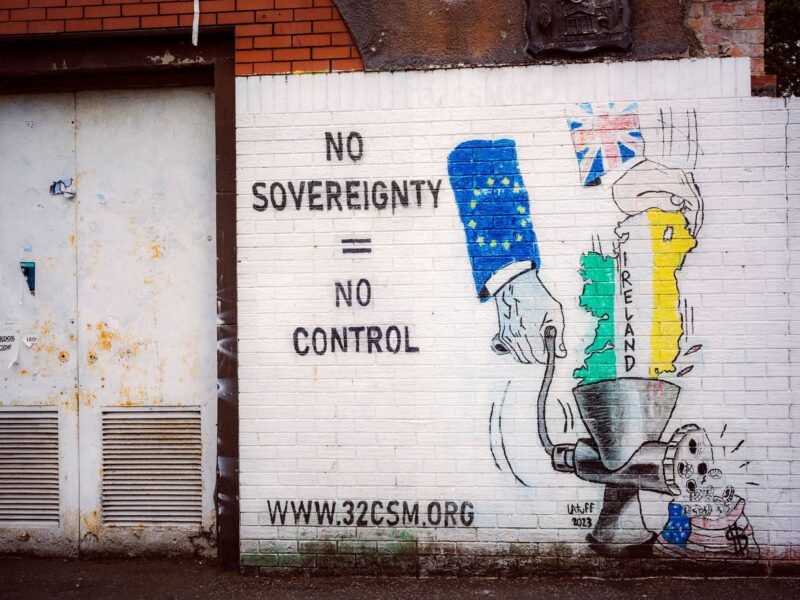
MANCHESTER, England (CN) — Leaders of Scotland, Wales and Northern Ireland signed an agreement Monday calling for the British government to prepare for constitutional change, after U.S. President Donald Trump voiced support for a united Ireland.
Scottish First Minister John Swinney, Welsh First Minister Rhun ap Iorwerth and Northern Ireland First Minister Michelle O’Neill signed the memorandum of understanding in Cardiff, Wales, pledging closer cooperation between the Scottish National Party, Plaid Cymru and Sinn Féin.
The left-wing parties said their nations have a right to self-determination and called on the British government to “prepare for, plan and facilitate constitutional change in each jurisdiction.”
The devolved nations have their own elected governments and legislatures but remain part of the United Kingdom, whose central government and Parliament are based in Westminster, London.
The agreement marks the first time Scotland, Wales and Northern Ireland have simultaneously been led by governments committed to independence.
The three parties said they believe “Westminster’s time is coming to an end” and called for greater cooperation on the economy, energy and relations with the European Union.
They also said no British government should have the right to block a democratic decision by any of the nations.
“We believe there is a better way: Nations working together as equals,” the leaders said in the declaration.
The leaders acknowledged their constitutional goals and timelines differ but said they would work together as momentum for change grows.
The meeting came days after Trump broke with the traditional U.S. approach of avoiding a position on Northern Ireland’s constitutional future.
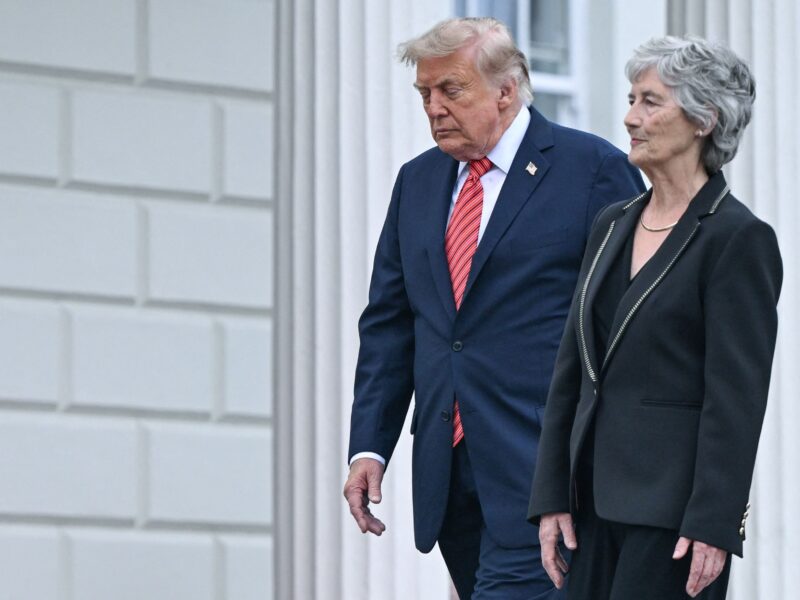 U.S. President Donald Trump walks during the official welcoming reception ceremonies alongside Irish President Catherine Connolly inside Aras an Uachtarain on Sept. 12, 2026, in Dublin, Ireland. (Artur Widak / NurPhoto via AFP)
During a visit to Ireland on Saturday, Trump said he “would love to see” Ireland unified and added: “It’s going to happen eventually.”
He repeated his support Sunday while speaking to reporters in County Clare, saying having Northern Ireland and the Republic of Ireland unite seemed to him to be “one of the naturals of all time.”
“Many people agree. I made what I considered to be a fairly routine comment, I have had so much support on that,” Trump said.
When asked about Scottish independence, Trump said he would “say nothing” and “save that for another day.”
The comments drew criticism from Northern Ireland’s pro-British unionist parties.
Right-wing Democratic Unionist Party leader Gavin Robinson said Northern Ireland’s constitutional future would be decided by its people rather than “commentary in London, Dublin or Washington.”
Donnacha Ó Beacháin, a professor of politics at Dublin City University, said Trump had broken with a longstanding U.S. tradition of avoiding a preference on Ireland’s constitutional future.
“We could be seeing in slow motion the breakup of the United Kingdom,” Ó Beacháin said, adding that Brexit had strengthened independence and reunification debates in Scotland and Northern Ireland.
The 2016 Brexit referendum removed the U.K. from the EU even though about 62% of voters in Scotland and 52% in Northern Ireland voted to remain.
Ó Beacháin said Brexit had made closer ties with the EU an important factor for nationalist movements, because independence could provide a route back into the bloc.
“Before Brexit, nobody was really talking about a united Ireland,” he said.
Scotland held an independence referendum in 2014, when voters rejected leaving the U.K. by 55% to 45%.
The British government has rejected calls for another vote.
Northern Ireland has a separate mechanism under the 1998 Good Friday Agreement, which allows the British secretary of state for Northern Ireland to call a referendum on Irish unity when it appears likely a majority would support it.
Prime Minister Andy Burnham’s government rejected Monday’s pact, saying the government was focused on easing pressure on household finances rather than constitutional debates.
“The United Kingdom is at its best when people come together around our shared values and problem-solving, rather than division,” the prime minister’s official spokesperson said. “The prime minister is committed to delivering change across all four nations of the United Kingdom and believes strongly in the Union.”
Swinney, meanwhile, has said he wants Scotland to hold another independence referendum within the next five years.
The three leaders are due to meet with Burnham in October for a wider summit on the future of the U.K.
Courthouse News reporter James Francis Whitehead is based in England.

Follow @jayfranklinliveSubscribe to our free newsletters
Our weekly newsletter Closing Arguments offers the latest about ongoing
trials, major litigation and rulings in courthouses around the U.S. and the world,
while the monthly Under the Lights dishes the legal dirt from Hollywood,
sports, Big Tech and the arts.