
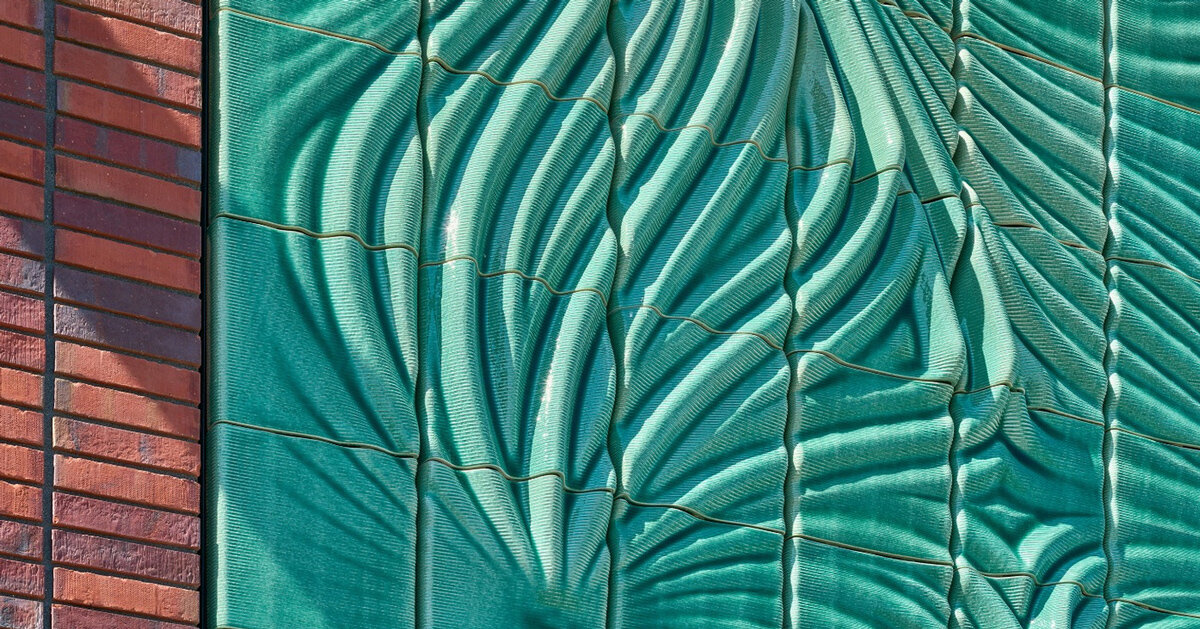
3d printed ceramic wall adorns electrical substation facade
Powerwall by Studio RAP forms a 40-sqm ceramic 3D printed artwork within the facade of a new 150 kV switchstation in Beverwijk, the Netherlands. Designed by Powerhouse Company for energy infrastructure operator TenneT, the building responds to the redevelopment of the area around the Bazaar, where technical infrastructure and large-scale commerce are giving way to a neighbourhood with housing, workspaces, public space, and a renewed connection to the waterfront. The switchstation is conceived as part of this changing urban context, combining its technical requirements with an architectural treatment that addresses its scale and presence along the street. Powerwall is integrated into the brick facade as a large-scale relief inspired by the invisible electromagnetic fields generated by the electrical equipment inside the building.
The switchstation is organised into two complementary volumes. A taller brick volume contains the primary electrical installation, while a lower metal volume accommodates secondary functions. Deep brick piers introduce rhythm and depth to the main facade, while sculptural metal lamellas wrap around the lower volume and visually connect the two parts. Their gently undulating profiles create changing patterns of shadow across the facade. Together with the 3D printed ceramic artwork, these elements give the infrastructure a more layered architectural presence within the developing neighborhood.
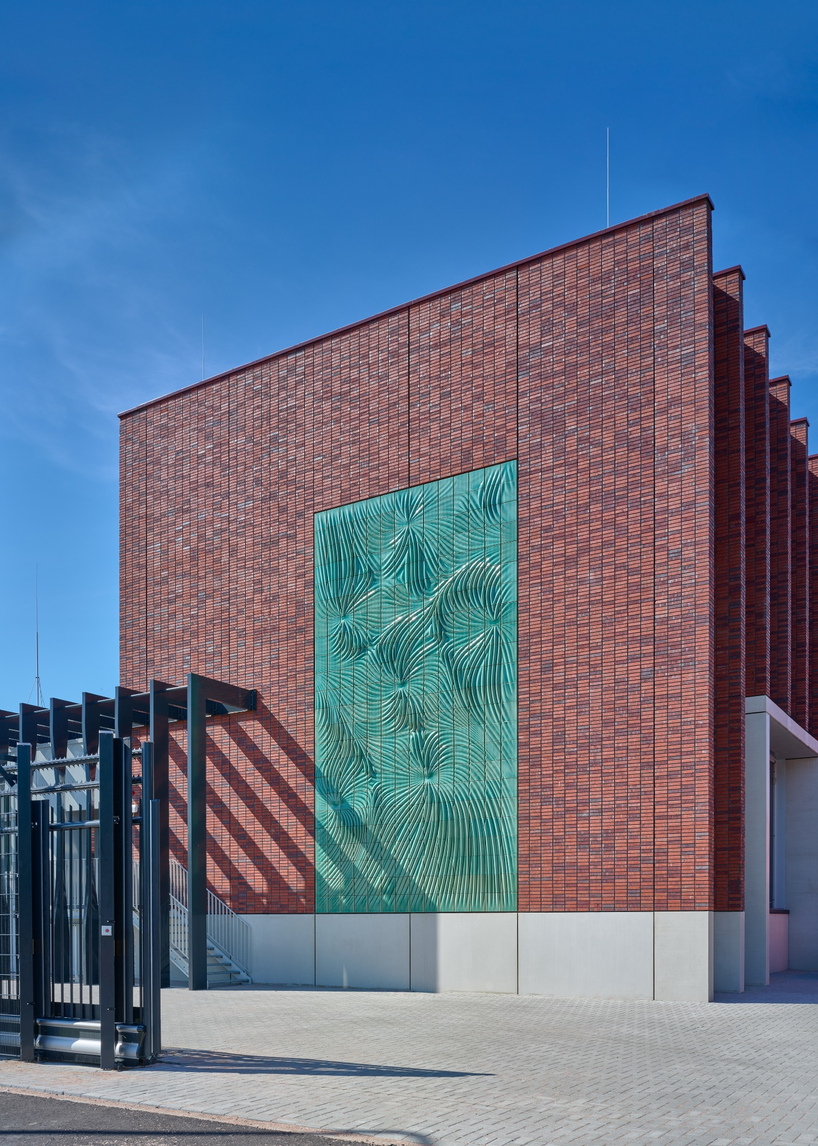
all images by Studio Pim Top
322 tiles translate electromagnetic fields into ceramic relief
Powerwall translates the movement of electromagnetic fields into a continuous ceramic landscape of lines, folds, and changing depths. Using computational design, design practice Studio RAP developed 322 unique 3D printed ceramic tiles that combine to form an 8-by-5-meter relief. Each tile was produced in Studio RAP’s Rotterdam workshop using in-house robotic clay printing. The process allows variations in form, texture, and depth across the individual components, which are assembled into a continuous surface on the brick facade. After firing, the tiles were finished with a translucent turquoise glaze. The glaze settles into the grooves and recessed areas of the relief, emphasising its three-dimensional surface. As sunlight moves across the facade, the changing illumination alters the appearance of the ceramic surface, bringing different lines, folds, and depths into view throughout the day. The scale and placement of Powerwall make the artwork visible from a distance, while its variations in texture and relief become more apparent at closer range.
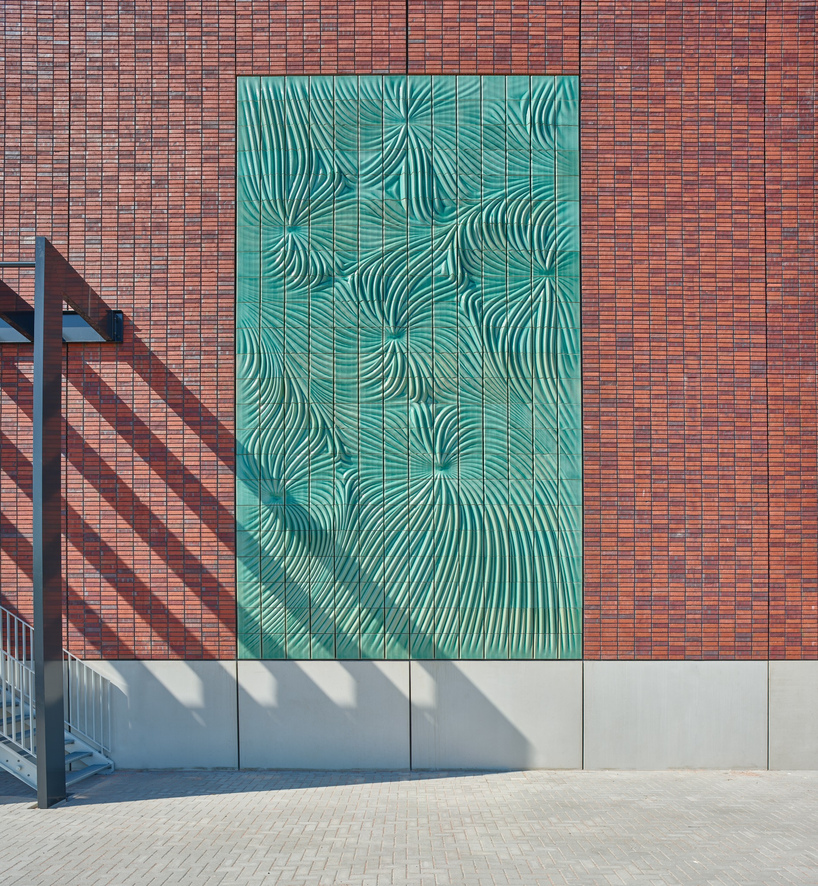
Powerwall forms a 40-sqm ceramic artwork within the switchstation facade
Brick, metal and ceramic shape the switchstation facade
The architectural composition by architectural group Powerhouse Company combines the substantial brick volume with the lighter metal enclosure and the textured ceramic relief. Deep brick piers give the main volume a vertical rhythm, while the metal lamellas introduce a more fluid profile around the lower section. Their undulating surfaces produce shadows that change according to the position of the sun. Powerwall adds another layer to this material composition. Its turquoise ceramic surface contrasts with the brickwork while remaining integrated into the building envelope. The combination of computational design and robotic clay printing allows the artwork to occupy a substantial section of the facade without repeating a single tile. The result places an energy facility within the visual and spatial context of the surrounding neighborhood. As switchstations and transformer stations become increasingly present within urban areas, the project explores how infrastructure can accommodate operational requirements while also responding to its architectural surroundings.
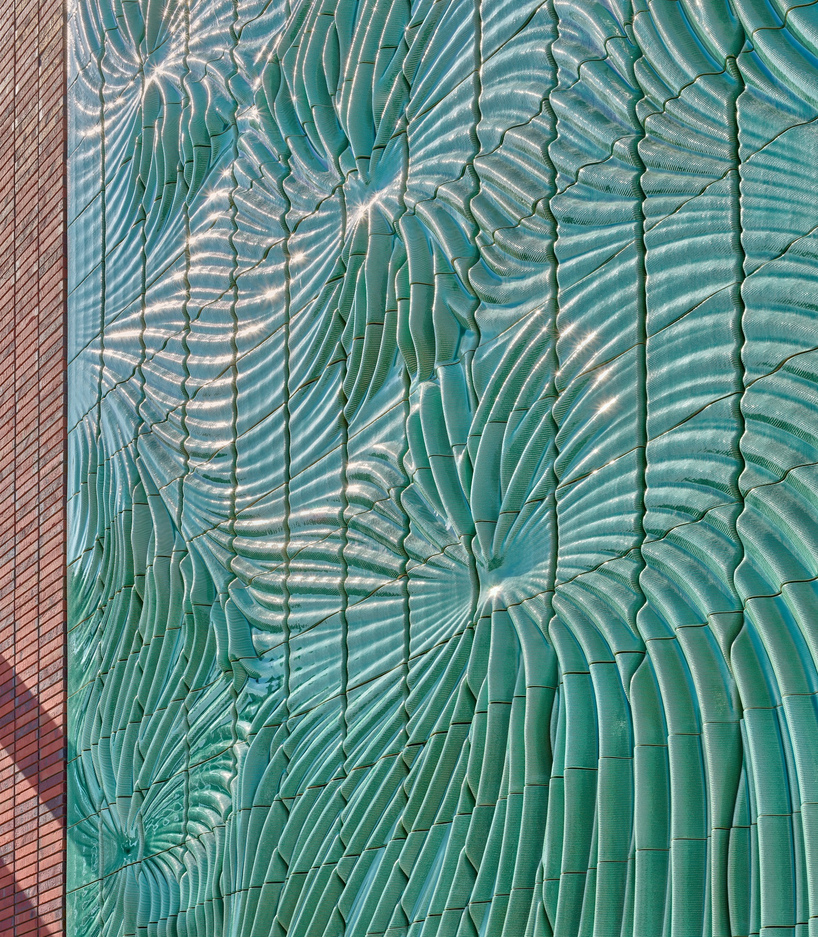
Powerwall is integrated into the brick facade as a continuous relief
digital ceramic fabrication meets energy infrastructure
Powerwall forms part of Studio RAP’s wider approach to digital craftsmanship in architecture. From its Rotterdam workshop, the studio develops ceramic facades, ornaments, and architectural artworks using computational design and in-house robotic 3D clay printing. Powerhouse Company, founded in 2005, is an international architecture practice with studios in Rotterdam, Munich, Oslo, and Nairobi. Its work includes adaptive reuse, residential developments, interiors, private villas, and public buildings. For Switchstation Beverwijk, Powerhouse Company worked with Studio RAP to integrate a digitally fabricated ceramic artwork into an essential piece of energy infrastructure. Completed in 2026, the project combines a functioning switchstation with a facade that responds to the building’s technical purpose through material, geometry, and changing light.