
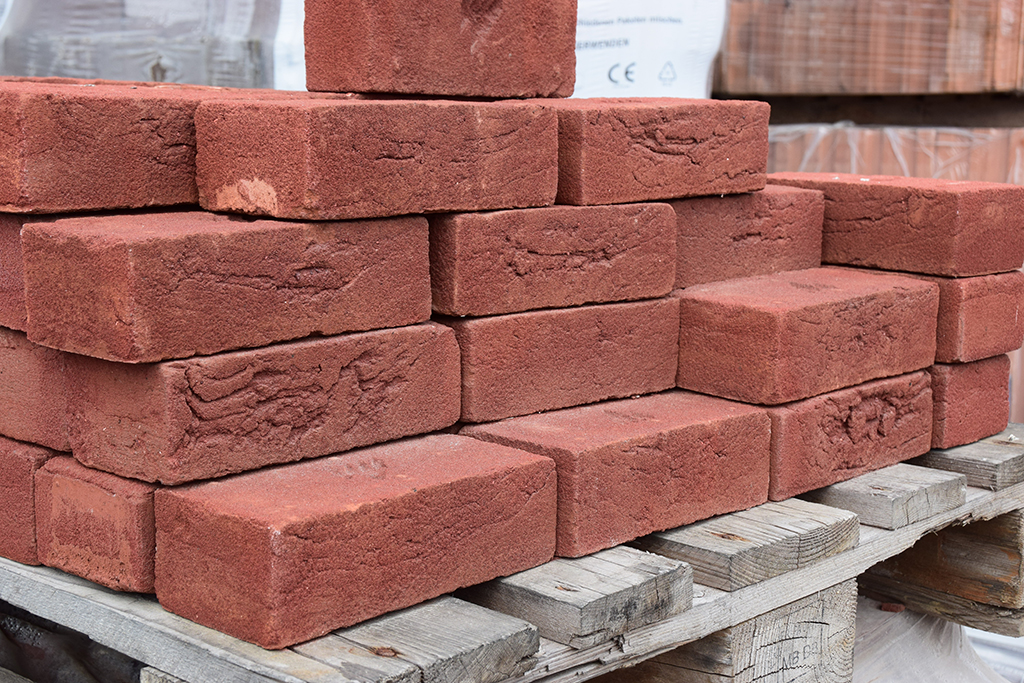
Seasonally adjusted brick deliveries in Great Britain slumped 22.8 per cent year on year in July, according to new government figures.
Deliveries fell to 95.4 million bricks from 123.5 million in July 2025.
They were also 10 per cent lower than in June, extending a decline that saw June’s deliveries fall 17.6 per cent year on year.
Writing on X, Construction Products Association economics director Noble Francis said brick deliveries were a useful proxy for new housebuilding starts and that July’s fall was consistent with weakening housing output as higher mortgage rates began to feed through into activity.
He said: “House builders are still building out existing developments but they are adjusting build-rates to the subdued & slowing level of demand & they are not starting new developements except in a few exceptional cases on selected sites.”
However, he added that year-on-year comparisons arelikely to become less negative later in 2026 because activity in autumn 2025 had been depressed by Budget-related tax speculation.
Today’s figures show otal brick production dropped 16.3 per cent year on year to 110.7 million in July.
However, brick stocks were 541 million at the end of the month, 16.1 per cent higher than a year earlier.
Other materials indicators also pointed to weaker activity.
Seasonally adjusted concrete block deliveries fell 10.8 per cent year on year to 3.98 million square metres in July, although they were down just 0.2 per cent from June.
Seasonally adjusted ready-mixed concrete sales totalled 2.59 million cubic metres in the second quarter, 6.1 per cent below the same period of 2025 but 1.5 per cent higher than in the first quarter.
Seasonally adjusted sand and gravel sales fell 9.2 per cent year on year and 3 per cent quarter on quarter.
The weaker materials indicators came as construction-material prices remained higher than a year earlier.
The all-work materials price index rose 5.9 per cent in the year to July and 0.4 per cent during the month.
Prices for materials used in other new work climbed 7.2 per cent year on year, compared with increases of 5.5 per cent for repair and maintenance and 4.9 per cent for new housing.
Fabricated structural-steel prices recorded the largest annual rise among individual materials, increasing 20.9 per cent.
Rigid pipes and fittings rose 15.5 per cent, while flexible pipes and fittings increased 11.7 per cent.
Cement prices fell 3.5 per cent and electric water-heater prices declined 1.5 per cent.
Concrete roofing tiles provided a contrast to the wider weakness.
Production rose 77.7 per cent year on year to 6.88 million square metres in the second quarter, while deliveries increased 52.1 per cent to 6.13 million square metres.
The increases were against particularly low production and delivery levels in the second quarter of 2025.