
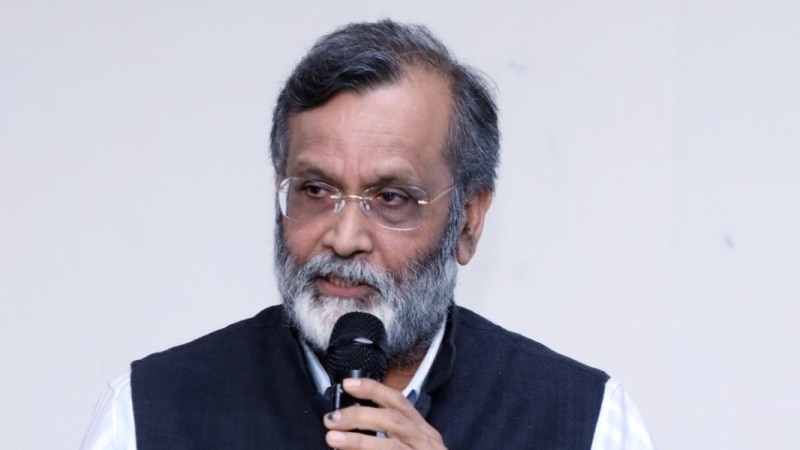
Retired IPS officer and author O P Mishra on Wednesday said many police personnel, including very senior officers, choose to end their lives rather than speak about mental health problems because of the stigma attached to them. Speaking at the launch of his book, Beyond the Uniform: Duty, Discretion and Public Trust: Citizen-Friendly and Responsive Policing, he said the welfare, working conditions and mental health of police personnel are often overlooked while judging the force’s performance.
Chief Justice of India Justice Surya Kant, who released the book, said the physical and emotional well-being of police personnel was central to citizen-friendly policing. Former Delhi police commissioner Neeraj Kumar and political commentator and writer Sanjaya Baru also spoke about the role of police leadership, public-facing conduct and the pressures that add to stress within the service.
Mishra said, “Police is a highly stressful job. It gets a lot of mental health issues for police staff,” and added that, according to a global survey cited in his book, one in seven police officers worldwide suffers from post-traumatic stress disorder or depression, while one in eight struggles with other mental illnesses.
“Policemen are reluctant to share their mental health issues with anybody due to stigma attached to it. Several policemen, including very senior officers, prefer to end their lives rather than disclosing it to their peer groups,” he said. Mishra added that early signs of depression and other mental health problems among police personnel often go unnoticed, and only a few police organisations offer an empathetic space where officers dealing with stress can share their concerns. He said he has suggested an institutional mechanism to address the issue in his book.
Justice Surya Kant said proper training, modern investment in training, resources, responsible resources, better working conditions, and attention to the physical and emotional well-being of police personnel were essential. He said Mishra’s book underlined the importance of duty, discretion and public trust, and argued that police authority must ultimately be exercised with responsibility and proportionality.
Neeraj Kumar said police leadership had a major role in improving the force’s image and ensuring that personnel met public expectations. “The biggest role that can be played is by the leadership, by police leadership, and by police seniors,” he said, adding that senior officers should identify all areas where police personnel come in contact with the public and ensure that these interactions provide a professional experience.
He cited police verification as an example and said such interactions could be made more pleasant and could help build public trust. He alleged that there was often an expectation of a tip during police verification and said such practices needed to be addressed. He also stressed the importance of supervision in policing and investigation, saying senior officers must add value to the work of their subordinates. “Police leadership fails to provide its contribution in including the basic police work of any field,” Kumar said, adding that supervisory ranks must ensure value addition at every stage of an investigation.
Sanjaya Baru said the police service faced enormous pressures and personnel shortages, which contributed to stress, anxiety and depression. “I am not surprised to hear from people the incidence of depression, anxiety, stress and then problems,” Baru said, while calling for greater attention to police reforms.
Mishra, a retired IPS officer of the AGMUT cadre, served in policing for 36 years and holds a PhD in sociology from Jawaharlal Nehru University. At the event, speakers returned repeatedly to the need for better working conditions, stronger leadership and greater attention to the mental and emotional well-being of police personnel.
– Ends
With PTI inputs
Published By:
India Today Web Desk
Published On:
Sep 16, 2026 23:47 IST