
The other Englishman was a gangster of my acquaintance. He looked like he could kill you with his bare hands, talked like Del Boy and had left school aged 14, yet during my visits to his home – I was researching a film on the London underworld – he asked me endless questions about the history of Ireland, where I’m from, and the state of politics in Scotland, where I live.
He brimmed with curiosity and showed empathy and interest in the lives and histories of Irish and Scottish people. Each time I returned, he’d tell me about the books he’d been reading and how uncomfortable he was as a proud Englishman at some of the moments in his nation’s history that he’d learned about.
There you have two poles of the English experience, when it comes to understanding the other three home nations. On one extreme, there’s ignorance and dismissal verging on the pathological; on the other there’s openness and – dare I say it – even humility.
It’s notable that it was the shaper of opinion on one side, and the man from the streets on the other.
In between, of course, there are as many shades of attitude and engagement as there are English men and women. Yet among the ruling class – and my liberal colleague was assuredly from that class – the overwhelming position seems to be sheer indifference.
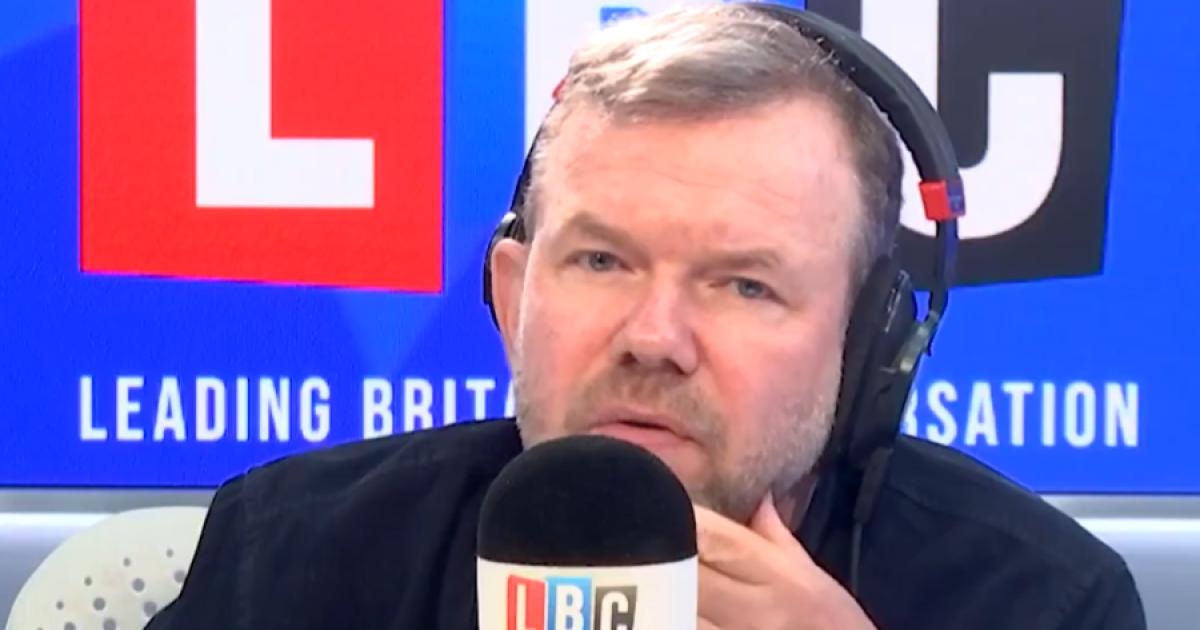
Take the LBC radio presenter, James O’Brien. He’s always struck me as a decent guy with a brain in his head. However, he made a startling and very honest admission recently.
After the summit between the SNP, Sinn Fein and Plaid Cymru, he displayed the kind of introspection about the union which is vanishingly rare among English journalists and politicians.
O’Brien had been, he said, “dismissive of the independence movement. The reason for that – the reason perhaps for my position – is ignorance. I’d no idea about the effort put in by English governments to eradicate the Welsh language from the land of Wales.
“I didn’t know about the Highland Clearances until they popped up in an historical fiction book I was reading and I thought that I need to know a little bit more about this. And if I’d known about that, my feelings would be different.
“When people talked about Welsh nationalism … my entire box of Lego bricks would have been differently constituted. So when I started building my opinion, I would have been building it with different bricks. But I didn’t know about that. I don’t like being that bloke.”
O’Brien comes from the same social class as that racist twit I once upbraided, yet he has the intelligence and openness of my London gangster friend. If only there were more O’Briens in England.
Read more Neil Mackay
What O’Brien offers us is proof that cultural domination doesn’t just damage those who are dominated, it damages the dominator as well.
England, without doubt, dominated and still dominates the other three home nations culturally.
The current furore over the Bayeux Tapestry is prime evidence. Clearly, it’s an astonishing artefact, but historically it means much more to England than it does to Northern Ireland, Wales or Scotland.
Yet there has been wall-to-wall coverage of its arrival at the British Museum. It has rather been shoved down the throats of Scotland, Wales and Northern Ireland.
Certainly, among my generation, schoolchildren in Wales, Scotland and Northern Ireland knew as much about the Elizabethans, say, as any pupil in England.
But were those English pupils as equally conversant with the medieval histories of Wales, Ireland or Scotland? I think we know the answer.
Recently, the Welsh actor Michael Sheen said that he wasn’t taught Welsh history at school. He’s about to play the Welsh hero Owain Glyndŵr, yet Sheen never learned about him in class. The failure to properly represent Glyndŵr on the stage “tells a story itself”, Sheen added.
As the son of an English mother, it pains me to say that I’ve too often seen among my English family a complete lack of knowledge or understanding of the history and culture of the other three home nations.
It’s a very American trait. Anyone who has lived or worked in America will have been struck by how little the average American knows about the outside world. Life begins and ends in America.
England suffers from that malaise too, and it’s damaging. It closes the world down, limits horizons, blunts empathy for other cultures.
When you’re culturally powerful – because you’re the ‘big’ country’ – it becomes very easy to see no further than the tip of your nose.
Herein lies the foundational problem of these islands. If, perhaps, there was a fully shared sense of brotherhood among the nations – that we were all in it together, that we were all interested in each other and respected each other – then who knows where we might be today constitutionally?
It’s a sign of just how detached England is from life in the other home nations, that there was surprise at the pan-Celtic summit. Everyone in Scotland, Wales and Northern Ireland knew this was inevitable. Yet somehow England was shocked.
You often hear from English politicians and English commentators a sense of ‘how dare they’ when it comes to demands to leave the union. If they’d paid attention these last 200 years, they wouldn’t be surprised.
But then if you’re only listening to your own song, you won’t hear the music that others are playing.