
 Play Brightcove video
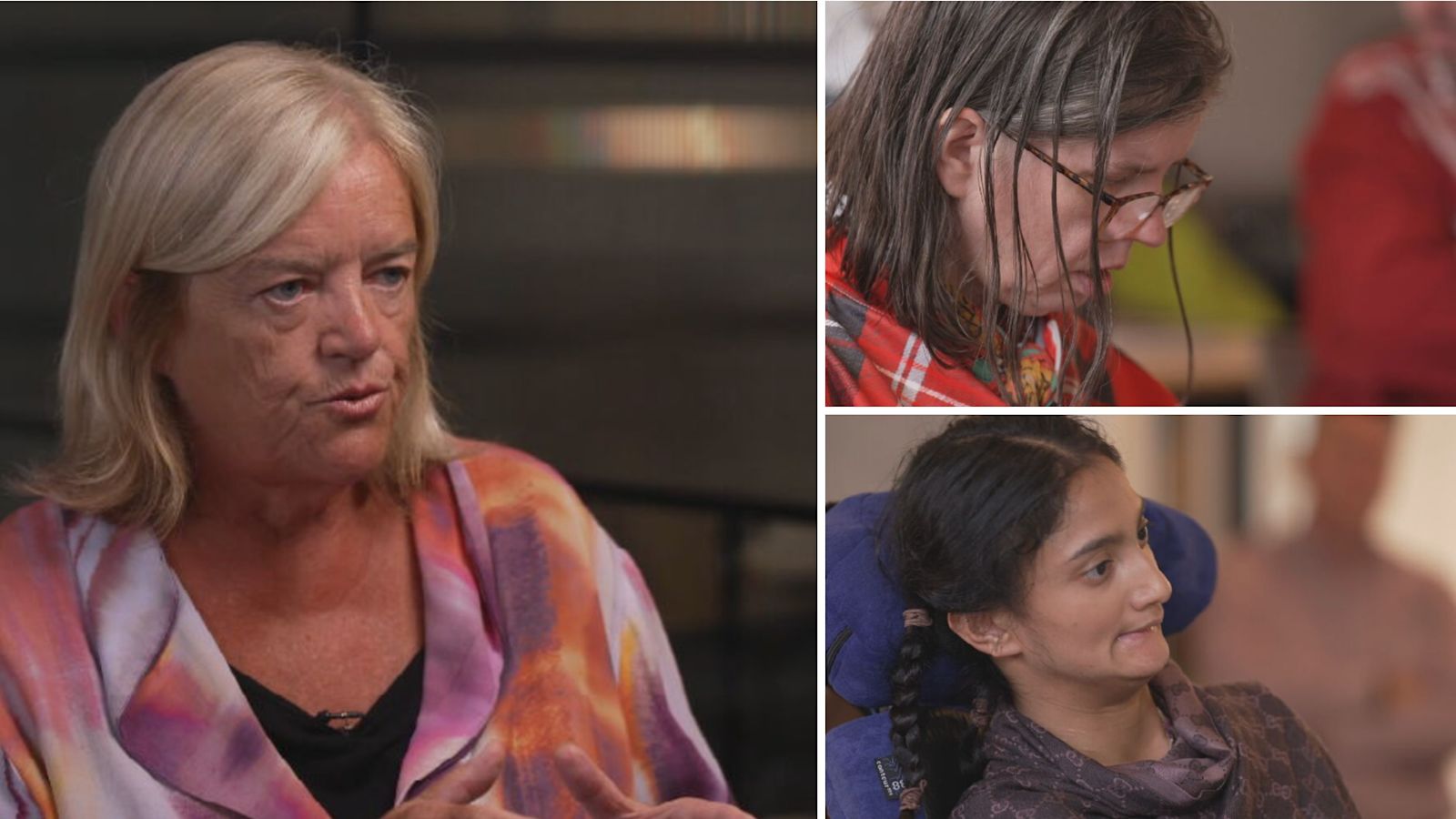
In an exclusive interview with ITV News’ Dan Hewitt, Baroness Louise Casey criticised the privatisation of the social care system and private companies who make large profits “off the back of disabled people” and taxpayers.
Additional reporting by Lili Donlon-Mansbridge.
The NHS is failing people with learning disabilities and hospitals are “unable to sufficiently treat and look after” them, says Baroness Louise Casey, the head of the government’s commission into adult social care.
In an exclusive interview with ITV News, Baroness Casey heavily criticised NHS treatment and attitudes, and said caring for people with learning disabilities is seen as a “burden” by some health professionals, who “do not see them” and “do not hear them”.
When asked directly why she thinks people with learning disabilities are dying 20 years younger than the rest of the population, Casey said it was in part due to a lack of adequate care across the NHS.
“I think that the National Health Service, particularly hospitals, are unable to sufficiently treat and look after people with learning disabilities,” Casey told ITV News.
“(There was) a case very recently of a woman who was 70 and had a stroke.
“She had profound learning disabilities, ended up at a general ward, and they wouldn’t let her carers come into the ward, and her carers were the only people that could probably fully understand what she was saying and thinking.
“Now people watching this tonight on the news will think, well, that’s insane, isn’t it? It’s almost hard to explain how the system just does that.
“It’s like it’s got a one-track mind: it’s a medical condition, if I can’t medically treat you, it’s game over, not our responsibility anymore.”
Baroness Casey has been commissioned by the UK government to lead a wholesale review of adult social care in England.
In a wide-ranging interview, Baroness Casey also criticised the scale of privatisation in the social care sector, calling out “profiteering” private companies who make large profits “off the back of disabled people” and taxpayers.
She told ITV News that allowing large parts of adult social care to be run by private companies for profit was a “mistake”.
“What I would just personally object to on behalf of the taxpayer is what I call profiteering,” said Casey.
“You’ve got, in some cases, I would say profiteering on the back of taxpayers and specifically on the back of people with higher levels of need. Where I think people are making bag loads of money, I think that’s wrong.
“If you look back to the history of what we now call social care, we saw a massive shift in the 1980s. Essentially, the sort of outsourcing of all of that [care] to the private sector, without it being organised and managed, I think was probably a mistake.”
Baroness Casey is conducting an independent review of adult social care. Credit: ITV News
When asked what she thinks of foreign entities such as wealth funds, private equity and healthcare firms owning companies that provide care for learning disabled adults, Casey said she doesn’t think non-British entities should own care companies.
“I’m a great believer in keeping the money in our own country,” she told ITV News. “I’m a great believer in not letting other people take British taxpayers money, whoever they are. And I think if we could provide those services and those resources here, then we should do it.
“I think at the moment though, I would say one ought to be a bit careful because a lot of those companies, if you pulled them, the lifeline for the people we’ve met the same afternoon would stop. So you’ve just got to be really measured.”
For the past 18 months ITV News has been investigating the treatment of people with learning disabilities in private care homes, NHS hospitals and the courts.
Baroness Casey invited ITV News along to the hearings she is holding with members of the public, the first time cameras have been allowed in to film the work of The Casey Commission, which will be central to the creation of a new National Care Service.
At the charity Mencap’s offices in Central London, she heard from people with learning disabilities and their families about their experiences of the care system, as part of “The Big Conversation on Social Care” initiative.
Rahima Begum said people with learning disabilities are often ‘not treated as a person but as a thing’. Credit: ITV News
Casey also confirmed that she will deliver her final recommendations on how social care should be run and funded earlier than previously promised.
Previously, Keir Starmer had said the report wouldn’t be delivered until 2028, but she will now deliver it by the summer of 2027 after the new Prime Minister Andy Burnham called for a speeding up of the process.
“I happen to have known Andy Burnham for quite a long time before he was Mayor of Manchester,” Casey said, when asked what impact Burnham coming into office had had on her work.
“So for me, it’s a great gift that he wants to prioritise social care. It’s a huge, fantastic injection of support, direction, and I’m delighted.
“He set out then how he wanted to move faster and I’m absolutely delighted about that,” she added. “We need to get on with it.”
Casey refused to be drawn on how she thinks the system would be funded, but told ITV News that politicians need to be “completely upfront” with the public about how much social care costs.
“I think complete and direct honesty with the public is the best way of dealing with this, which hasn’t happened in the past,” she said. “Nobody’s been completely upfront about it…
“We’re already spending billions on it. So my starting point is: before I ask politicians to ask the British public, it’s time to raise more money, we need to look at the money we’re already putting in. And why would we put more money into a failed system?
“If there’s a private provider that’s taking 12 or 15% profit out of running care services for people, is that a good use of how we would plan for the next decade, when actually lots of FTSE 100 companies are very happy to take 5% profit? So these are the things we need to look at, not just how do you persuade the public to spend more money.”
ITV News has exposed the shocking way some people with learning disabilities are treated in NHS hospitals, and allegations of abuse and neglect at some of the country’s biggest private care providers.
We asked Casey how she would describe the state of the adult social care system today.
She said people with learning disabilities have been “completely forgotten” in Britain’s adult social care system, and that society has been too “frightened” to listen to what they and their families think needs to change.
“I think people with learning disabilities are often completely overlooked, completely forgotten, because essentially there aren’t millions of them,” she said.
“I think often we’re a bit frightened, actually. And I think that as a society, and we shouldn’t be, we should embrace listening to people and we should make sure that we don’t make this social care system so darn complicated that people end up lonely, they end up uncertain.
“Their families are worried sick about what’s going on for their adult children in many cases,” she continued.
“And I don’t think it should be too difficult to do a better job, but it appears to be. The starting point was to listen directly to people with learning disabilities and take it from there.”
Parents like Annabel Tall attended the panel talk to share how her experiences of navigating the system for her son. Credit: ITV News
For her, the poor care provided by NHS hospitals is central to why people with learning disabilities continue to die 20 years younger than the general population.
Seventy years on from its creation, she says, Britain’s health service – and population – still “hasn’t got its head around” how to look after learning disabled adults.
“Our National Health Service and our society more generally, hasn’t got its head around that. We just don’t. We haven’t planned for it, we haven’t organised ourselves for it. It’s seen as a burden,” she said.
A big part of the problem, she said, is that people with learning disabilities are not “seen” or “heard” by medical professionals.
“People with learning disabilities, they are often voiceless,” she concluded.
Casey also hit out at the existing frameworks in place to help learning disabled people and their families navigate the complicated social care system, telling ITV News that the government needs to improve the legislation that regulates the sector.
“What you have is families that we’ve just listened to this afternoon, who are pillar to post, pillar to post, pillar to post. They don’t know what they can expect, they don’t know what is certain,” she said.
Subscribe for free to our weekly newsletter for exclusive and original coverage from ITV News. Direct to your inbox every Friday morning.
In June, the Care Quality Commission – the body which regulates health and social care in England – admitted they are not inspecting enough providers of learning disability care, following an ITV News investigation.
“I think you know probably more than I do about this amount of time it takes between visits, between regulations and inspections,” she said.
“I think that we default into ‘this will all be sorted out by the regulator’. It’s a great government technique. You outsource your responsibility, you outsource your accountability. You say it’s not for us, it’s the regulator.
“I think when you’re dealing with actually quite small numbers of the population who are learning disabled, you can’t outsource your responsibility for vulnerable people who you’re letting other people look after, and not their family, and that we have a greater responsibility to those people than we would to others.”
A Department of Health and Social Care spokesperson said: “Everyone with a learning disability deserves safe, compassionate care and the right support to lead a fulfilling life.
“The stark health inequalities faced by people with a learning disability, including poorer health outcomes and lower life expectancy, are unacceptable and we know there is a lot more to do.
“This government is rolling out mandatory training on learning disability and autism for health and care staff, ensuring staff have the right knowledge and skill to provide safe and informed care.
“We are also firmly committed to creating a National Care Service and Baroness Casey’s Independent Commission will set out next steps to build a system that is sustainable, joined-up and works better for those who rely on it.”
An NHS England spokesperson said: “The NHS remains committed to improving care for people with a learning disability with thousands receiving a health action plan each month, and specialist learning disability nurses now working in general acute hospitals to support their specific needs while they are receiving support for a physical health issue.
“People with a learning disability are also eligible for an annual health check to ensure their physical health needs are met, while their medical records now include an adjustment flag to ensure staff in all healthcare settings can identify their specific needs easily.
“We welcome Baroness Casey’s comments in highlighting the care of people with a learning disability in NHS services and look forward to working with her and Government when her recommendations are published.”
Want a quick and expert briefing on the biggest news stories? Listen to our latest podcasts to find out What You Need To Know….