
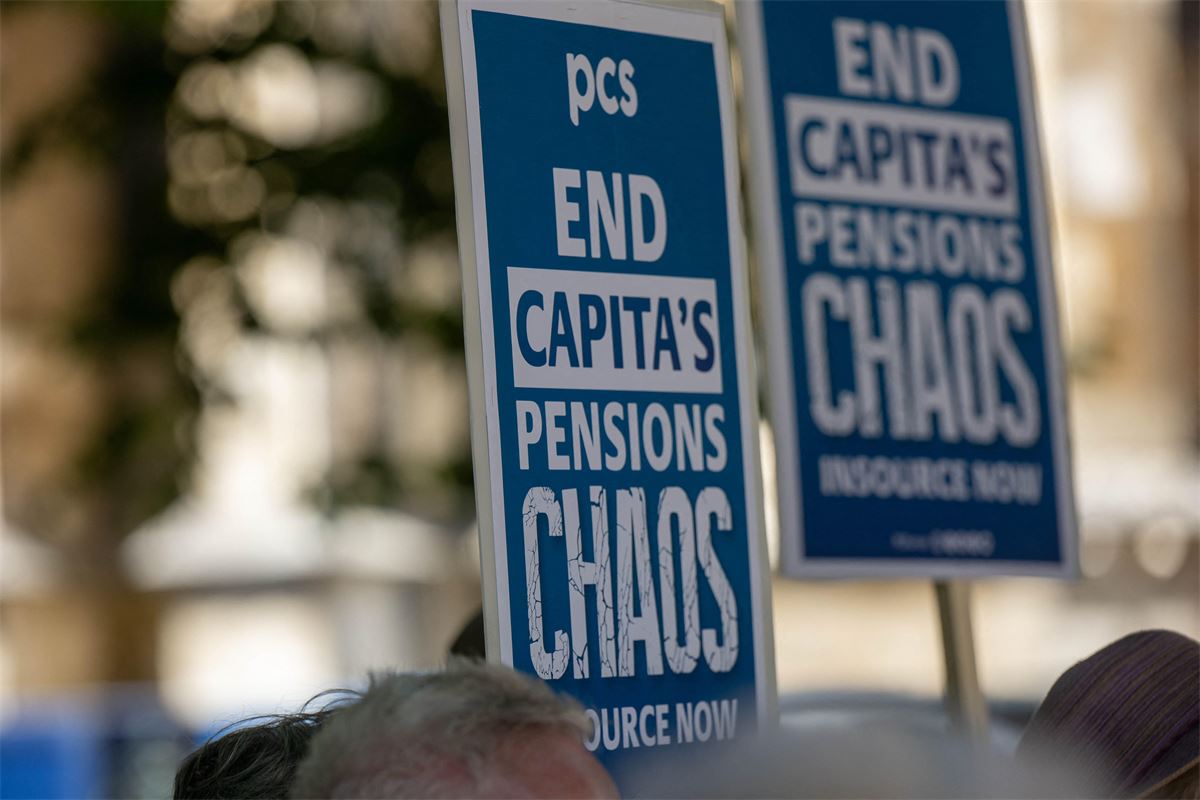
No one could fail to be appalled by the impact of the pensions administration chaos in the civil service. Every day we hear stories of members facing financial hardship with unpaid pension or retirement plans on hold as people try to get details of what their pension would be and when it will be paid. And then, of course, there are desperate stories of families who have lost a loved one and are not only facing financial hardship but are having to endlessly chase a resolution at such a difficult time.
Like most big, complex problems, the reasons why we’re in this mess and the solutions are not straightforward. Pensions administration was outsourced by the coalition government to MyCSP in 2012. It was an ideological decision taken to move the administration into the private sector. Behind it was a belief that the private sector can deliver these types of services better.
In the public sector, scale can be a challenge, and this limits the number of organisations that can genuinely compete. We’ve seen this with IT contracts, and it has been acknowledged that it was a factor in the awarding of the pensions contract to Capita. There are over 1.5 million civil service pensioners, multiple pension schemes, hundreds of employers and records going back decades.
There were any number of issues with MyCSP’s performance which led to them losing the contract and concerns around the deterioration of service as they neared the end of that contract. Complaints had soared and calls were being answered on average after 24 minutes, against a target for 80% to be answered in 30 seconds. MyCSP had started to run down staffing levels and there was a lack of transparency on the scale and nature of the backlog being transferred. All well-known risks when transitioning between contractors.
Once a service is outsourced, it is not straightforward to insource, particularly one as complex as pensions administration. To do so would take years of preparation, as you can see when you look at the timescales for the awarding of this contract to Capita – four years from tender to start of contract in 2025. In our dialogue with officials and ministers it was clear that insourcing was not a feasible alternative to the transfer and the die was cast.
We’ve met regularly with ministers who share the frustration that their hands are tied yet they are getting the flack for a mess of a previous government’s making. We meet with officials weekly during this crisis trying to work jointly on solutions. The government has poured resource and expertise in to trying to solve it, with around 150 civil servants supporting Capita as part of a surge team. The government has used the levers they can contractually pull by fining Capita, enforcing the appointment of an external advisor to scrutinise recovery plans, and announcing further resource from the Government Actuary’s Department to help with the complex cases.
We’ve made proposals on escalation routes through unions and flexibility on expiry of medical certificates, and we have insisted on Capita being round the table.
Even if a decision was taken now, with all the complexities and costs of cancelling a contract, transition would take years and is also hugely risky, as we’ve seen with the transfer from MyCSP to Capita. “Insource Now!” may make a good war cry for those standing with placards and pitchforks, but it is not a viable solution to the hardship and uncertainty faced by current and retired civil servants.
I am never shy of criticising ministers of any government, but they have given clear instruction to the civil service to do all it can to resolve the problem, which is what they’ve been doing. I feel for them when the legitimate anger that many feel is directed at them rather than the architects of the crisis.
Ministers have made clear they are looking at all options for the future, and a number of reviews are looking at short, medium and longer-term solutions including “actively shaping a long-term strategy to bring this pension scheme back in-house”. But right now, the answer for the thousands of civil servants left in hardship or uncertainty is to make the Capita contract work. That’s the uncomfortable reality and anything that gets in the way of that is only making things worse.
Dave Penman is general secretary of the FDA union