
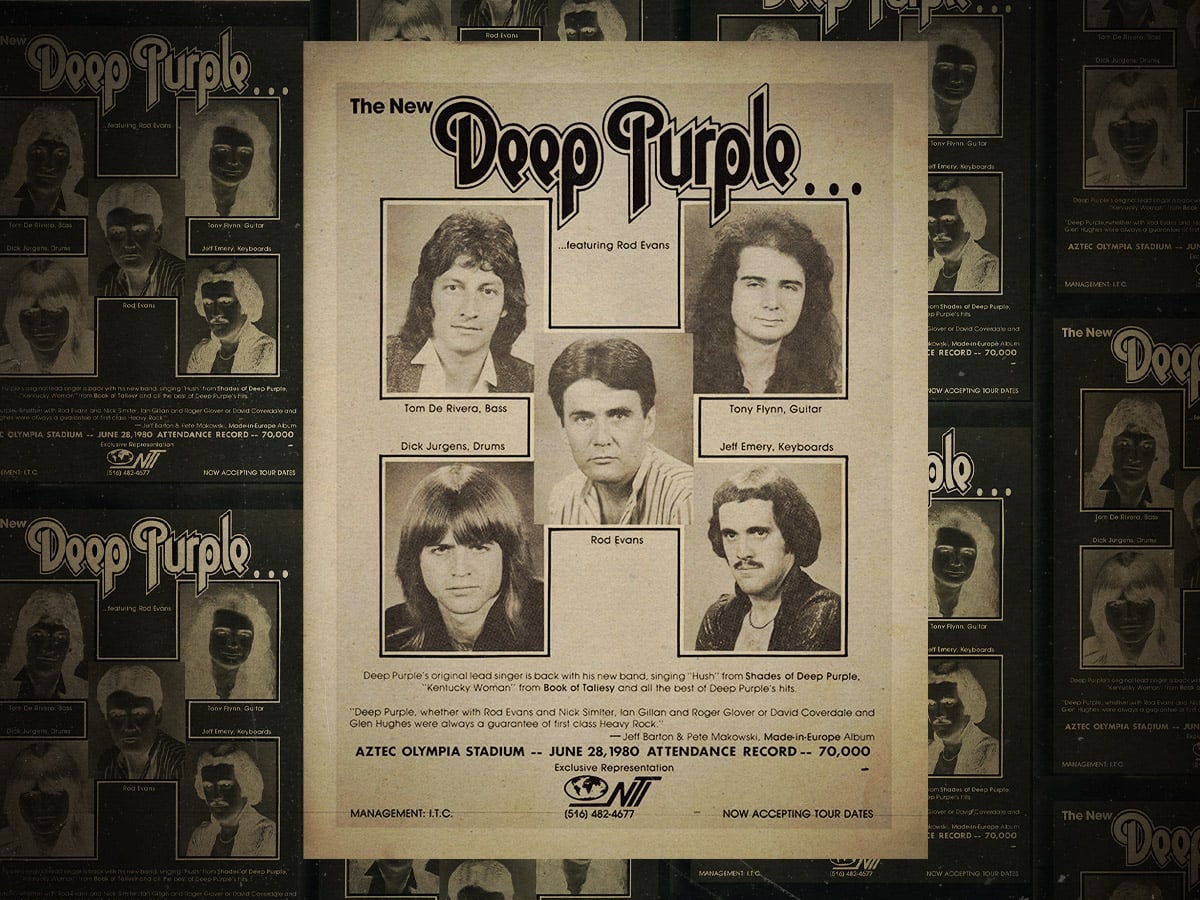
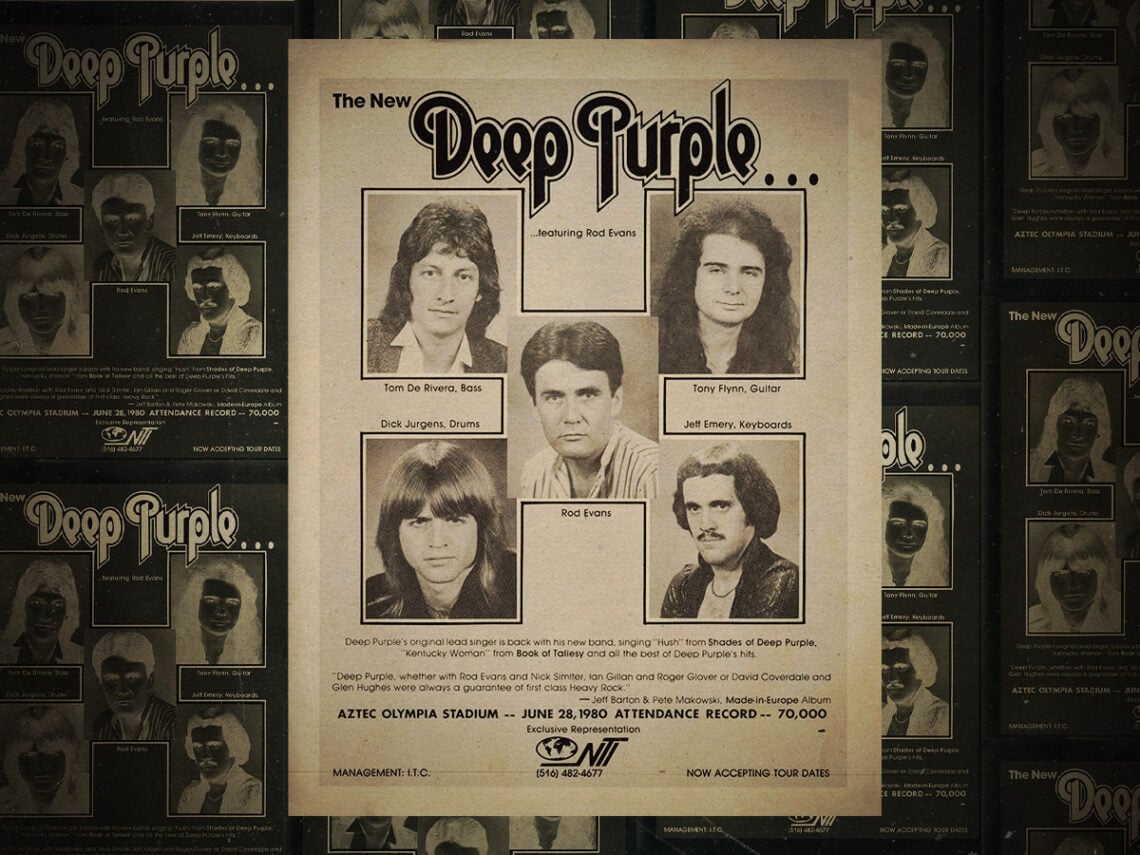
Credit: Far Out / Original Poster
Sun 20 September 2026 2:00, UK
Deep Purple have had a lot of line-ups in their time, and with these different members came new versions of the band’s sound.
While you had somewhat of a solid foundation with Ritchie Blackmore, Ian Paice and Jon Lord, the variety of different members would often add their own two cents to the band. The discography of Deep Purple is so varied because of how much these different line-ups impacted the band’s approach to music, and it means that you never know what you’re getting from track to track, album to album.
That foundation, though, is one hell of a group of musicians. It didn’t matter what iterations of Deep Purple you were a part of; when you saw how the three of them worked together and understood how limitless their approach to their sound was, you no doubt got an inkling that this group was going to be big.
Rod Evans certainly knew it. Evans was a founding member of the band and lent his vocals to the first three Deep Purple albums, projecting them into the mainstream. While he was an important member of the band, he was fired in 1969, along with bassist Nick Simper, as they were both replaced by Ian Gillan and Roger Glover. Evans tried to revitalise his music career by playing in a group called Captain Beyond with former members of Iron Butterfly, but this was a project that didn’t have any wings.
Evans was training as a respiratory technologist when the idea was pitched to him. Geoff Emery was a lawyer, keyboard player and, most importantly, a shady entrepreneur who thought it would be a good idea to take the fired members of Deep Purple and use them to create a New Deep Purple. He had proof of concept, as he had done something similar with Steppenwolf prior. When he pitched the idea to the former Deep Purple members, Simper flat out refused, but Evans was happy to be a part.
Emery trademarked the band name Deep Purple and then booked a tour with Evans and a haphazard group of musicians. It was this tour that wound up introducing Deep Purple to Mexico, as fans of the band’s music were suddenly able to experience what they thought was the group up close and personal.
Reports from these gigs say that the band didn’t sound remotely up to scratch. One of the bands that supported this faux Deep Purple was called Bunz, and when asked about the shows, the lead singer said that they sounded nothing like the original and put on a set that was difficult to get through. “Even on our worst night,” they said, “We would have blown those guys away”.
Further reading: From The Vault
Of course, the actual Deep Purple eventually found out about this fake group and took legal action against the band that had been performing around Mexico. The tour was stopped, and the management who were associated with the New Deep Purple completely distanced themselves from the group. You’d be surprised just how often this kind of scam went on back in the day. Word didn’t get to bands as quickly as it would in the modern age, so it was an easy way for budding musicians and shameless managers to get a bit of cash.
Deep Purple may well have been the most ambitious scam in the history of musical doppelgangers, though, as the talent on display within that group isn’t something that can be easily reflected in covers. Despite using a lot of pyro and volume to try to mask their identity, anyone within earshot could tell that this wasn’t the real deal.
ADD AS A PREFERRED SOURCE ON GOOGLE  The Far Out Classic Rock Newsletter
All the latest Classic Rock content from the independent voice of culture.
Straight to your inbox.