
The Black Death did not end plague in Europe. New ancient DNA research shows how Yersinia pestis returned in repeated waves for more than 350 years after the first pandemic.
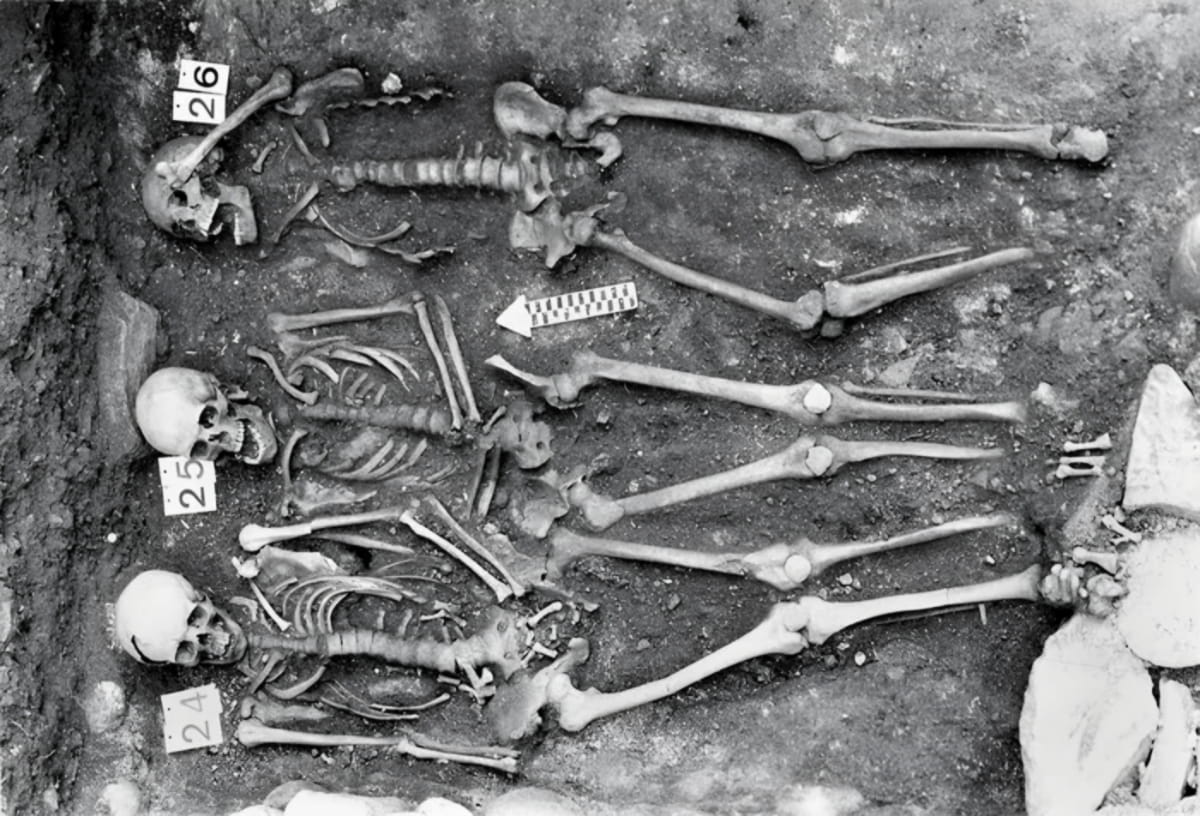
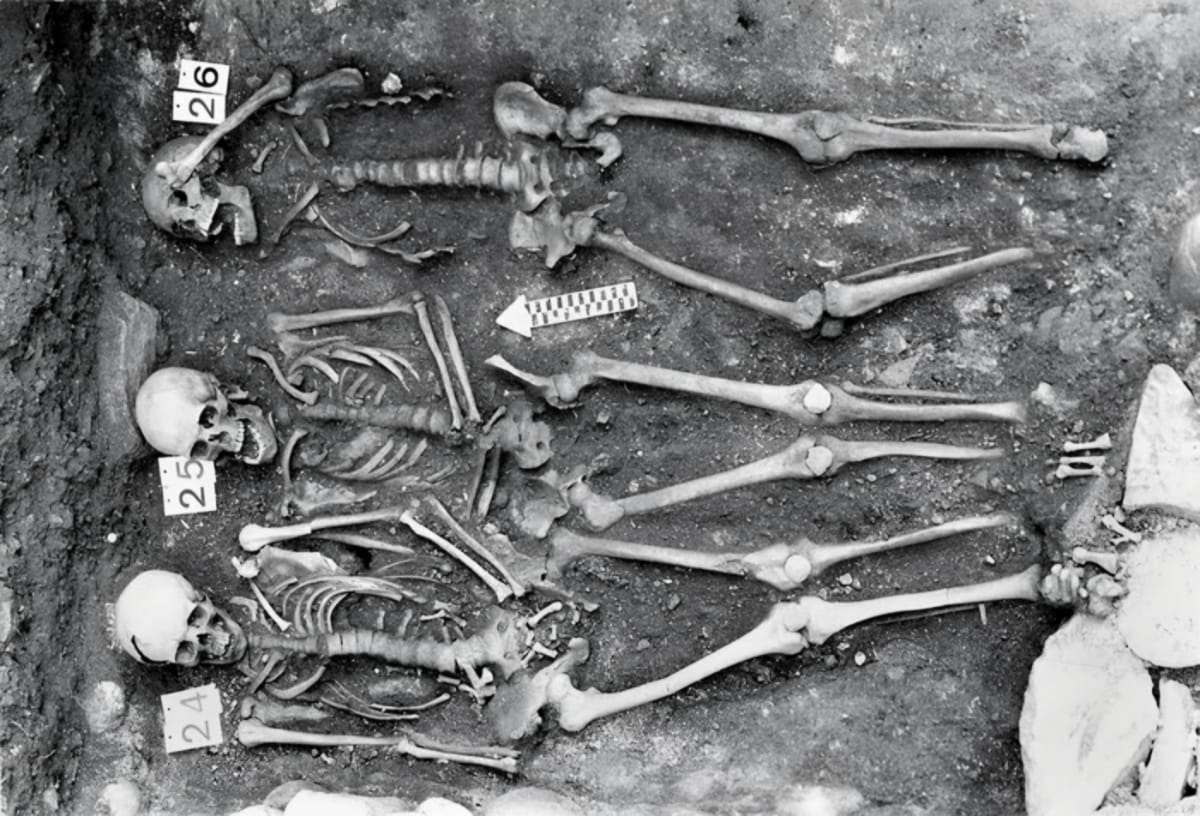 Multiple burial of plague victims from Domat/Ems, Sogn Pieder (Switzerland) associated with the Plague of the Thirty Years’ War (c.1629–1631). Analyses of individual 24 yielded a full Yersinia pestis genome. Image credit: Archaeological Service of the Canton of Grisons. Credit: Archaeological Service of the Canton of Grisons.
Researchers from the University of Tartu and partner institutions studied 26 plague genomes from 11 archaeological sites across Europe. The samples came from Estonia, Russia, England, the Netherlands, and Switzerland. They date from 1349 to 1710 and cover much of the Second Plague Pandemic.
The team also reassessed 64 previously published genomes. Together, the study examined 75 plague genomes from the 14th to 18th centuries.
The findings show a shifting pattern of plague spread across Europe. Rather than surviving in one place after the Black Death, different Yersinia pestis lineages appeared in new regions over time. Estonia, for example, experienced repeated plague introductions from the late 14th century onward.
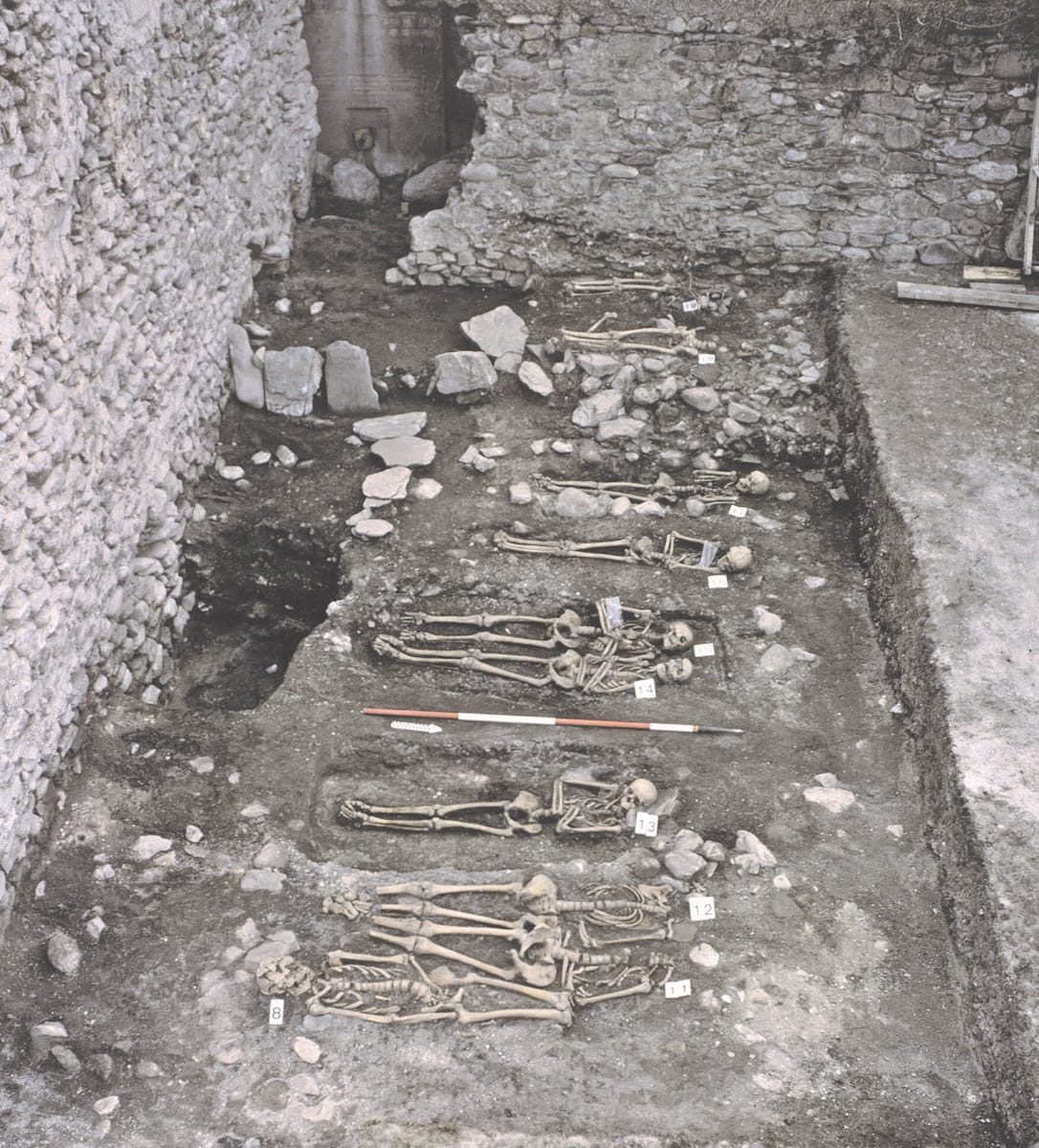 Plague burials from Domat/Ems, Sogn Pieder (Switzerland) associated with the Plague of the Thirty Years’ War (c.1629–1631). Image credit: Archaeological Service of the Canton of Grisons. Credit: Archaeological Service of the Canton of Grisons
The study also found a major expansion of plague lineages around 1450 to 1500. During this period, Yersinia pestis split into three major branches. Some of these lineages may have entered new wild rodent populations and formed long-term reservoirs.
Climate might have helped shape these changes. The researchers point to the Great Renaissance Drought as one possible factor. Modern research shows links between climate conditions and plague outbreaks among wild rodents, which serve as natural hosts for Yersinia pestis.
The study’s main advance comes from a new way to date ancient plague genomes. Most such genomes rely on radiocarbon dating. Those dates often cover more than 100 years, making links with specific historical outbreaks difficult.
The researchers developed a method called Phylogenetically Informed Radiocarbon Modeling, or PhIRM. The approach combines radiocarbon dates with chronological information from the evolutionary tree of Yersinia pestis.
This gives researchers narrower and more precise date ranges for many genomes. The improved dates helped link genetic evidence with plague outbreaks recorded by chroniclers.
The team used the method to connect all 75 analyzed genomes with possible historical outbreaks. In some cases, the analysis also showed genomes from different sites or studies were genetically identical. This helped define the smallest known geographic range of some plague epidemics.
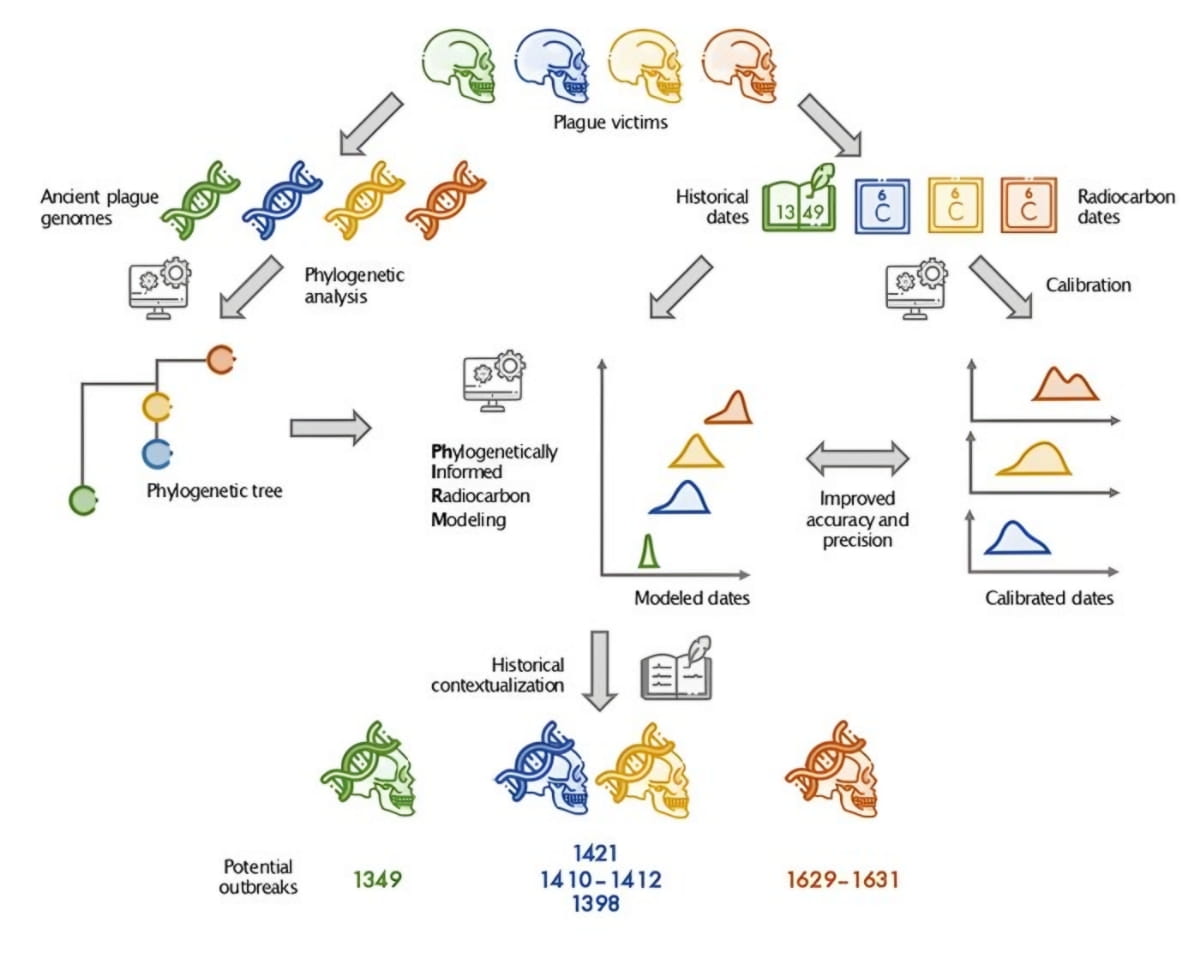 Schematic workflow from data generation to the Phylogenetically Informed Radiocarbon Modeling and historical contextualization.
Credit: University of Tartu. Icons are modified from Flaticon.com.
The results also show how human movement shaped the spread of plague. New genetic evidence links several outbreaks with major European conflicts, including the Thirty Years’ War from 1618 to 1648 and the Great Northern War around 1700 to 1721.
Armies, refugees, and traders often followed the same routes. Those movements provided paths for plague to reach new communities. During the 1710 siege of Tallinn, for example, plague struck Swedish and Russian troops as well as civilians.
The genetic record also offers clues about how plague lineages emerged and spread during periods of conflict. Such evidence helps connect changes in the bacterium with events recorded in historical sources.
The researchers say the new dating method also creates opportunities for wider studies of historical epidemics. Future work could add archaeological dates, coin evidence, cemetery records, and other chronological data to the models.
The team also points to climate records and stable isotope studies as useful additions. Such data could help test how environmental changes affected plague reservoirs and outbreaks.
Plague no longer causes large epidemics across Europe, but Yersinia pestis still survives in wild rodent populations in parts of the world. Understanding how the disease spread, persisted, and eventually disappeared from Europe offers a longer view of epidemic disease.
The study brings ancient DNA, archaeology, history, radiocarbon dating, and climate research together. Its detailed timeline shows how plague changed across Europe long after the Black Death of 1347 to 1353.
Publication: Keller, M., Guellil, M., Slavin, P., Saag, L., Irdt, K., Kabral, H., … Scheib, C. L. (2026). A refined phylochronology of the second plague pandemic in Western Eurasia. Proceedings of the National Academy of Sciences of the United States of America, 123(37), e2534899123. doi:10.1073/pnas.2534899123