
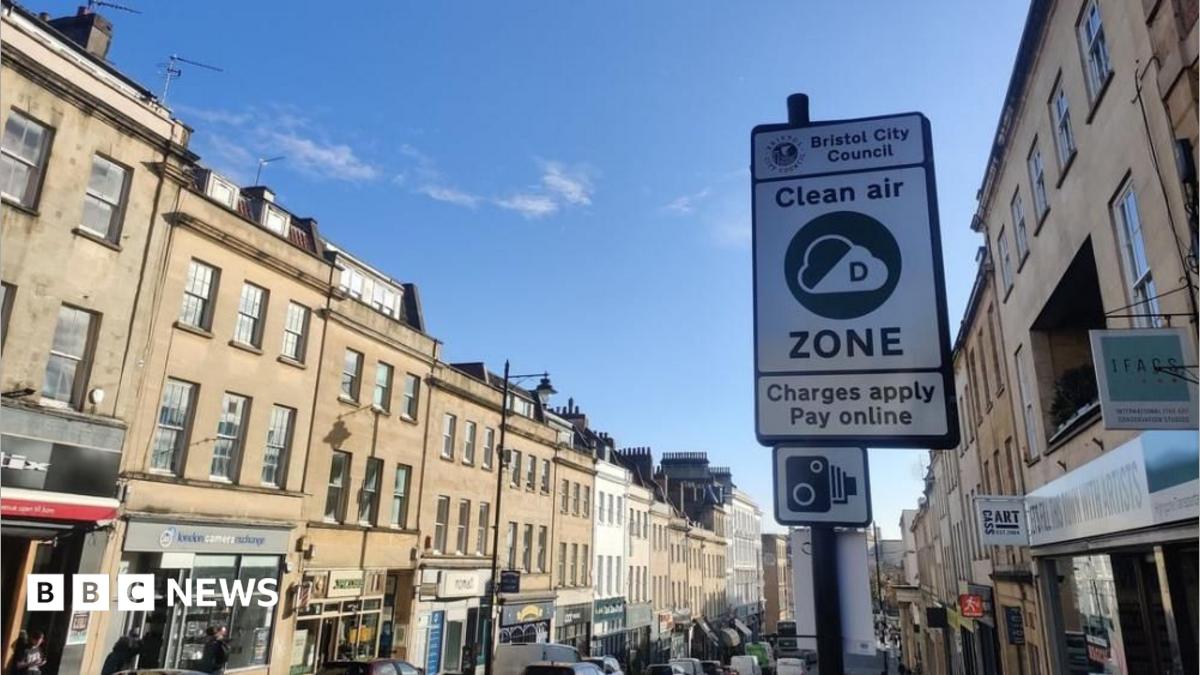
An increase in air pollution inside a clean air zone (CAZ) is down to the impact of weather, a local council has said.
New data has revealed that nitrogen dioxide levels rose on average by 2.4% inside Bristol’s CAZ in 2025 compared to the previous year.
Bristol City Council said the recent increase was down to weather factors, which was mirrored in other parts of the country.
Pollution levels have still fallen by 16% since charges on non-compliant vehicles were introduced in 2022, which the local authority said was “the most important measure of progress”.
The council said that wind and rain can help clear pollution, but calm, still weather can trap nitrogen dioxide close to the ground, contributing to a perceived increase.
Enda Hayes, professor of air quality and carbon management at the University of the West of England (UWE), said one year of data should be interpreted “cautiously”.
“Low wind speeds, stable atmospheric conditions, and less dispersion can increase NO2 concentrations even when emissions remain unchanged or continue to fall,” he said.
“It would be difficult to interpret such a modest change as evidence of a reversal in the longer-term trend, particularly when concentrations remain substantially below pre-CAZ levels.”