
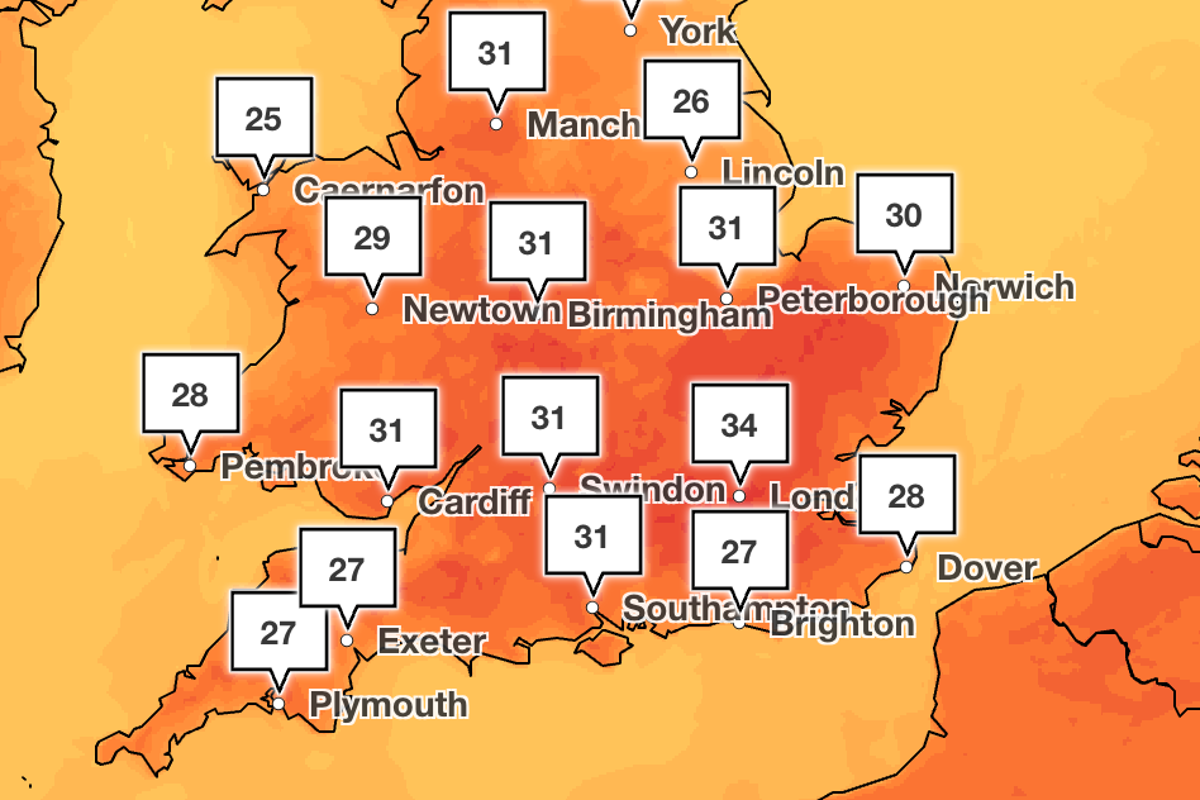
Thought it was hot this summer? That was a mere tip of the (melting) iceberg – particularly when it comes to the UK’s cities.
New research from Ordnance Survey (OS) is clear: the country’s metropolises are on course to overheat in the decades to come. After a summer of record temperatures, its extensive analysis looked at not only where it’s hottest now, but where’s most at risk of reaching boiling point in the medium term (2040-2070) and longer term (2070-2100).
To create its new Heat Vulnerability Index, OS looked at data including building density and height, hard surface coverage, tree canopy, open vegetation and water across every city in England, Scotland and Wales. It combined all this with observed land surface temperatures and Met Office climate modelling of air temperature projections.
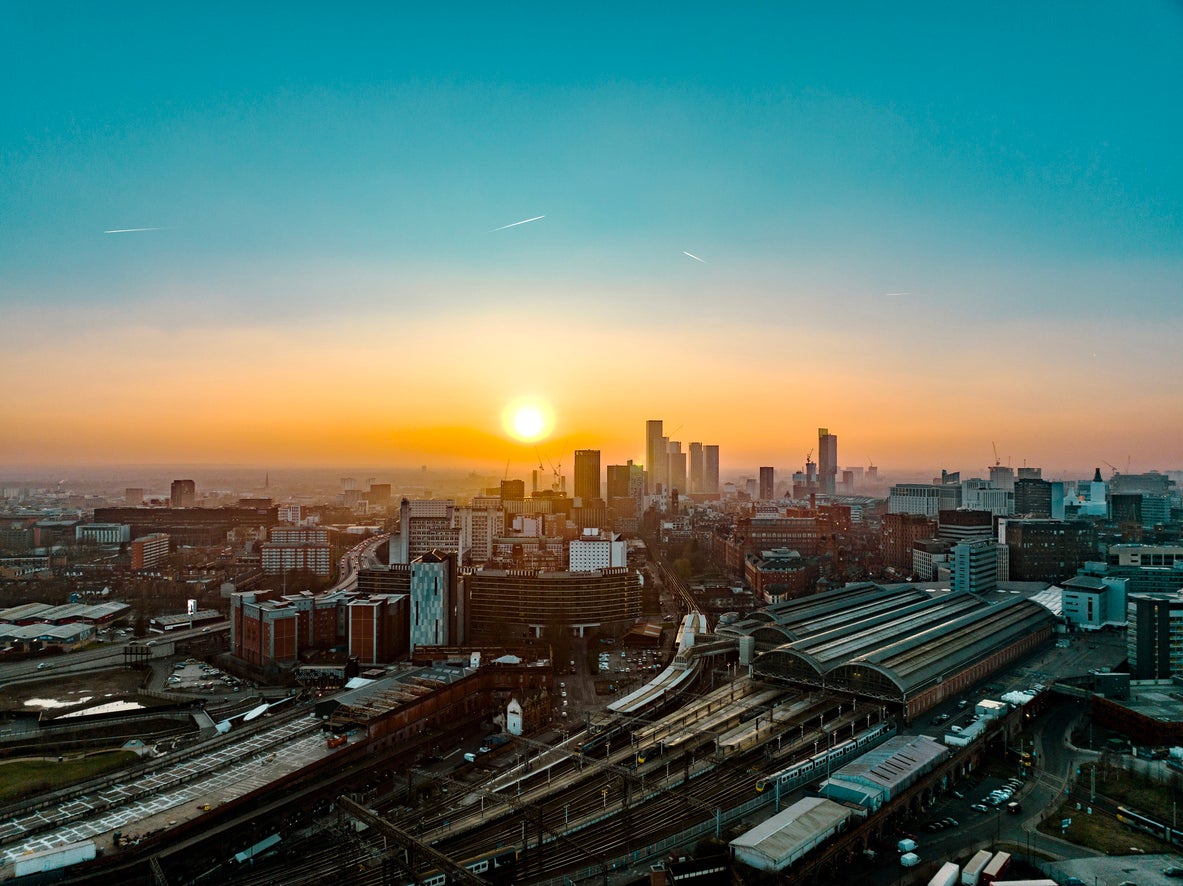 Urban heat island: cities often retain heat after the sun goes down (Getty)
What’s most alarming about the analysis is that, although some cities are in a better position than others to weather rising temperatures, 83 per cent are already “highly vulnerable” to urban heat, with the remaining 17 per cent classed as “moderately vulnerable” today. By 2040, a warming world is projected to push every single city into the “high vulnerability” category, regardless of its current status; by the turn of the century, 63 per cent of Britain’s cities are set to cross into “severe” heat vulnerability, the most serious level in the index.
The big reason for this is what’s dubbed the urban heat island effect, which sees cities retain much more heat than less built-up environments through several mechanisms. Unlike rural areas, which cool rapidly after sunset, cities keep the same heat overnight. This can mean urban temperatures are up to 10C higher than surrounding rural areas.
“When we think about overheating, we tend to think simply about temperature, right?” says Dr Macarena Cardenas, senior adviser for resilience and nature at the UK Green Building Council (UKGBC). “But when we understand where the effects of that environmental temperature are, they’re directly related to the materials, the surfaces and the kind of components that are in the city.”
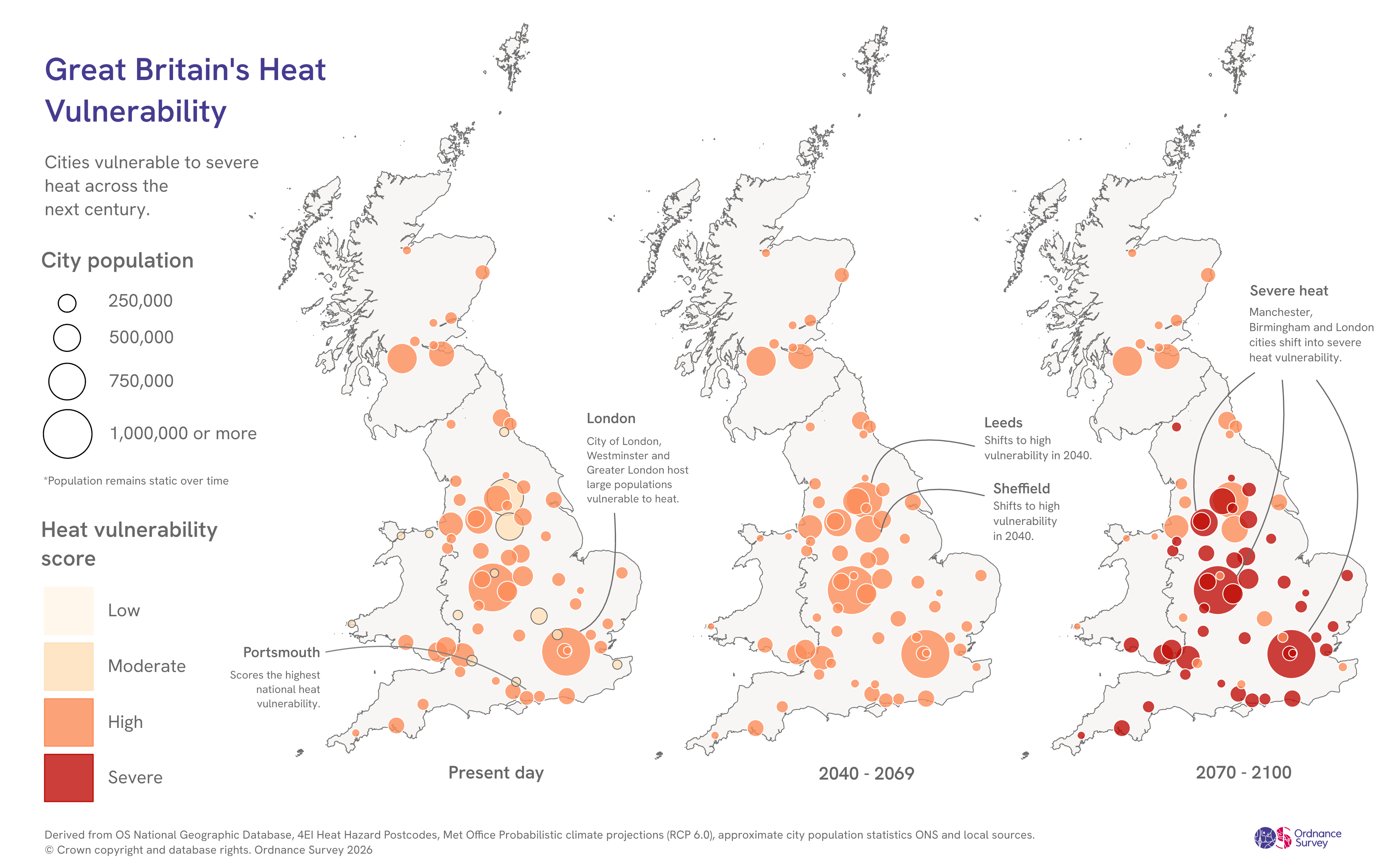 UK cities’ heat vulnerability has been projected over the next 70+ years (Ordnance Survey 2026)
There is what she calls “grey infrastructure” – things like streets and buildings, made of hard, dark-coloured materials that absorb and retain heat rather than release it, alongside lots of glass that reflects heat back out. The more tightly packed and high-rise the buildings are, the more pronounced the effect; tall buildings and narrow streets reduce wind speeds that would otherwise carry heat away.
“The main problem with cities is the lack of planning for dealing with overheating, particularly in the UK, because that’s not historically been a problem,” explains Lucelia Rodrigues, a professor of sustainable and resilient cities at the University of Nottingham.
“And when we don’t really design our cities thinking we need to keep cool, we therefore end up with things like a high density of buildings, and lots of surfaces that absorb heat, like concrete and asphalt. When the sun is shining, they get warm – and when the sun is not shining, they’re still radiating that heat back into the city.”
On the other side of the same coin is a lack of what’s known as green and blue infrastructure that act as natural coolants: things like parks and green spaces, trees and woodland, rivers, lakes and other bodies of water. These elements would act as a city’s natural “lungs” or ventilation, but the more you’re stuffing a city with buildings and streets, the less room there is for blue and green space.
We are absorbing heat, we’re storing it and we cannot release it. That’s why these cities are getting hotter and hotter
Dr Macarena Cardenas, UK Green Building Council
“Vegetation can offer shading or vapour transpiration”, adds Rodrigues. “Under a tree canopy could be somewhere between 10C and 12C cooler than outside of it.” Having grass or shrubs instead of asphalt allows absorption of sunshine without it being radiated back out, decreasing the temperature of surfaces by up to 8C; rivers and other water sources enable the cooling mechanism of evaporation. But the latter are often deviated or buried in cities, replaced by roads.
Human activity adds another sweltering layer on top of all this: cars, trains and – an increasingly significant issue as we try to tackle the symptoms of overheating rather than the root cause – air conditioning. AC creates a two-fold heating effect: it pumps heat from inside buildings back out into the environment, and it releases harmful gases that further amplify the heat island effect.
All in all, these factors “create a sort of feedback loop,” says Cardenas. “We are absorbing heat, we’re storing it and we cannot release it. That’s why these cities are getting hotter and hotter.”
When it comes to risk of overheating, it’s not simply a question of which city gets hottest. “The risk of overheating depends on a combination of rising temperatures, urban density, the amount of hard surfaces and green space, and the design and performance of the homes people live in,” according to Dr Mehri Khosravi, energy and carbon senior research fellow at the University of East London’s Sustainability Research Institute (SRI).
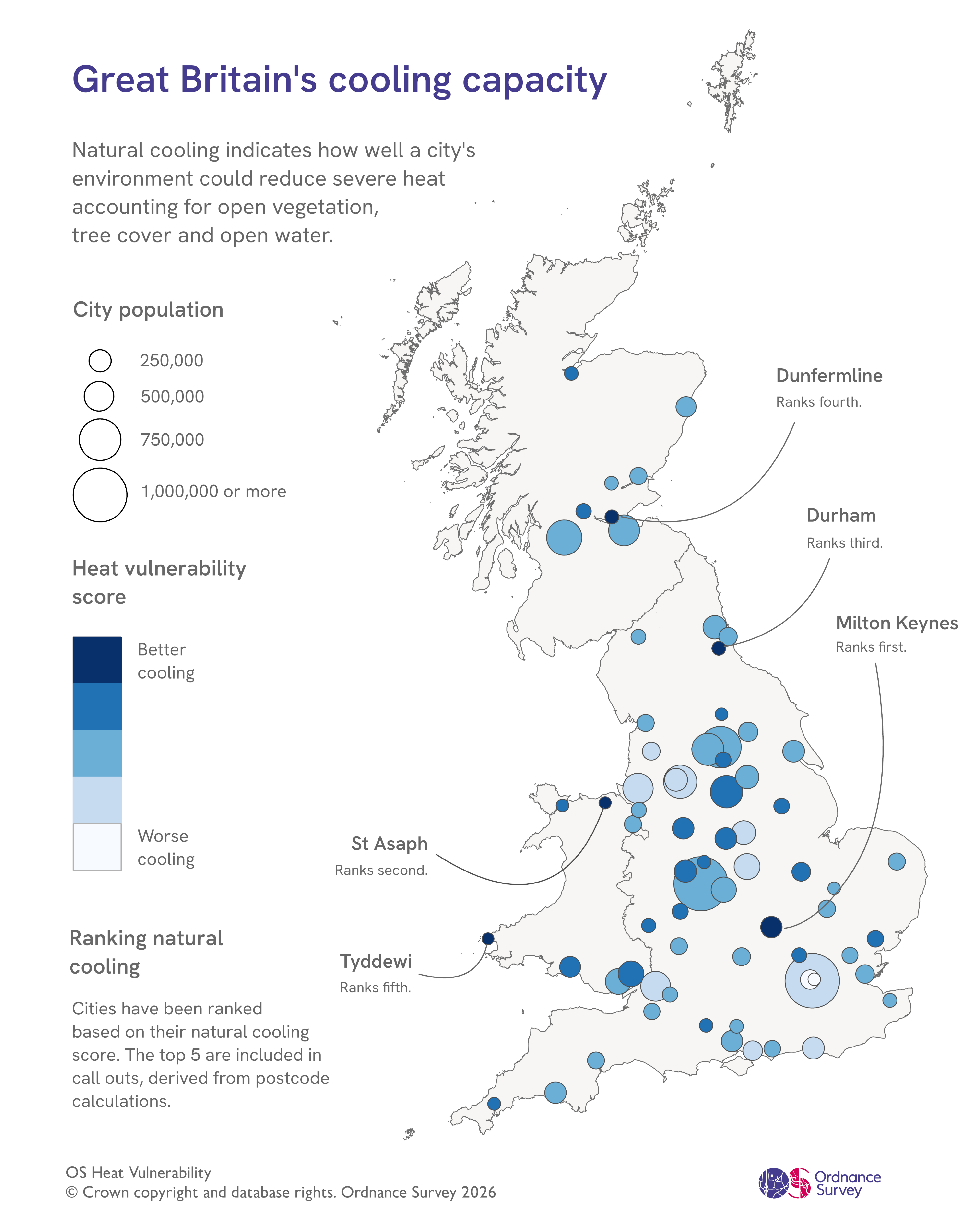 Some British cities have more cooling capacity than others (Ordnance Survey 2026)
Among the cities projected to warm most between the present day and 2070 to 2100 are Leicester, Exeter, Nottingham, Brighton and Bristol. Leicester is forecast to see the biggest rise in Britain’s heat vulnerability rankings, climbing from 10th today to fourth by the end of the century.
Though one might be forgiven for assuming the UK capital is the most at-risk city, Portsmouth takes the top spot on the OS heat vulnerability index for the present day, followed by Carlisle, the City of Westminster in London, Newcastle upon Tyne and Plymouth.
If we’re looking at the medium-term (2040-2070) and longer-term (2070-2100), the top 10 cities most at risk of overheating ranking look like this:
At the other end of the scale, which cities are best protected against overheating? The OS report has come up with a top 10 that have the best natural cooling. Milton Keynes tops the list, followed by St Asaph, Durham, Dunfermline tied with Tyddewi (St Davids), and Truro. The list is rounded out by Abertawe (Swansea), Bangor, Ripon, Peterborough and Inverness.
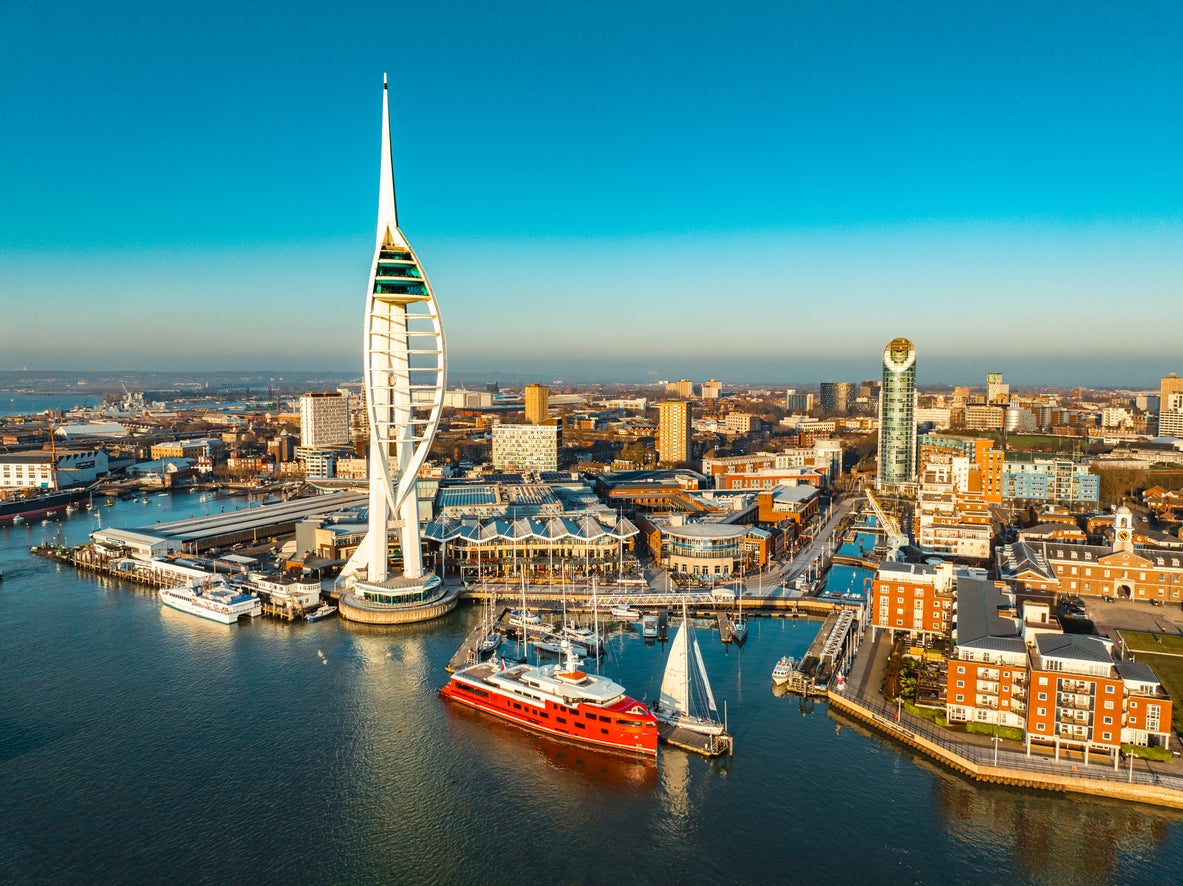 Portsmouth tops the list of cities that are most at risk of overheating (Getty)
Looking at the heat vulnerability index, the 10 cities at the bottom of the ranking – ie, the ones that are least at risk of overheating – for 2040-2070 are:
St AsaphBangorTyddewiSheffieldDurhamLeedsStoke-on-TrentWakefieldRiponWolverhampton
For the longer term range (2070-2100), the list looks like this:
BangorTyddewiDurhamSt AsaphSunderlandInvernessSt AlbansMilton Keynes/Preston (tied)Kingston upon HullLiverpool
“These findings matter because cities are where millions of people live, work and spend their everyday lives,” says Nick Bolton, Ordnance Survey CEO. “Extreme and sustained heat can affect people’s health and wellbeing, how comfortable our homes and workplaces are, and put additional pressure on transport, energy and emergency services.”
Rising mercury is already having devastating impacts on people’s lives. This year, an estimated 2,877 heat-associated excess deaths were recorded in England during the heatwaves of May and June alone – almost double the number recorded during the entire summer of 2025.
As already stated, even the cities with the best natural cooling are on course to hit the “high vulnerability” overheating criteria in the next 50 years. But there are things that planners and developers, plus we as individuals, can do now to help turn the tide, say the experts.
These findings matter because cities are where millions of people live, work and spend their everyday lives
Nick Bolton, Ordnance Survey CEO
Rodrigues cites an inspiring piece of work in the Netherlands, whereby cities are being paid for every pavement they take out and replace with plants. It might be swapping a paved square for a community garden, or a small orchard of fruit trees. “It’s a great initiative, because it involves the community and means there’s less asphalt and concrete to retain the heat, as well as more green coverage,” she says.
In terms of retrofitting existing buildings, she also recommends adding passive cooling measures to homes and buildings – things like internal and external shading, including awnings or trees, wooden cladding, or having shutters fitted on the outside of windows – before exploring an active cooling system, like a reversible heat pump, rather than inefficient air conditioning.
As for new buildings, “we should be designing homes around a passive-first approach, with mechanical cooling used where necessary as a second line of defence”, adds Khosravi. “The important thing is to consider overheating at the design stage, rather than trying to fix it after a building has been constructed.”
Looking to other hot countries such as Spain for inspiration, we may have to create climate refuges, or designated urban cooling centres in local neighbourhoods, advises Cardenas. These are public indoor or outdoor spaces that offer relief for city residents during a heatwave through shading and cooling, via vegetation, water or air conditioning.
The heat is on: it’s time to start future-proofing Britain’s cities.