
 Play Brightcove video
In a special report ITV Granada Reports correspondent Mel Barham reports on the link between menopause and mental health
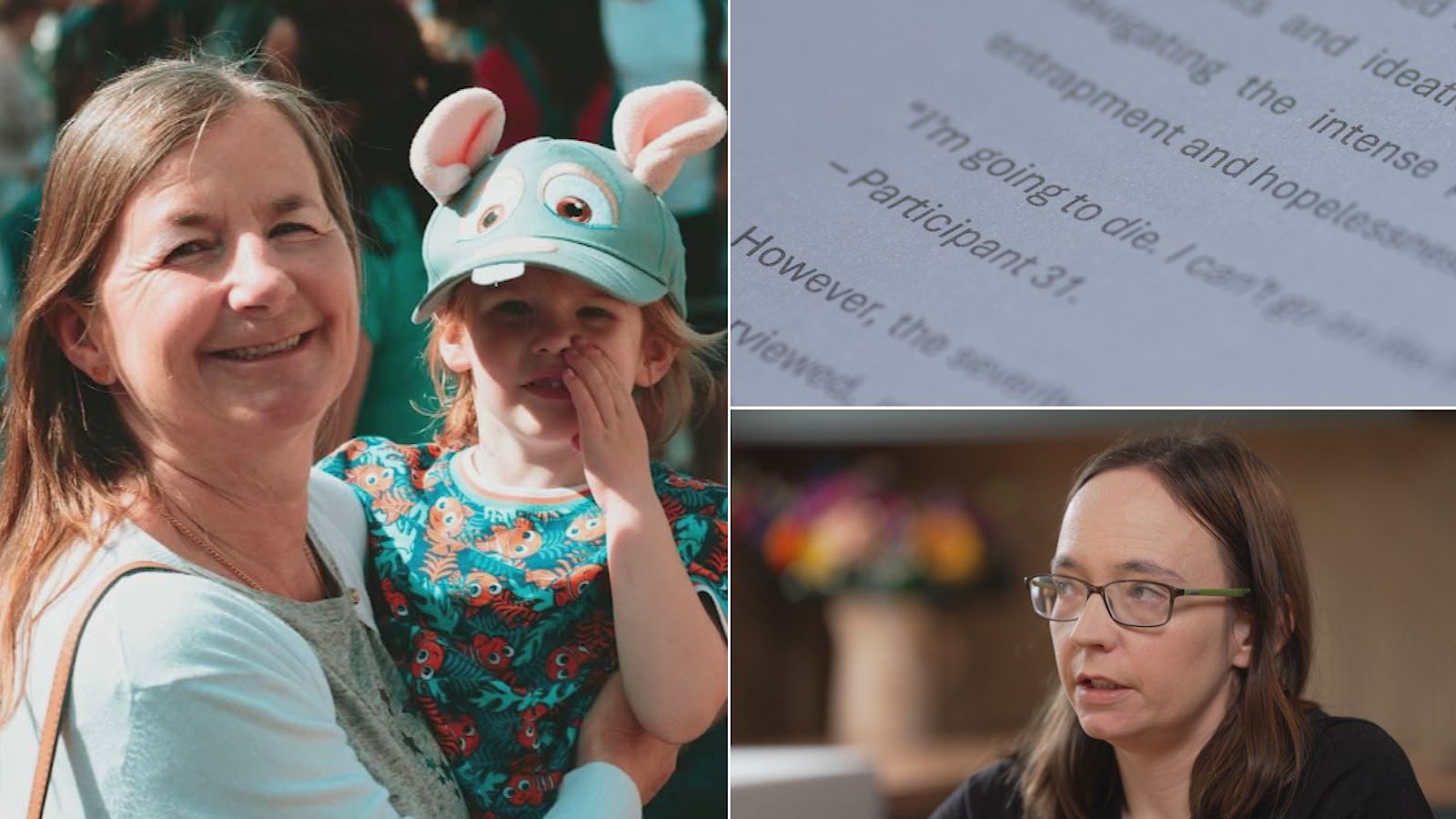
The daughter of a woman who took her own life after struggling to cope during the menopause says she believes she would still be here today had she got the right help.
Helen McGraw, from Ellesmere Port, sought help from her GP and was given anti-depressants after she began to “lose herself” following the menopause.
The grandmother is one of a growing number of women who have taken their own life at an age where they typically experience the menopause.
It comes as a first-of-its-kind study has found hormone replacement therapy (HRT) could reduce suicidal thoughts among menopausal women by more than 90%.
Researchers at Liverpool John Moores University (LJMU) spoke to more than 1,000 women going through the menopause about their experience with symptoms of depression, distress, and suicidal thoughts.
The study looked into the effect of hormone replacement therapy on women as they experience the menopause, along with why it is often not offered to those it could benefit.
Menopause fact file
The menopause is defined as 12 months since a woman last had a period.
The average age at which women start the menopause transition is 46 years. Periods usually stop by the age of 51.
The menopause itself is reached when the ovaries stop producing oestrogen.
Some women will experience menopause for reasons other than natural ageing. These include premature ovarian insufficiency or a chronic health condition that causes early menopause, or removal of their ovaries to reduce their risk of certain cancers or to alleviate pain associated with endometriosis.
Back to topWhat is the perimenopause?
Perimenopause is the natural transitional phase before menopause when hormone levels—specifically estrogen and progesterone—fluctuate and ovaries gradually stop releasing eggs.
The length of the perimenopause can range from anywhere between a few months to over a decade, but typically lasts between four to eight years. It concludes 12 months after a woman experiences her menstrual period.
Back to topWhat are the signs and symptoms of the menopause?
The most common symptoms are heavy bleeding, hot flushes, night sweats, emotional instability, vaginal dryness and bladder problems.
A survey conducted by Ipsos MORI, on behalf of the British Menopause Society, revealed 79% of women experience hot flushes and 70% experience night sweats.
Symptoms can range from mild to debilitating.
Back to topWhat treatment is available?
Much can be done to help with symptoms during the menopause transition, including lifestyle changes, hormone replacement therapy (HRT) and treatments for individual symptoms.
Hormone Replacement Therapy (HRT)
The main medicine treatment for menopause and perimenopause symptoms is HRT.
HRT replaces the oestrogen that you lose during the menopause transition, either aloneor in combination with a progestogen.
It helps to alleviate menopausal symptoms and also reduces the long-term consequences of the menopause.
HRT can be delivered in many ways including tablets, patches, gels, a spray and implants.
Women prescribed HRT, can get access to a year’s worth of treatment for just under £20, The Department of Health says.
Lifestyle changes
Get plenty of rest, including a regular sleeping pattern.
Have a healthy diet and exercise regularly – weight-bearing activities (such as running and walking) are important to protect your bones.
Do relaxing things like yoga, tai chi or meditation which are good for general strength and flexibility and improve the pelvic floor.
Eat calcium-rich food like milk, yoghurt and kale to keep bones healthy.
Speak to other people going through the menopause.
The NHS advise people going through the menopause not to smoke or drink more than the recommended alcohol limit.
Her daughter, Heather Wilson, said the menopause caused her to lose a “sense of who she was”.
Heather said: “There was so many different things going on with her body. Obviously there was all the usual things that you hear about like the hot flushes.
“She had lots of changes going on over her skin, difficulty with hair loss. I think it was just… All of it was just too much to her.”
Helen sought help and was given antidepressants, but in 2021 she took her own life. Credit: Family handout
Helen sought help and was given antidepressants, but in 2021 she took her own life.
Heather said: “The day that she died, she did ring the crisis line in the morning and they told her to go to A&E, and as far as she was concerned, she’d already done that.
“Every time she went to A&E, they told her to talk to her GP and she was just stuck in a cycle that she couldn’t break.
“She just couldn’t get that help that she needed.”
Heather says she saw her mother lose herself along with many of her relationships with friends and family.
She said: “It impacted her mood, it impacted her relationships with other people and she just didn’t know which way to turn and where to direct those feelings.”
Heather says the menopause was just one contributing factor in her mum’s death, but she believes she would still be here today had she got the right help at the right time.
Researchers say the evidence suggests the prescribing of HRT could save lives and reduce unnecessary suffering.
Researchers says wider prescriptions of HRT could save lives. Credit: ITV News
Suicide rates among women peak between the ages of 45 and 54, the very ages where the menopause typically happen.
Researcher Dr Olivia Hendriks said: “I spoke to a few women who had attempted multiple times, actually, and been sectioned onto psychiatric wards.
“A lot of them said after they had taken HRT, they felt a lot better and it only took.. months for them to stop feeling like that again.”
The study found suicidal thoughts among menopausal women reduced by 92% after they were proscribed HRT.
While HRT is a recognised method of treating menopausal women, the study also found one in six were either being misdiagnosed or offered antidepressants.
Another researcher on the project, Professor Pooja Saini, suggests this is due to outdated fears over the safety of HRT.
She said: “There was a study done in 2002. The results of that alluded that HRT caused cancer, but since then that has been debunked several times. And I think doctors still are kind of hung up on that study and maybe that was the only one that they were taught whenever they did the medical degree.”
The study found one in six women struggling with menopause were misdiagnosed or not being offered HRT. Credit: ITV News
While this study provides valuable data that could save lives, there are growing calls for further research into women’s health.
Professor Saini said: “I’ve worked in the field for 20 years. These were some of the toughest papers to get published.
“I think it’s really highlighted to me the misogyny within the field of research that we’re in. So I just think research in female health is really lacking.”
Worried about mental health?
Mind is a mental health charity which promotes the views and needs of people with mental health issues.
It provides advice and support to empower anyone experiencing a mental health problem, and campaigns to improve services, raise awareness and promote understanding.
Back to topThe Martin Gallier Project
The Martin Gallier Project are a Wirral-based charity dedicated to helping individuals and families across the North West of England.
They were the UK’s first Suicide Prevention, Intervention and Postvention charity. The project offers non clinical suicide interventions on the high street, with no barriers to access, waiting list or criteria.
The service is open 7 days a week 9.30am-4.30pm – lines and emails are only monitored during these hours.
Samaritans is an organisation offering confidential support for people experiencing feelings of distress or despair.
ANDYSMANCLUB is a men’s suicide prevention charity, offering free-to-attend peer-to-peer support groups across the United Kingdom and online.
It wants to eliminate the stigma surrounding mental health and create a judgement-free, confidential space where men can be open about the storms in their lives.
The charity runs weekly, free-to-attend peer-to-peer support groups for men aged over 18.
Suicide prevention centre in Liverpool offering life-saving support to men in suicidal crisis.
YoungMinds is a resource with information on child and adolescent mental health, but also offers services for parents and professionals.
It is the UK’s leading charity fighting for children and young people’s mental health, and wants to make sure all young people can get the mental health support they need, when they need it
YoungMinds Textline – Text YM to 85258
Phone Parents’ helpline 0808 802 5544 (Monday to Friday, 9.30am – 4pm)
EPiC HOPE is managed and run by a team of dedicated, passionate and compassionate people. Staff and volunteers who want to stop suicides and save lives.
Crisis HarboursAt the Crisis Harbours, our trained and compassionate Peer Supporters with lived experience are here to offer immediate support if you’re going through a mental health crisis, including feeling suicidal. We provide a safe alternative to A&E and can help connect you to other support once the immediate crisis has passed.
Community HarboursAt the Community Harbours, you can drop in for a couple of hours in a safe, welcoming space. You might be going through a bereavement, a breakup, feeling lonely, or just need a chat. Whatever you’re facing, you’re welcome to join us for a brew and some friendly support, even if you’re not in crisis.
Email: help@epichope.org.uk
Phoneline: 07483186351 for their Crisis Harbour
EPiC Men – A support group just for men Every Thursday, 7pm – 9pm