
Introduction
For most of the last 20 years, overclocking the graphics card has been the single best free performance boost for gamers. However, the additional performance gained over the years lost much of its impact when AMD and NVIDIA introduced power limits and encrypted the VBIOS to prevent easy modifications. Processor overclocking also offers some free performance gains, but it too has become more restricted in recent years. It started off promising with a single core and the highest possible frequency, but as core counts increased, so did power consumption and thermal output. With desktop CPUs now featuring up to 16 cores and the next generation expected to more than double that, performance per watt becomes an increasingly important factor in maintaining those high clock frequencies, but thermal constraints often keep the additional overclocking headroom from taking center stage.
When PC enthusiasts have limited options available, every component is analyzed to squeeze out a few extra frames in games. Memory and its actual benefits are among the less understood components in a computer. While essential for a computer to function, questions often arise about how much is needed, how fast it should be, and what those strings of numbers attached to the speed really mean? The basics of memory are best left for another article, but it’s important to note that ever since AMD separated the CPU cores and memory controller onto different dies connected by Infinity Fabric, DRAM latency has become a primary bottleneck for gaming performance. This shift has sparked renewed interest in memory overclocking as enthusiasts chase lower latency numbers.
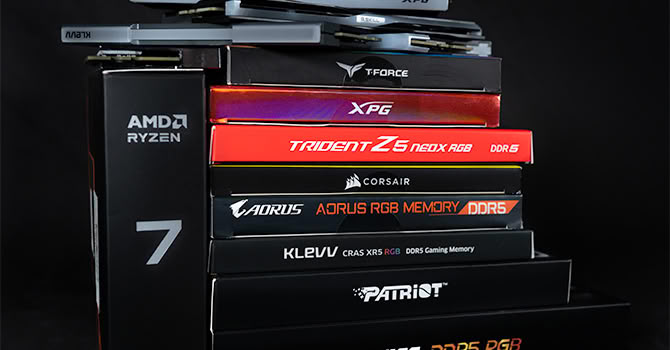
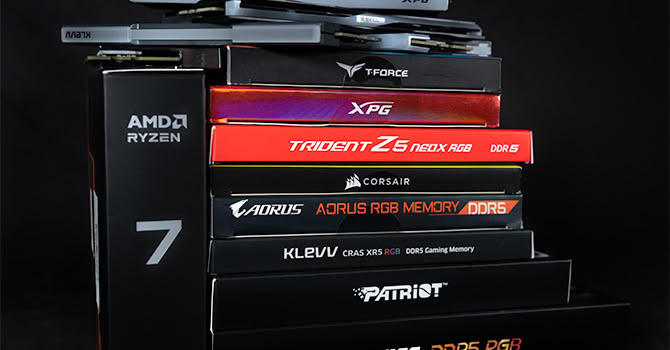
AMD’s 3D V-Cache technology has completely shifted the landscape for AMD latency chasers. With the Ryzen 7 9800X3D boasting a hefty 96 MB of L3 cache, the core question arises: if the processor rarely needs to urgently access system memory, does the type of RAM you choose still matter? To answer this, we assembled eight distinct memory configurations, covering the entire spectrum of options an AM5 buyer might realistically consider.