

“Was your room this messy when you left?”
Becky, 31, who lives in east London, was sunning herself on holiday when her cat sitter videocalled to ask about the chaos.
Her bedroom “looked absolutely ransacked”, she recalls. She thought she must have been burgled, but after her friend found four pairs of (treasured) heels that were chewed off, and caught a whiff of a “really strong burny smell” they realised the likeliest culprit: a fox, who would have crept in through the back door.
Shorts
Scroll to previous short
Scroll to next short

 Caption: Former British nurse and convicted child serial killer Lucy Letby appears by video link during an appeal against her conviction for trying to murder a newborn baby, at the Court of Appeal in London, Britain, October 24, 2024, in this courtroom sketch. Courtesy of Julia Quenzler/Handout via REUTERS THIS IMAGE HAS BEEN SUPPLIED BY A THIRD PARTY. MANDATORY CREDIT
Photographer: Julia Quenzler
Provider: via REUTERS
Source: Handout
news
The new claims about Lucy Letby – and what it means for appeal

Lucy Letby has failed – twice – to get judges to overturn her convictions for murdering seven babies and attempting to murder seven more. However, fresh claims that her prosecution is a major miscarriage of justice have been made in the new documentary, Lucy Letby – Scapegoat?, a collaboration between The Sun and Channel 5.
‘Letby was a scapegoat’
A doctor who worked alongside Letby at the Countess of Chester Hospital says he believes the evidence used to convict her is “extremely poor” and that there was no killer on the neonatal unit, saying instead she was a “scapegoat” used by hospital bosses to cover up the unit’s poor performance.
 Caption: CHESTER, ENGLAND – JULY 03: General view of the Countess of Chester Hospital on July 3, 2018 in Chester, United Kingdom. Health care worker at the Countess of Chester Hospital, Lucy Letby, has been arrested on suspicion of murdering eight babies. Cheshire Police having been have been investigating the deaths of 17 newborns at the neonatal unit between March 2015 and July 2016. (Photo by Anthony Devlin/Getty Images)
Photographer: Anthony Devlin
Provider: Getty Images
Source: Getty Images Europe
Copyright: ANTHONY DEVLIN
Individual failings and sub-optimal care at the hospital were discussed at length during both of Letby’s trials, but prosecutors insisted they did not explain the deaths.
Some details ‘not shared with jury’
The documentary claims there was a set of results relating to a baby who was poisoned by Letby that were not shared with the jury.
Letby was convicted of attempting to murder two babies by secretly injecting insulin into IV bags which were being used to treat them.
During the trial, jurors were told how a blood result for Baby F pointed to insulin coming from an external source rather than being produced by the body.
The Sun now claims that there were a further 14 glucose readings which were “normal” at the time Baby F was poisoned but that this evidence was not shown to the jury.
Retired detective Stuart Clifton, who investigated killer nurse Beverley Allitt, said the result should offer “clear grounds for appeal”.
Baby died ‘after Letby left the unit’
A mother has said her baby suddenly collapsed at the hospital and later died, six months after Letby was taken off the unit.
The statistics around the unusual number of collapses and deaths at the Countess of Chester between 2015 and 2016 were a key part of the prosecution case.
There were a total of 12 deaths from 2010-14 and then eight in 2015. Since Letby left the unit in July 2016, there has only been one.

Exclusive
3 min read

Big Read
5 min read
Expert questions method of alleged murders
 Caption: LIVERPOOL, ENGLAND – SEPTEMBER 15: Supporters of Lucy Letby gather outside the Thirwall Inquiry at Liverpool Town Hall on September 15, 2026 in Liverpool, England. The public inquiry led by Lady Justice Thirlwall into the events around neonatal nurse Lucy Letby’s murders of babies at the Countess of Chester hospital in northwest England is publishing its findings on Tuesday. Letby is serving 15 whole-life orders following her convictions for the murder of seven infants and attempted murder of seven others, between June 2015 and June 2016. ( (Photo by Christopher Furlong/Getty Images)
Photographer: Christopher Furlong
Provider: Getty Images
Source: Getty Images Europe
Copyright: 2026 Getty Images
One of the methods by which Letby was said to have murdered babies was injecting them with air to cause an air embolism.
However, vascular surgeon Dr Colin Ferguson told The Sun: “The fact that in no case was air found in the heart at post-mortem means that this is just not true.”
Email ‘undermines doctor’s evidence’
Following her retrial, Letby was convicted of attempting to murder a baby by removing her breathing tube.
Senior doctor Ravi Jayaram claimed that he walked in to find Baby K having collapsed with Letby standing over her cot doing nothing.
However the documentary obtained a contemporaneous email written by Jayaram which said that Letby called him for help.
The discrepancy over whether Jayaram went in because he was worried or because Letby called him for help was highlighted in the Thirlwall public inquiry into her case.
What happens now?
Letby remains in prison and her only avenue to clear her name is an application to the miscarriages of justice watchdog the Criminal Cases Review Commission (CCRC).
The CCRC is currently considering her application but there is no timeline as to when it will decide whether it believes Letby’s case should be referred back to the Court of Appeal or not. Only a fraction of all applications submitted are successful.

Analysis
4 min read

3 min read
How PIP claims for ADHD are rising for teens in richer areas
The number of 16- to 17-year-olds claiming personal independence payment (PIP) for ADHD and autism has more than tripled in richer areas over six years, according to analysis by the Nuffield Trust.
 Caption: Close-up on digital tablet on desk top. (Mock-up.)
Photographer: John_Lamb
Provider: Getty Images
Source: iStockphoto
What is PIP for?
PIP is the main benefit paid to people who have a long-term physical or mental health condition or disability and is intended to help with everyday tasks and living costs.
According to government statistics from July, there were 4.1 million claimants entitled to PIP in England and Wales.

Big Read
5 min read

4 min read
A closer look at the figures
While the amount of teenagers claiming PIP in deprived areas is higher, the number has grown at a slower rate, from 2.1 per cent in 2019 to 5.1 per cent last year.
This compares to a rise from 0.8 per cent to 2.5 per cent for teenagers from the least-deprived neighbourhoods.
 Photographer: Maskot
Provider: Getty Images/Maskot
Source: Maskot
Copyright: Copyright Maskot
The think-tank also found that PIP recipient rates for ADHD and autism for white people were higher overall than those of other ethnicities.
 Caption: CANTERBURY, ENGLAND – MARCH 16: Staff and students, some wearing face masks, queue to receive antibiotics at the University of Kent in Canterbury after an outbreak of meningitis caused the deaths of two people, on March 16, 2026 in Canterbury, United Kingdom. Two people have died amid an outbreak of meningitis at the University of Kent in Canterbury. Thirteen cases have been reported since Friday, reportedly affecting university students aged between 18 and 21. Children and young people are the most at risk of the disease, often caused by a bacterial or viral infection, which leads to inflammation of the meninges, or protective membranes around the brain and spinal cord. The UK Health Security Agency (UKHSA) is contacting 30,000 students and staff of the university to notify them of the outbreak. (Photo by Carl Court/Getty Images)
Photographer: Carl Court
Provider: Getty Images
Source: Getty Images Europe
news
Analysis reveals why Kent meningitis outbreak was so severe
Scientists have revealed what made the bacteria behind a deadly meningitis B outbreak in Kent in March particularly dangerous.
The context
Twenty-one people were diagnosed with invasive meningococcal disease (IMD) in a week, in the outbreak which was linked to a nightclub in Canterbury.
Two teenagers died and nine required intensive care.

Exclusive
3 min read

Explained
3 min read
Why it was so dangerous
Experts from the UK Health Security Agency (UKHSA) and University of Oxford found that the bacteria underwent a process called horizontal gene transfer – where it picked up small pieces of DNA from other bacteria.
 Caption: A female African-American scientist conducting and research on scientific sample though a microscope in a pharmaceutical laboratory.
Photographer: Nitat Termmee
Provider: Getty Images
Source: Moment RF
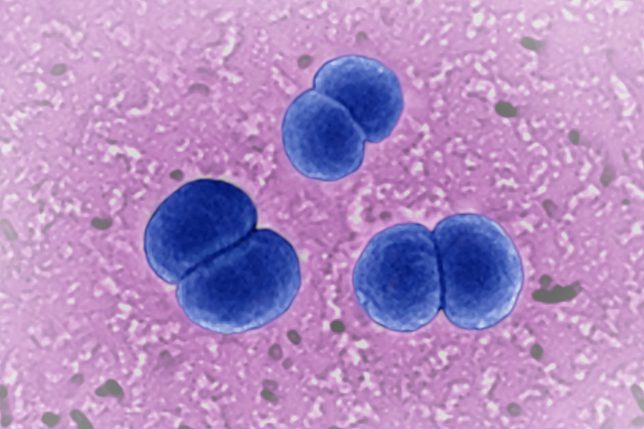 Caption: Meningococcus seen under a scanning electron microscope. (Photo by: BSIP/Universal Images Group via Getty Images)
Photographer: BSIP
Provider: Universal Images Group via Getty
Source: Universal Images Group Editorial
Copyright: CAVALLINI JAMES / BSIP
This means the bacteria can borrow genetic traits without reproducing and changes how it interacts with human cells. The change made it particularly effective at causing severe illness and may have affected how the immune system recognised it.
How the UK is trying to prevent future outbreaks
 Caption: teenage girl receiving her Covid-19 vaccination from a nurse
Photographer: Thana Prasongsin
Provider: Getty Images
Source: Moment RF
Copyright: ja
The UKHSA has said these invasive strains are unpredictable and can emerge suddenly, meaning there is a high likelihood of this happening again.
Following the Kent outbreak, a one-off menB vaccination programme was launched as universities start again.
What else is being done?
The Joint Committee on Vaccination and Immunisation (JCVI) has also recommended that teenagers be offered the jab on the NHS at the age of 15.

2 min read

4 min read

How to be more grateful for daily life in five easy steps
Gratitude
The world feels like a difficult place at the moment, and it can feel very hard sometimes to find things to be thankful for; when we are overwhelmed, we have less capacity to notice and reflect on the good things. Yet, ironically, proactively cultivating gratitude is one of the things that can actually help us feel less stressed.
NHS GP dR RADHA

The science
Research has shown that feeling or expressing thanks can actually alter our brain.
The balance of neurotransmitters change; more serotonin and dopamine (feel good chemicals) are produced.
This can be long lasting if we make gratitude a regular habit.
We also get a decrease in our cortisol (stress hormone) levels which helps lower anxiety.
Being grateful can strengthen the nerve pathways which triggers positive emotion.
How can we build gratitude?
 Caption: Two adult brothers enjoy a warm embrace in a sunny park. They stand beside a decorative fence surrounded by lush greenery, showcasing a strong bond and happiness in the moment.
Photographer: Beatriz Herrera
Provider: Getty Images
Source: iStockphoto
Copyright: beatrizherreragonzalez@gmail.com
Change your words
Instead of seeing something as a problem, try to see the opportunities within it.
Journal
Our brains are very receptive and what we read or write can alter our emotional system.
 Caucasian mid adult patient writing a diary while recovering in the hospital ward – stock photo. (Photo: Getty)
 ‘One question is how to achieve such a longevity hack when most of us have relationships that unsettle us,’ says Dr Amir Levine (Photo: Oliver Rossi/Getty)
Express it
This will not only make you feel good, but you will also get a positive response from others.
How can we build gratitude?
Notice more
Throughout your day, try to notice all the things that are going well; has someone opened a door for you, or smiled?
 Exercise with people you love (Photographer: Morsa Images/Getty/Digital Vision/Abel Mitj? Varela)
 Caption: Group of Happy Asian senior women friends shopping and having lunch at restaurant on summer holiday vacation. Healthy elderly woman enjoy outdoor lifestyle meeting and eating food together.
Photographer: CandyRetriever
Provider: Getty Images
Source: iStockphoto
The basics
By being thankful for the small things every day, we are far more likely to be and stay healthy so that we can enjoy them.
What to do
Gratitude can lead to feelings of optimism, lower our blood pressure, and improve sleep quality.
Write down what potential good aspects there are to the things you don’t feel like doing, or even what could be worse about it.
Spend a few minutes writing down three things that you are looking forward to that day, or the good things that have happened to you that day.
Say thank you to yourself for the things you have achieved, or managed to get through and changed that day.
Sales of battery
electric vehicles hit a record high last year.
Leon Poultney, a writer who specialises in cars, gives his EV recommendations, and the ones that should be avoided.

Renault 5 E-Tech
Starts at £22,995 for the smaller battery
Available with either a 40kWh battery or a larger 52kWh pack, that offers almost 255 miles, the latest, retro-inspired Renault 5 is both a joy to behold and a hoot to drive.
The interior has been lavished with a level of detail that’s typically reserved for more expensive cars.


4 min read
Mercedes-Benz CLA
A champion of EV efficiency

It offers a remarkable 491 mile range on a single charge from the 85kWh battery.
It is a technological masterclass inside with the ability to option screens that span the entire width of the dashboard, including an optional display for the front passenger.
Priced from £37,400

2 min read

Porsche Macan GTS
It’s a lot of money to part with, but this is arguably all the car you will ever need.
The £89,000 Macan is a premium SUV that somehow manages to blend Porsche’s reputation for dynamics and sporty driving with everyday practicality.
The 95kWh batteries can go from 10 to 80 per cent in as little as 21 minutes from the fastest public charging outlets.
Kia EV 9
With the business class-style six seat configuration costing a staggering £76,995, it is by far the most expensive Kia ever made, but it backs up its financial demands with a suite of genuinely useful and impressive onboard technology.


MG IM6
It’s fast, goes a long way between stops and charges relatively quickly but the interior is bland, the onboard technology is infuriating and the experience is devoid of emotion.
BYD Dolphin Surf
All of its gadgetry can’t disguise the fact that performance is weak, even for a typically zippy EV, the ride is fussy at slower speeds and it’s not in the least bit enjoyable to drive on a country road.

While good value (prices start at £17,935) for the 200-mile max range, there are more interesting options from Hyundai, Citroen and Renault for similar money.
Leapmotor T03

It attempts to wow with tech, much of which hinders, rather than helps.
There’s no tangible benefit over mounting your phone to the dash.
Simply an average driving experience, adequate range and slow charging speeds.

2 min read

The kitchen gadgets and products a food editor swears by, all under £25
The kitchen gadgets under £25
 Caption: best kitchen gadgets
Victorinox paring knife
It’s comfortable to hold, with a point sharp enough for scoring pastry.
ProCook cast iron pan
For unbeatable searing and heat-retention, cast iron is the top choice.


Tesco chopping board
Priced at just £22, I’ve yet to find another board that matches it for sheer value and quality.
The kitchen gadgets under £25
Pyrex jug
It is the perfect vessel for blending smooth sauces, melting butter, or warming stock. It won’t stain like plastic and the red measurements never fade.

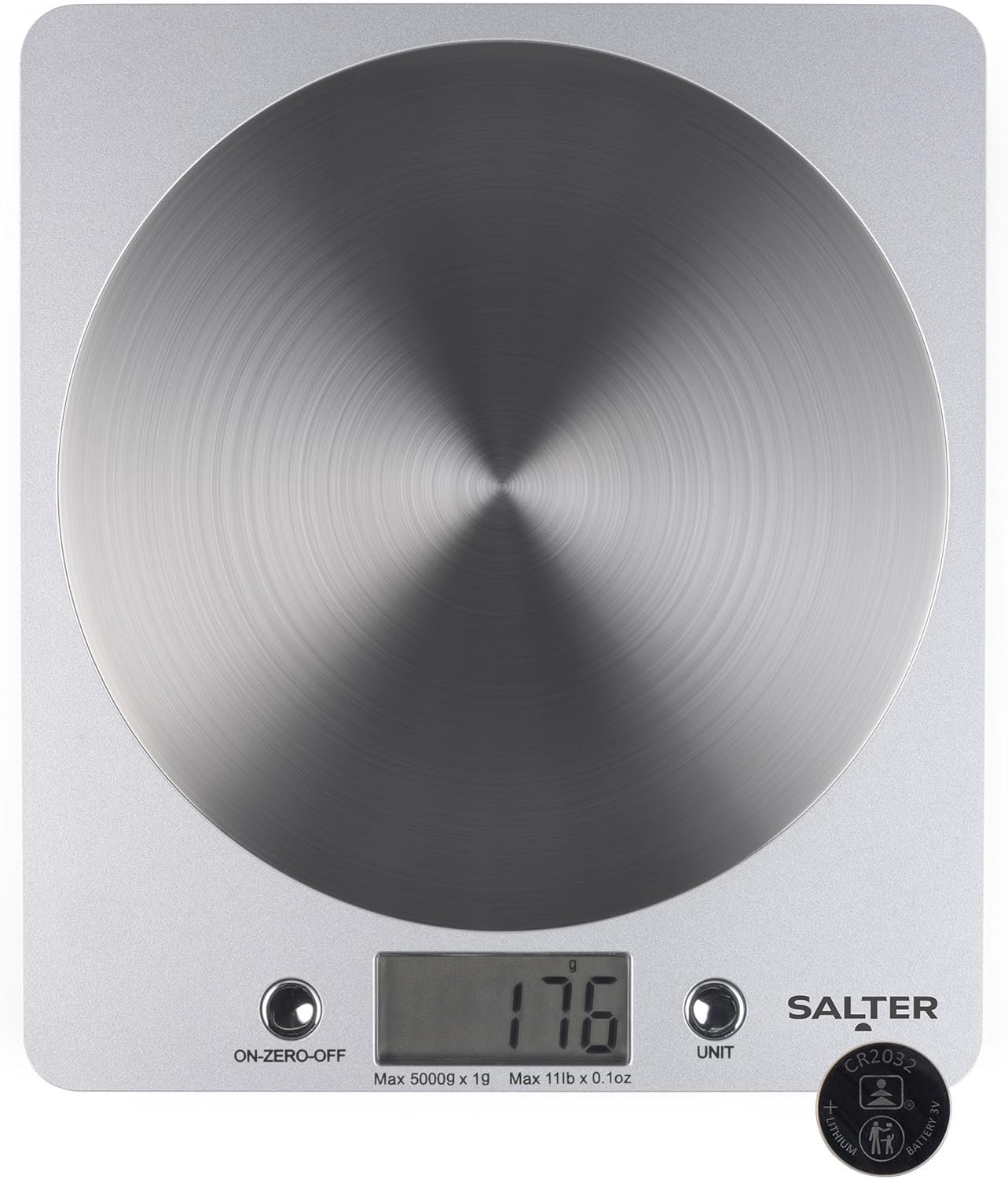
Salter scales
“I’ve had my slim little set of Salter Disc Scales for over a decade, and I’m delighted to see they are still made to exactly the same reliable design today.”
Microplane grater
It uses photo-etched stainless steel teeth that stay razor-sharp for a decade, something the lookalike copycats simply can’t match.
Braun hand-held blender
It’s an essential for everything from making velvety soup to getting the lumps out of white sauce.
Bodum cafetiere
As well as delivering great results, cafetieres are easy to clean and there’s no ongoing filter paper costs or pod recycling to deal with.

5 min read
The kitchen gadgets under £25
Oxo peeler
What truly sets it apart is the chunky, rubberised handle that absorbs pressure and stays completely non-slip, even if your hands are wet. It is inexpensive and incredibly durable.


Falcon pie dish
Made by fusing porcelain onto heavy-gauge steel for smooth durability, it is dishwasher, freezer, hob, air-fryer and oven-safe.
The golden rules for a happy, secure relationship
Psychiatrist and neuroscientist Dr Amir Levine, author of bestselling book Attached, explains why we behave the way we do in love.
 Caption: Happy woman walking with male partner in vineyard during sunset. Elderly couple are touring in field against sky. They are enjoying during weekend.
Photographer: Morsa Images
Provider: Getty Images
Source: Digital Vision
Golden rules for happy relationships
Start with your own behaviours
The foundation of a secure, connected life is being what I call CARRP: that means being consistent, available, responsive, reliable and predictable. All of these qualities can be enacted in small gestures every day.
 Side view of affectionate happy couple sitting in the cozy cafe. – stock photo. (Photo: Getty)
 Son’t assume your partner knows how you think (Photo: ljubaphoto/Getty/E+)
Express your needs
People need consistency and connection to feel safe. This is not, ‘You hurt my feelings by never replying to me’, it’s more ‘this is the kind of contact that helps me feel secure’.
Golden rules for happy relationships
 Unhappy married couple facing away from each other in a quiet home, concept of emotional distance, loneliness in relationship and family problems – stock photo. (Photo: Getty)
The appendix ‘inflammation’ rule
If a relationship repeatedly inflames your nervous system, you need to disengage and deprioritise it.
Lean on community
You don’t need hundreds of friends. You need people and places that regularly remind you that you belong.
 Caption: Happy couples talking while walking embraced during spring day in a meadow.
Photographer: skynesher
Provider: Getty Images
Source: E+
 Candid shot happiness and togetherness Asian mother supporting daughter try to standing and walking first time and positive emotion – stock photo. (Photo: Getty)
Stop blaming childhood
Humans are much more complicated than: ‘this happened to you, therefore you are doomed to be anxious’.
 Caption: Financial problems. Worried middle-aged woman holding utility bills, managing monthly household budget, sitting on bed feeling anxious. Cost of living concept
Photographer: MementoJpeg
Provider: Getty Images
Source: Moment RF
Reach for a
secure script
When something unsettles you in a relationship, your first reaction is not always the most accurate one.
If you’re anxious, your brain may jump very quickly to: ‘this is the beginning of the end’. If you’re avoidant, your brain may say: ‘this person wants too much from me, I need to get away’. So one very practical thing you can always do is pause and ask: ‘What would a secure person do here?’
Loneliness elsewhere
When people talk about loneliness, they often assume it means you don’t have enough people in your life. But you can be surrounded by people and still feel lonely if those relationships leave you feeling excluded, ignored or disconnected.
 Frustrated lonely shy guy sitting apart of others teenagers – stock photo. (Photo: Getty)
What to do
Build a community that works for your temperament and gives you regular, reliable moments of connection.
You can still be kind to people while not treating them as someone who belongs in your inner circle.
Explain what you need. Sometimes people simply don’t realise how you are experiencing them.
Check in with people: does this person actually feel that I’m reliable? Do they experience me as predictable? That’s the only way that you can start to become more secure.

Do some foods leave
you feeling hungry rather than satiated? Experts say there are…
Foods that leave you hungrier
A bowl of cereal and glass of orange juice
More refined cereals are digested quickly, and fruit juice, whilst one of your five-a-day, contains less fibre than whole fruit. This might mean you find yourself hungry again within 1-2 hours of eating this breakfast.
 No more orange juice. (Photo via pixaby)
 It’s estimated ultra processed foods make up at least half of the average UK diet (Photo: Getty)
Swap the orange juice for a whole orange, the cereal for oats and milk or serve it with Greek yoghurt or a boiled egg. This would increase the fibre and protein content; two nutrients strongly linked with fullness.
Foods that leave you hungrier
 Caption: Gail’s croissant
Image taken from https://gails.com/collections/breakfast/products/croissant
Croissants
These pastries are made primarily from refined flour and butter, and are relatively low in protein and fibre.
Toast and jam
It is mostly carbohydrate and without protein or fibre, it is digested quickly, leaving you feeling hungry.
 Caption: Toasted bread and white background
Photographer: Daniel Tamas Mehes
Provider: Getty Images
Source: iStockphoto
Copyright: Minden jog fenntartva!
 Yakitori’s on the menu at the Japanese restaurant – but what exactly is it? (Photo: Reuters)
Sushi
Shop-bought packs can contain a lot of white rice, which is digested quickly, and the protein content is often modest.
Foods that leave you hungrier
 Sarawak laksa is one of many varieties of this noodle soup (Photo: Tham Kee Chuan/Getty)
Vegetable soup
On its own, it is often very low in protein and calories, so hunger can return quickly.
Pizza
Unless it’s loaded with veggies, it’s probably pretty low in fibre.
 Best pizza in Britain named – and owner reveals the secret to its success (Photo: James Linsell Clark/SWNS)
 The Government has announced that the sugar tax will be extended to milkshakes (Photo: Scott Suchman)
Smoothies
Liquids are generally less filling as they require little chewing which may not trigger satiety signals.
Foods that leave you hungrier
 ‘Aged 14, I started what I considered to be my own little business selling confectionary,’ writes Beauty Dhlamini (Photo: Getty)
Snack bars
They are ideal for a quick pick-me-up, but if reducing hunger is what you’re after, it’d be better to swap it out.
Low-fat yoghurt
A full-fat plain Greek yoghurt with berries and seeds tends to be much more filling due to the protein, fat and fibre.
 Which yoghurts are the best options? (Unsplash)
 Caption: BANGKOK, THAILAND – OCTOBER 17: A “KT Herbalist”, a Kratom cocktail made from Kratom, coffee and siamese herbs is seen at Teens of Thailand, a bar in Bangkok’s Chinatown on October 17, 2021 in Bangkok, Thailand. In April 2021, the start of Thailand’s third and most deadly wave of the COVID-19 pandemic, the Thai government banned the sale of alcohol in restaurants and bars, crippling the already suffering food and beverage industry. With a lack of government aid and support, some bars have shuttered their doors in hopes of reopening post-lockdown, while others shuttered their doors for good. But six months into Thailand’s most recent lockdown, Niks Anuman-Rajadhon, owner of Teens of Thailand, a gin bar located in a renovated shophouse in Bangkok’s Chinatown, decided that instead of waiting for the government to allow the sale of alcohol again, they would take advantage of Thailand’s recent legalization of Kratom. Kratom is a locally grown herbal drug with mild opioid and stimulant effects and was reclassified from a type-5 narcotic to a legal-to-grow herb in August 2021. While Thailand prepares for a tentative reopening on November 1st, the alcohol ban and curfew are set to continue, leaving business owners questioning if the country can revive its suffering tourism industry. (Photo by Lauren DeCicca/Getty Images)
Photographer: Lauren DeCicca
Provider: Getty Images
Source: Getty Images AsiaPac
Alcohol
On an empty stomach, it can actually increase your appetite.
What to eat instead
Instead of thinking about avoiding foods, think about what you can add to them.
Add beans, lentils or shredded chicken to your vegetable soup and pasta.
Thicken your smoothies with Greek yoghurt, chia seeds and oats.
Apple slices with peanut butter, yogurt with berries and hummus with oat biscuits are better snack options than a pre-made snack bar.
Have alcohol alongside a balanced meal containing protein and fibre.
Foxes have always been wily creatures: scavenging for food, staring down your dog on evening walks, volleying haunting screeches at 2am. In the past 40 years, their numbers have been rising, mainly due to urban sprawl giving them more access to food. Their tendency to avoid humans means there is no precise science to measure the British fox population, but a study from scientists at Bournemouth University and the University of Reading in 2017 estimated that 280,000 foxes live in the countryside and around 150,000 are city-dwellers.
And just like autumn heralds freshers’ week for young adults, at this time of year fox cubs, almost fully grown, begin to scope out new digs. So, if your neighbourhood is home to foxes, you can expect increased activity as they battle for territory. Meanwhile, there are strong signs that foxes are becoming braver and more confident around humans than ever before.
Last month, a mother in Watford, Hertfordshire, recalled how her three-month-old’s head was bitten by a fox who’d come into their home while she slept. Residents in London, now home to 10,000 foxes, report that they are wandering into open front doors and back doors and even sitting on sofas and jumping on kitchen tables.
Jen Elliott, 38, who also lives in Watford, says when foxes first started coming closer to her terraced house, she “found it novel and quite welcome”.
However, over the past 18 months, “the screaming starts just as it gets dark. We thought it was people fighting at first, then realised [it was foxes] because they’ve been pooing in our yard. It absolutely stinks. They did it on our welcome mat and I thought I’d hose it off, but the smell was so rank I had to just put it in the bin.”
Her kids’ garden toys have also been “destroyed” by foxes’ gnaws. “They’re wild animals, but they do really smell and there doesn’t seem to be a way of moving them on”, she says. Yet, part of her doesn’t want them to go. “I am a bit of a softie, especially when it comes to nature,” she says.
She has neighbours who’ve had foxes come into their homes. “It’s either when people have left their back door open, or, in one case, through a skylight into a child’s bedroom.”
Foxes, like all animals, adapt to their surroundings. A study from the University of Hull, published in 2023, found that urban foxes are becoming bolder as they increasingly adapt to the hustle and bustle of city life. Researchers gave the animals unfamiliar puzzle feeders to see how they would react. At the time, Dr Blake Morton said: “We found that urban foxes were more likely to behave bolder than rural populations in terms of their willingness to physically touch the puzzles, but they were not more motivated to try to gain access to the rewards inside.”
This is where problems really arise. Rhiannon, 42, lives in Snaresbrook and has found foxes “treating the kids’ trampoline like a bed, and when it was very hot, I think they thought, ‘Eff it, I’m not moving’. They did move off if I approached, but then I’d have to wipe the whole thing down.”
More frustratingly, she has had to bid a budding rosebush adieu after discovering that the fox was ruining her plants. “I don’t normally mind them, but they left soil everywhere.”
Becky lives in Homerton, east London, and recalls the time she found a fox in her home. “[I was] in the lounge watching TV the other day, and I looked to the right, and I saw a fox there, just eating our cats’ food. It then weed onto the floor and their cat food bowl, then trotted off like nothing had happened!”
That burning smell is lingering, so Becky and her partner have “ordered a UV light to try and locate the exact spot to clean with all these special enzymes”.
“The smell reeks and literally haunts me every day. I just cannot get it out of my head, and it’s driving me insane.”
Not everyone is so anti-fox, with plenty of Britons more than happy to feed their local foxes. On social media hundreds of thousands of vulpephiles use dedicated fox-lover pages to share images of cutesy foxes snuggling on benches, trotting around patios in search of food and curled up asleep.
Chloe, 40, who lives in Loughton, has “befriended a fox called Jingles” and feeds him cracked eggs.
Dr Rebecca Machin, a zoologist and scientific and policy officer in the RSPCA’s wildlife team, understands the temptation to feed and photograph foxes. “It’s great if people leave out a bit of wet dog or cat food to help them, to welcome them into their gardens. But there have been people on social media, posting about getting foxes really tame and leaving out inappropriate food like donuts and fast food.” The RSPCA strongly advises the public against feeding foxes inside their property or hand-feeding them.
A 2025 study from the Game and Wildlife Conservation Trust and Bournemouth University found that 14 per cent of foxes’ diets consisted of human food sources. However, Machin says that foxes’ food should mainly be self-sourced and consist of “small vertebrates, like frogs, small birds and mammals, and also worms, fungi and fallen fruit”. She also warns that “if people are trying to be overfamiliar with them, then it might encourage them to go into neighbours’ houses who obviously aren’t wanting them inside”.
“Foxes are really unlikely to become aggressive, but it is much more likely to happen when people are trying to hand-feed foxes. If foxes become familiar with people there’s more chance they will […] start to expect food from other people. That might result in them being more aggressive if they don’t receive food when they’re expecting it.”
Dr Phillip Baker, a zoology lecturer at the University of Reading and member of the science advisory committee of the Mammal Society, echoes this warning. “In this selfie age, we are aware, increasingly, of people trying to have interactions with foxes which are not particularly constructive. Back in the day, people would not have thought about trying to feed foxes from the hand or getting them to come into their houses”.
He continues: “But now, foxes just kind of get a bit inquisitive for their own good […] and there is this increasing tendency for people to see them as extended pets […] which is not in the fox’s best interests.”
“If people feed foxes from the hand or allowing them indoors, then the fox might be tempted to approach another person who does not like foxes [or] go into a strange house. This then could create a scenario where they scare or antagonise someone who does not like them approaching too closely, and then that person gets someone in to kill the fox because they are fearful of it.”
Baker says that in truth foxes rarely act aggressively. “The reason that [fox attacks] make headlines is it’s phenomenally rare if it does occur, and in this day of social media, people do make stories up without question. We’ve had maybe five reports of foxes attacking people in the way that this last one did […] in the past 25 years”.
The RSPCA carries guidance on how to fox-proof your garden, including sealing bins and composters, blocking areas beneath decking, protecting fruit and vegetable crops and planting spiky plants at the edges of the garden.
If a fox does show up in your home, Machin advises that people “leave the outside door open, but block access to elsewhere in the house. The fox will likely leave, but if not, approach gently with a long-handled broom to help usher it out. But don’t try to handle it directly.”
In the course of Baker’s work, he has “been bitten by foxes several times. Every time, it’s my own fault. Obviously with smaller children, it’s a bit more concerning. But a big fox weighs about six kilos, and even a small baby is kind of that size or bigger.”
He concludes: “I think it’s very much a British cultural thing, that wildlife, which is common and abundant, ultimately rubs people up the wrong way.”
So, although foxes are perhaps responding to humans’ familiarity, there is nothing to suggest they are becoming more aggressive.
The only big change of late is that foxes may find getting indoors that much easier, Machin explains. “The hot summer has led to plenty of people keeping more windows and doors open, in search of some [air] circulation”.
Vulpine guests seem to be yet another inadvertent consequence of climate change on Britons, but for some it’s a joy.
As Jen puts it: “Yes they are a pest, and when they get into our food waste bins, they cause a mess, but equally we’ve sort of invaded and taken away their spaces.”
“I think it’s one of those things where you do have to try and live harmoniously if you can.”