
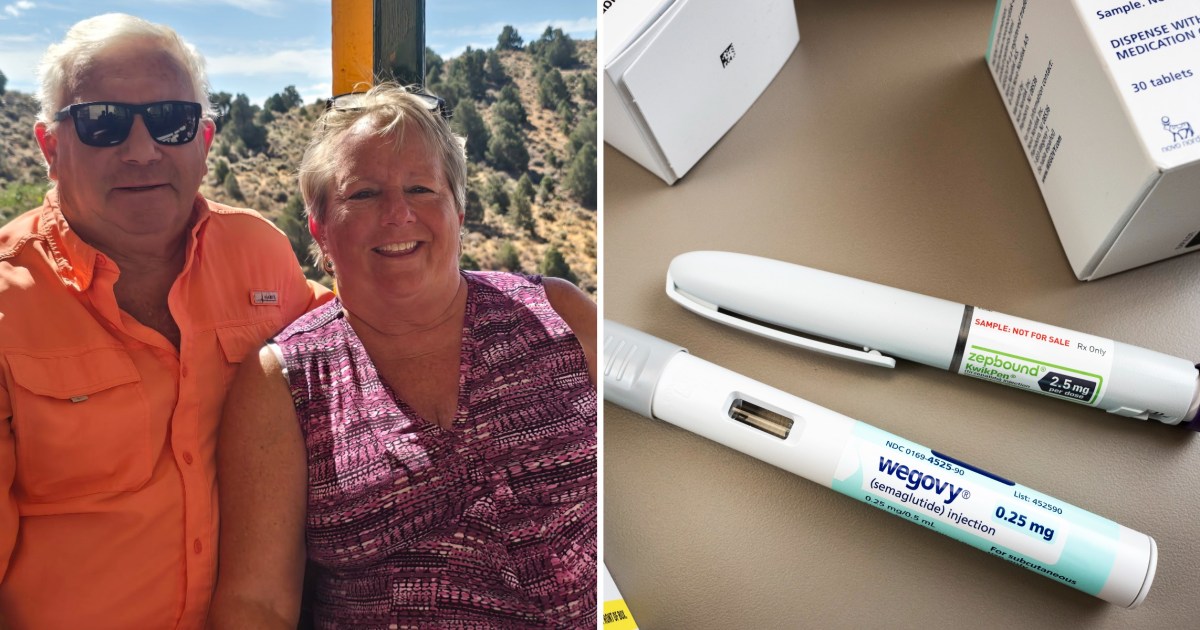
Hundreds of Americans are suing the makers of popular GLP-1 weight-loss and diabetes drugs, saying they weren’t adequately warned of the potential danger of vision loss.
Diane Wirth, 66, is one of them. She’s been diagnosed with a rare eye injury known as NAION, the acronym for nonarteritic anterior ischemic optic neuropathy, which has been described as a “stroke of the optic nerve.” There’s no known treatment for the condition.
The nurse practitioner in rural Georgia, who was taking the blockbuster GLP-1 medication Wegovy to lose weight, said her only symptom was a sudden loss of vision in her right eye.
“I woke up one morning and I was like, ‘What is wrong with my eye?’” Wirth told NBC News correspondent Stephanie Gosk.
“I was fine when I went to bed, and I woke up, and the vision was gone. … There was no warning sign at all.”
She described it as initially “missing a wedge” out of her right eye. Now, her vision in that eye is like looking through glasses that have been smeared with petroleum jelly — Wirth can still see light, but can’t read and doesn’t have depth perception, she noted.
Her entire life has been upended: Wirth stopped driving, had to retire early and is now more dependent on others.
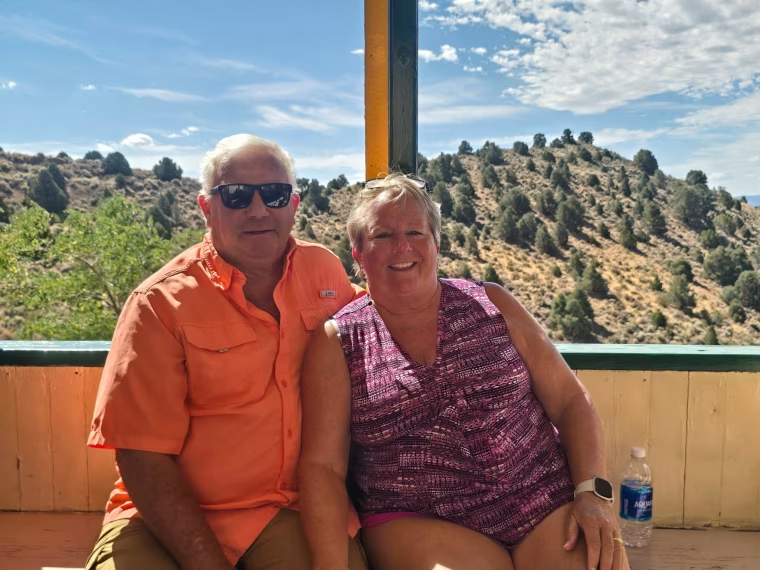 Diane Wirth’s life has been upended since losing her vision, which she believes was due to taking Wegovy.Courtesy Diane Wirth
“It’s been very challenging, and I would not want anyone else to have to go through this,” Wirth said.
She explained she would have never taken the drug if she knew there was a potential for vision loss, but it was not listed on the drug label. It has not been confirmed that Wirth’s vision loss is a direct result of taking a GLP-1 medication.
Wirth is suing Novo Nordisk, the pharmaceutical giant that makes Wegovy, for damages she alleges were a result of her using the drug. The suit was filed earlier this year in the U.S. District Court for the Eastern District of Pennsylvania.
A spokesperson for Novo Nordisk told NBC News in a statement that it “believes the personal injury lawsuits filed in the U.S. are without merit and (we) are vigorously defending them.”
Jason Goldstein, Wirth’s attorney at Parker Waichman LLP, said his firm represents at least 150 people who’ve been diagnosed with NAION after using a variety of GLP-1 drugs for both weight loss and Type 2 diabetes.
“It’s a devastating condition,” Goldstein told NBC News.
“The label needs to be updated if the companies want to do the responsible thing.”
Pharmaceutical Companies Respond
The drug labels for Ozempic and Mounjaro — which are approved to treat Type 2 diabetes — list “changes in vision” as possible side effects.
The drug labels for Zepbound and Wegovy — which are approved for weight loss — instruct patients with Type 2 diabetes taking those drugs to let their doctor know if they notice vision changes.
According to the World Health Organization, citing the European Medicines Agency, NAION is a very rare side effect of semaglutide, the active ingredient in Ozempic and Wegovy, potentially affecting up to 1 in 10,000 users.
However, a June 2026 systemic review by the American Academy of Ophthalmology did not find evidence of “a consistent overall increase in NAION risk,” the authors wrote.
Novo Nordisk, the pharmaceutical giant that makes semaglutide — the active ingredient in both Ozempic and Wegovy — told NBC News that it hasn’t seen any safety signals in its randomized clinical trials when it comes to NAION, adding that it believes the lawsuits are “without merit.”
Eli Lilly, which makes Zepbound and Mounjaro, also said patient safety is its top priority, adding that it actively monitors safety information for all its drugs. “We will continue to review data, including any data regarding ophthalmic issues,” the company said in a statement.
The U.S. Food and Drug Administration told NBC News it routinely monitors the safety of drugs after they’ve been approved and entered the market. The FDA “identifies safety signals from a variety of sources, evaluates the available data and takes regulatory actions when appropriate,” it noted in a statement.
A study on the risk of NAION in patients with Type 2 diabetes who are using GLP-1s is being conducted by the FDA and in progress.
What Doctors Say About the Risk
A statement by the North American Neuro-Ophthalmology Society and the American Academy of Ophthalmology, published in August 2026, noted that based on current evidence, the “overall magnitude of the risk of NAION remains low” in patients taking GLP-1 drugs such as semaglutide.
“New evidence is emerging rapidly, and the results of future studies may alter the current conclusions,” the authors added.
When it comes to overall incidence of NAION in the U.S., it’s estimated there are 2-10 cases per 100,000 people over the age of 50, according to the American Academy of Ophthalmology.
In patients who take GLP-1s, many papers have found an association with a two- to four-fold increase in risk, which still makes the condition very rare, said Dr. Manjot Gill, a retina specialist and professor of ophthalmology at the Northwestern University Feinberg School of Medicine in Chicago.
“The take-home message would be that while there is an increase in relative risk — and this is really an association, we haven’t determined an absolute causation — the absolute risk is still very small,” Gill told NBC News.
“The overall health benefits of these drugs would likely far outweigh the very small increased risk of this very, very rare complication.”
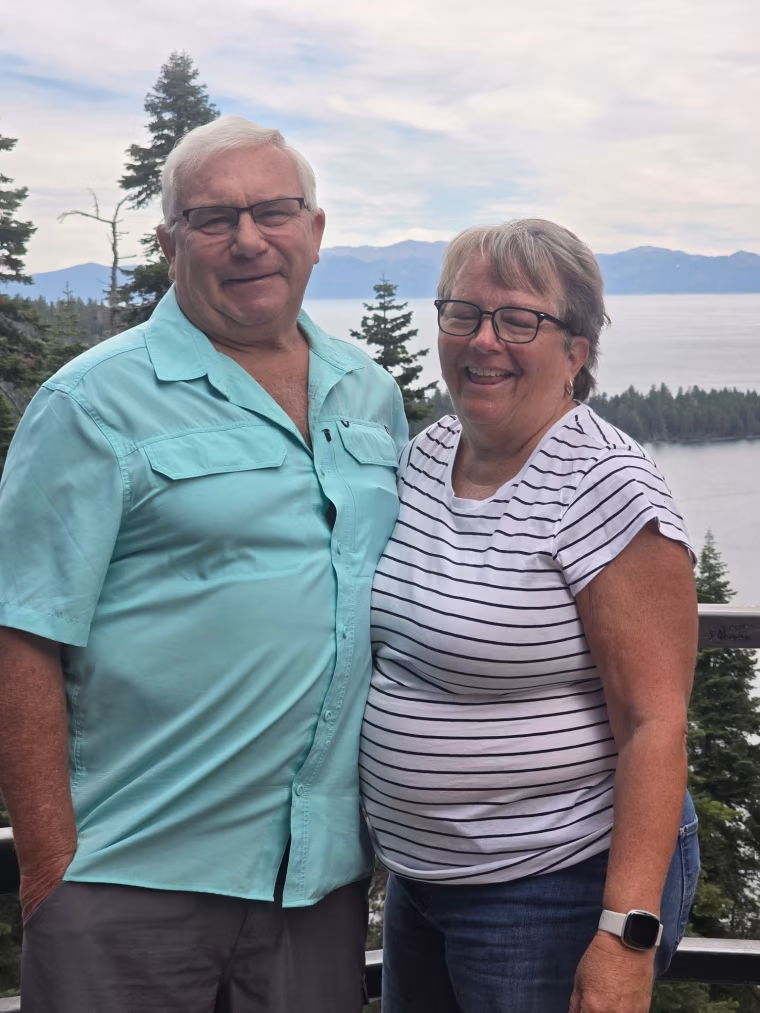 Diane Wirth.Coutesy Diane Wirth
GLP-1 benefits include better diabetes control and weight loss, plus many other health boosts.
It’s important to weigh the risks and benefits with your doctor, Gill added. She advised patients to be aware of the possible impact on their eyes and immediately tell their doctor if they experience a sudden painless loss of vision.
But when it comes to GLP-1s, vision loss concerns should not outweigh the overall patient’s wellbeing, doctors previously told TODAY.com.
“What we don’t want is for patients to be so fearful of these medicines that they say, ‘Well, I’d rather live with my poorly controlled diabetes out of fear of visual loss,’” said Dr. Sunir Garg, a clinical spokesperson for the American Academy of Ophthalmology and professor of ophthalmology at Wills Eye Hospital in Philadelphia.
“The substantial majority of patients who take these drugs won’t ever have vision problems.”