
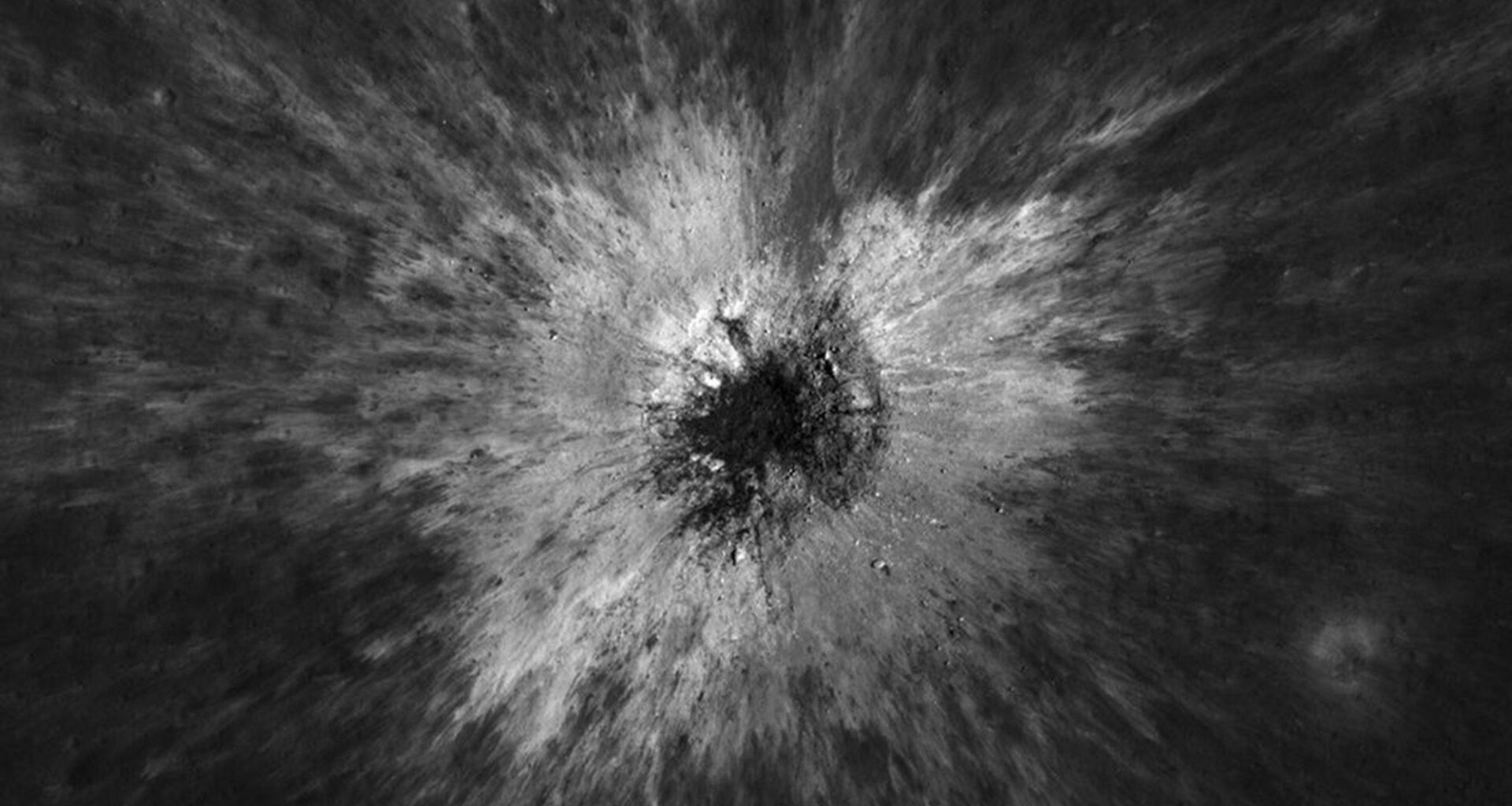
Since launching in 2009, NASA‘s Lunar Reconnaissance Orbiter (LRO) — a robotic satellite about the size of a minivan — has taken more than 3 million photos of the lunar surface. This week, scientists studying a few hundred of those photos announced what they’re calling a “once-in-a-century” discovery: the biggest, freshest impact crater ever seen in the solar system. It’s the result of a building-size meteorite that slammed into the moon just two years ago.
The new lunar pockmark, named McGetchin crater after the late geologist and lunar scientist Tom McGetchin, is about 728 feet (222 meters) wide, on average, and 141 feet (43 m) deep — imagine a hole as long as two American football fields and deep enough to fit a 14-story building inside.
You may like

Julie Stopar
Senior Staff Scientist at the Lunar and Planetary Institute
Dr. Julie Stopar is a staff scientist at the Lunar and Planetary Institute where she leads research on lunar geology and surface evolution. She is the deputy princial investigation for NASA’s Lunar Reconnaissance Orbiter camera, which discovered McGetchin crater.
What to read next
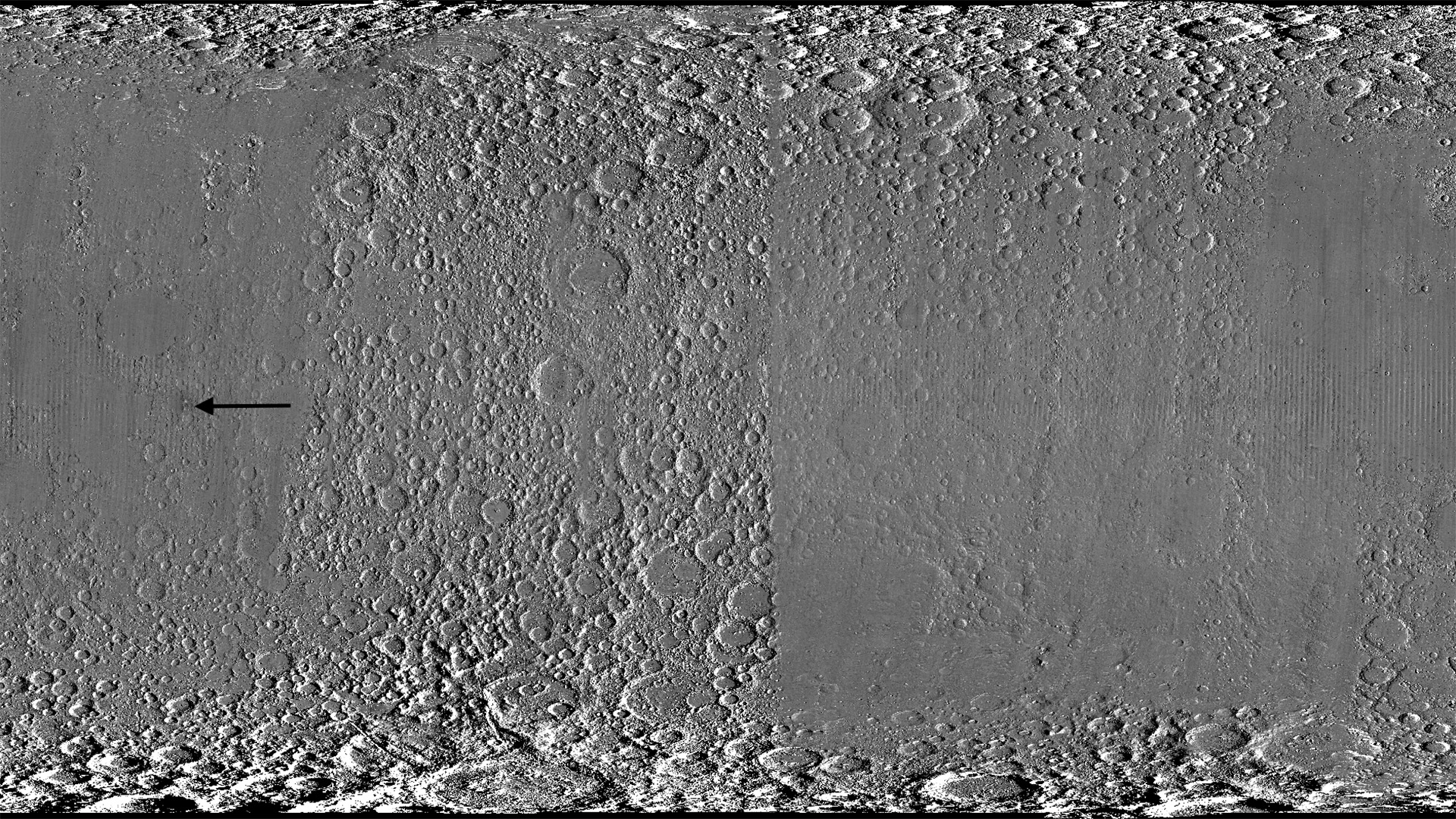
A global view of the moon made from hundreds of images taken by the Wide-Angle Camera aboard NASA’s Lunar Reconnaissance Orbiter. The black arrow shows the location of McGetchin crater.
(Image credit: NASA Lunar Reconnaissance Orbiter)
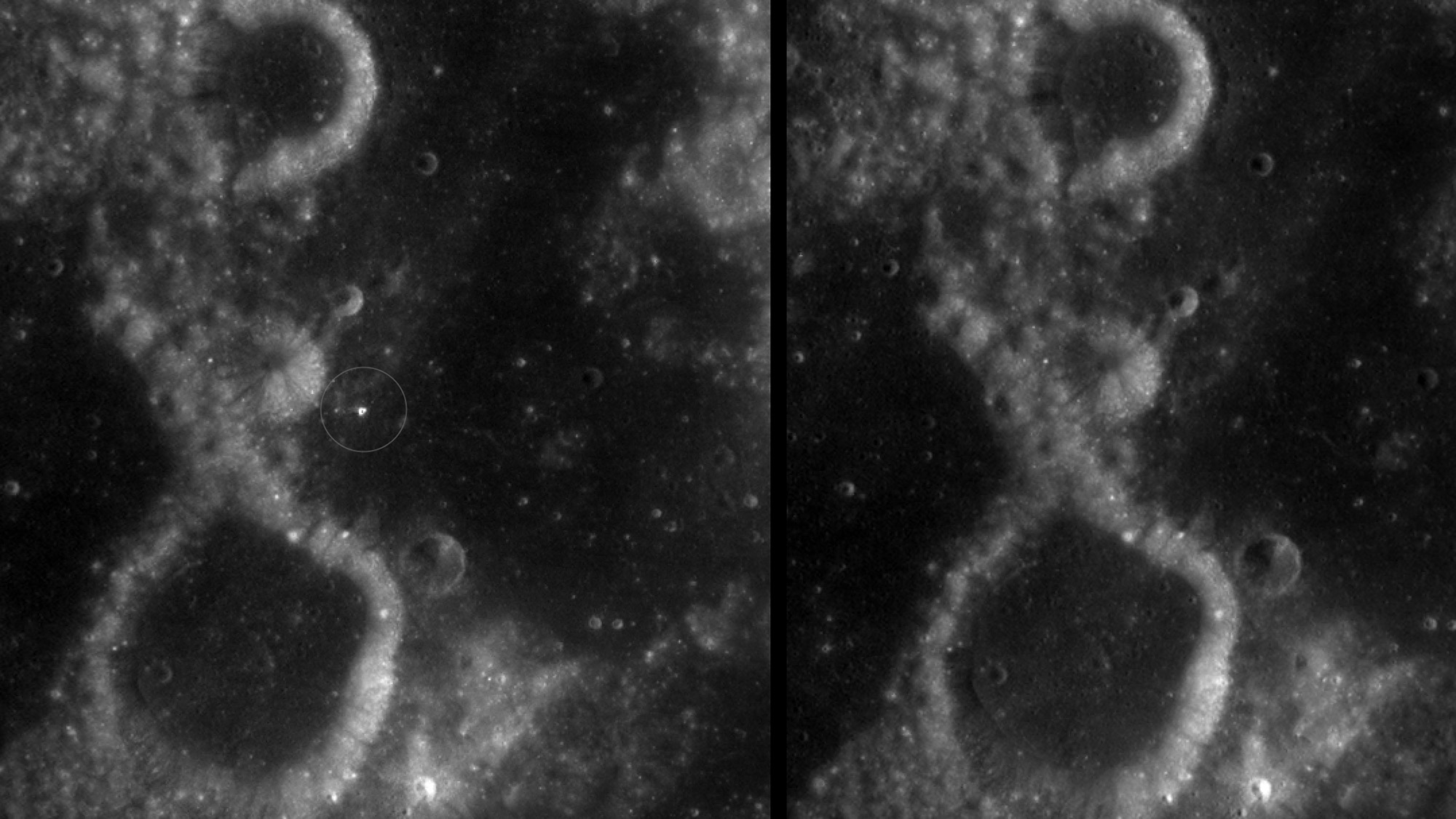
McGetchin crater, circled in white, as seen in a 2025 LRO image (left) compared to an image of the same part of the moon taken in 2011 (right). Scientists think the crater formed between April and May of 2024.
(Image credit: NASA Lunar Reconnaissance Orbiter)
Exclusive to Live Science Pro
This interview has been condensed and edited lightly for clarity.