
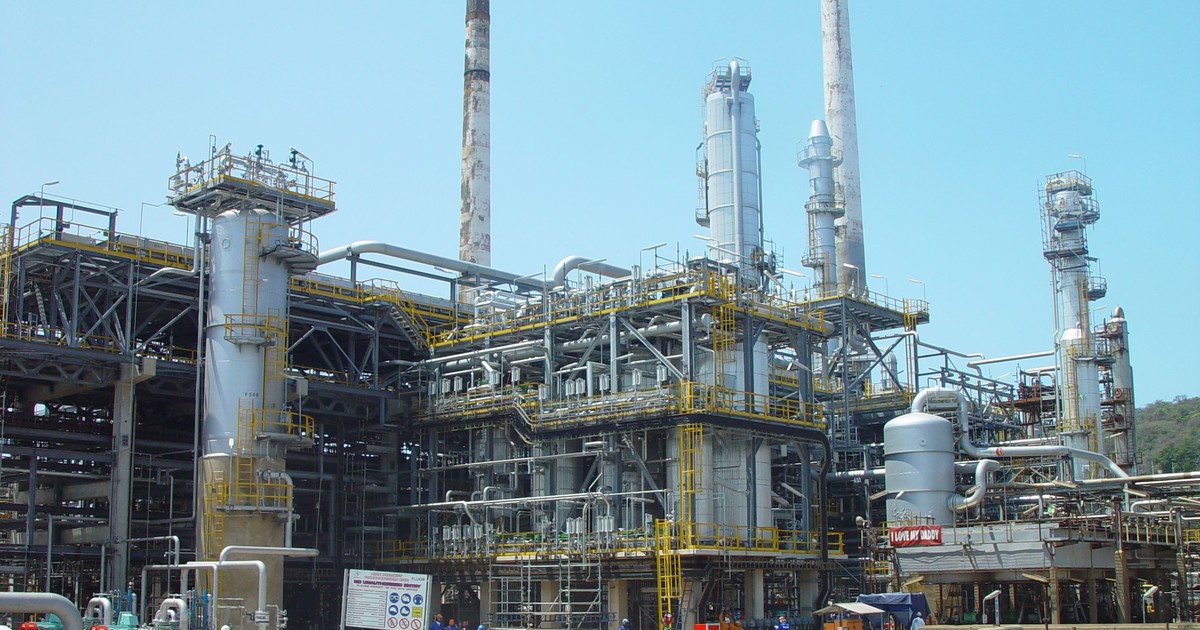
The Central Energy Fund (CEF) said it plans to spend about $7.15 billion upgrading the Sapref refinery in Durban, the country’s largest refinery, which it acquired from BP and Shell in 2024 for a symbolic 1 rand after the facility was damaged by floods.
The refinery, which has a capacity of 180,000 barrels per day, is being considered for an expansion that would eventually lift capacity to between 400,000 and 650,000 barrels per day.
Sapref targets major expansion
According to Reuters, CEF is seeking approval from South Africa’s National Treasury, with a final investment decision targeted for 2027/28.
However, a banking source and a government source said discussions were underway with Afreximbank and other potential financiers.
Before the refinery fully restarts, CEF plans to revive Sapref’s liquefied petroleum gas import and distribution business and lease existing storage tanks to generate early revenue.
The Durban refinery has been idle since 2022 after severe flooding damaged the facility, adding to South Africa’s dependence on imported refined petroleum products.
Mossel Bay refinery to restart in phases
CEF is also weighing plans to restart the Mossel Bay gas-to-liquids refinery, which has been idle since 2020 because of a shortage of domestic gas feedstock.
The facility, operated by PetroSA and now part of the South African National Petroleum Company, would be restarted in phases.
The first phase targets production of about 18,000 barrels per day and requires an estimated R5.8 billion in investment. A second phase would increase output to 46,000 barrels per day and require an additional R8.5 billion, or about $525 million.
The combined projects form part of South Africa’s efforts to rebuild domestic refining capacity and reduce exposure to international fuel markets as the country faces growing energy security concerns.
For years, South Africa, Africa’s biggest fuel importer, has relied heavily on refined products from Gulf suppliers, including Oman, Saudi Arabia and the United Arab Emirates, to meet domestic demand for diesel, petrol and jet fuel. In April, Business Insider Africa reported that South Africa’s fuel imports from the US reached 165,000 tonnes following supply disruptions in the Middle East.