
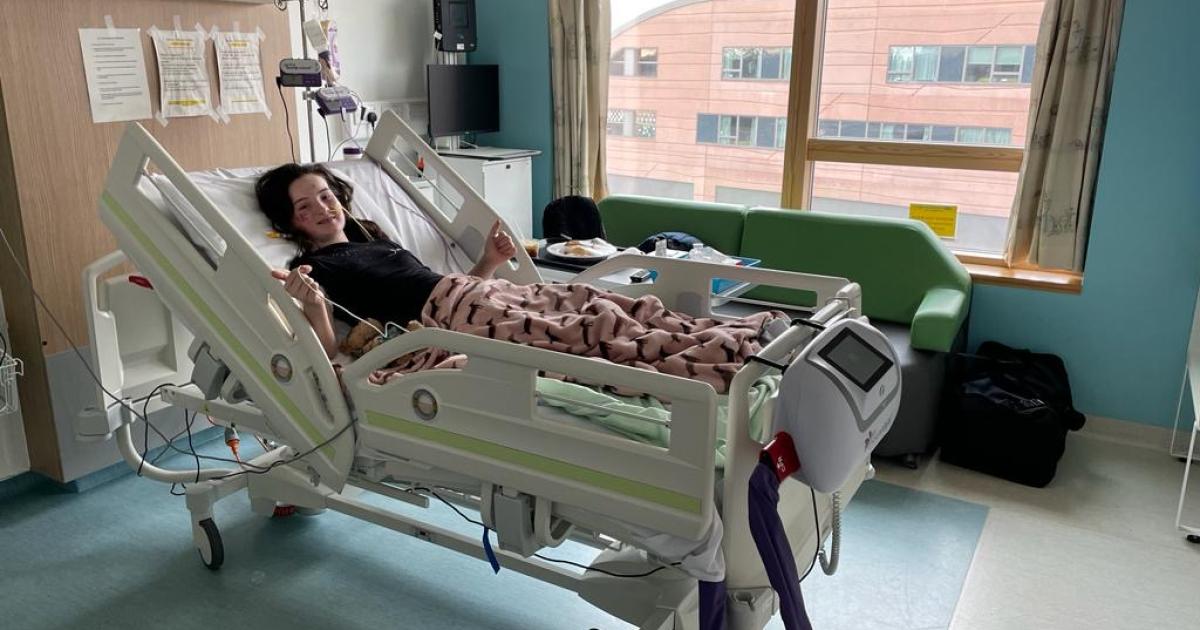
Anna Foster, from Grappenhall, spent 14 days in intensive care with childhood-onset systemic lupus erythematosus (cSLE), a rare autoimmune disease that nearly claimed her life.
Her family is now backing new research that could help identify children with cSLE who are at higher risk of developing heart disease, a leading cause of early death in lupus patients.
The research, which is being carried out at University College London, is being jointly funded by children’s charity Action Medical Research and LifeArc.
cSLE, previously known as juvenile-onset systemic lupus, is a rare lifelong autoimmune condition.
It is a condition where the immune system mistakenly attacks healthy tissues, causing a range of symptoms and damage to vital organs, including the skin, joints, kidneys, nervous system, heart and lungs.
(Image: Supplied)
“The symptoms affect each child differently, with symptoms ranging from very mild to life-threatening,” said lead researcher Professor Coziana Ciurtin of University College London.
For Anna, cSLE was life-threatening.
Her dad Mark said: “Anna had been complaining of aches and pains in her arms for a few weeks, we had been backwards and forwards to the GP but did not get a diagnosis.
“We went to A&E where her condition deteriorated rapidly, her face swelled up like a balloon, the skin started to peel from her face and it looked like she had an open wound.
“As she couldn’t breathe they had to intubate her immediately. She spent six days on a ventilator.”
At this point, the family had not been given a diagnosis, but the doctors knew that her immune system was being attacked so she was prescribed a strong cocktail of immunosuppressant drugs and steroids to treat the attack.
The first night was “terrifying” as the doctors told the family that Anna might not make it.
“To try and reduce the attack on her immune system, the hospital removed blood from Anna’s body, put it in a centrifuge machine to remove harmful elements and then returned it back into her body,” Mark said.
“In addition to the immunosuppressant drugs and steroids she was also on the maximum dose of adrenaline. She struggled to stay alive on the first night in intensive care.
“All we could do was watch – we felt helpless as there was nothing that we could do.”
(Image: Supplied)
After 14 days in intensive care, the family knew the worst was over and it was at this point that lupus was first mentioned as doctors had to rule out other conditions.
The family didn’t know anything about lupus or what the symptoms were.
The cocktail of drugs that Anna was prescribed has been reduced and she now takes two drugs every day, but the condition has taken its toll.
Although there is no cure, medications that suppress the immune system, similar to the drugs that Anna was prescribed, can control the disease, allowing many children to lead relatively normal lives.
However, children and young people with cSLE remain at risk of serious long-term health complications.
For example, they have a much greater likelihood of developing heart disease early in life compared to their healthy peers.
“Children with lupus are at greater risk of developing heart disease earlier in life as fatty material gradually builds up and narrows their blood vessels,” says Professor Ciurtin.
“These changes may begin in childhood, but it is difficult to know who will be affected, making early identification and prevention vital.”
(Image: Supplied)
Although Anna is better now, the condition has and still has a huge impact on her life.
She missed almost a year of school and has long-term side effects.
“Anna has scarring to the face and body and the brain fog that is often associated with lupus,” Mark said.
“Before being diagnosed with lupus she was in the top set, potentially heading for Oxbridge. This isn’t an option now as the tiredness and the brain fog has affected her school grades.
“Anna was prescribed strong doses of the steroid prednisolone, which caused avascular necrosis, a condition where the bone tissue dies. As a result, the bone in Anna’s hip deteriorated to mush. Anna had a hip replacement in May 2024, when she was 14. The other hip needs to be replaced but Anna wanted to wait until she had finished her GCSEs.”
Action Medical Research has been funding cutting edge research into rare conditions for many years.
Dr Caroline Johnston, senior research manager at Action Medical Research, said: “The results of this research project, a blood test to help identify young people with lupus who are most at risk of future heart disease, would ensure patients are treated earlier and could ultimately save lives.”
(Image: Supplied)
Anna and Mark are passionate about research and raising awareness of lupus.
To their knowledge, Anna does not have any heart problems, but they say that research into lupus and its long-term effects is needed.
“A blood test which would help predict which young people might be at risk of future heart problems could help doctors, patients and their families act sooner and prevent serious problems before they develop,” added Mark.