

Want to bookmark your favourite articles and stories to read or reference later? Start your Independent Membership today.
Already a member?
Log in
Apple thinks it lives in your iPhone, or maybe also your Apple Watch. OpenAI is rumoured to be installing it in a mechanical, doughnut-shaped object. Facebook parent company Meta wants it to live on your face, or inside a Tamagotchi-like gadget. Plenty of other companies want to put it elsewhere, from your fingers to around your neck.
Wherever it is, whatever precise form it takes, it is the future. Or at least that’s what technology companies seem to have decided. In recent months, almost all the major tech companies have been reported to be working on personal AI assistants – which gather data about your life, using it to help you out.
The idea, such as it is, remains vague. OpenAI is perhaps the most widely cited company working on such a technology, for instance, but it is still not really clear what they are actually making. Last year, former star Apple designer Jony Ive announced that his new design firm would work with OpenAI to design a new product.
 Sam Altman’s OpenAI is rumoured to be developing some kind of AI assistant technology (AFP/Getty)
Various rumours seem to illustrate some sort of assistant device. Early leaks point to a doughnut-shaped object that can move around, presumably being placed on a surface or carried with its owner.
But even as a vague idea, it is already becoming one of the most quickly developing new technologies. And – if the companies making it are right – then it might soon be shaping our lives, and the future.
The idea of a personal AI assistant is of course not new. It has been a staple of science fiction for decades, and products including ChatGPT, Claude, Gemini and Meta’s Muse are already promoted for their assistive capabilities. All of those companies are working on versions of their systems that are increasingly “agentic” – able to autonomously take actions – and can hook them into other platforms, so that they can send messages, schedule meetings and even book holidays.
But those systems, like all AI tools, are really only as good as the data they have on your life. And much of the important bits of life happens away from the computer, in the real world, rather than the more readily available information that is collected in emails, calendars and the other digital libraries that can be readily fed into a large language model.
The same problem exists in reverse. Chatbots, powered by large language models, are primarily designed for typing into a device and receiving a response back – but that means that the ways we can engage with them in real life are inherently limited, since it requires you to sit down at a laptop or phone and read any replies.
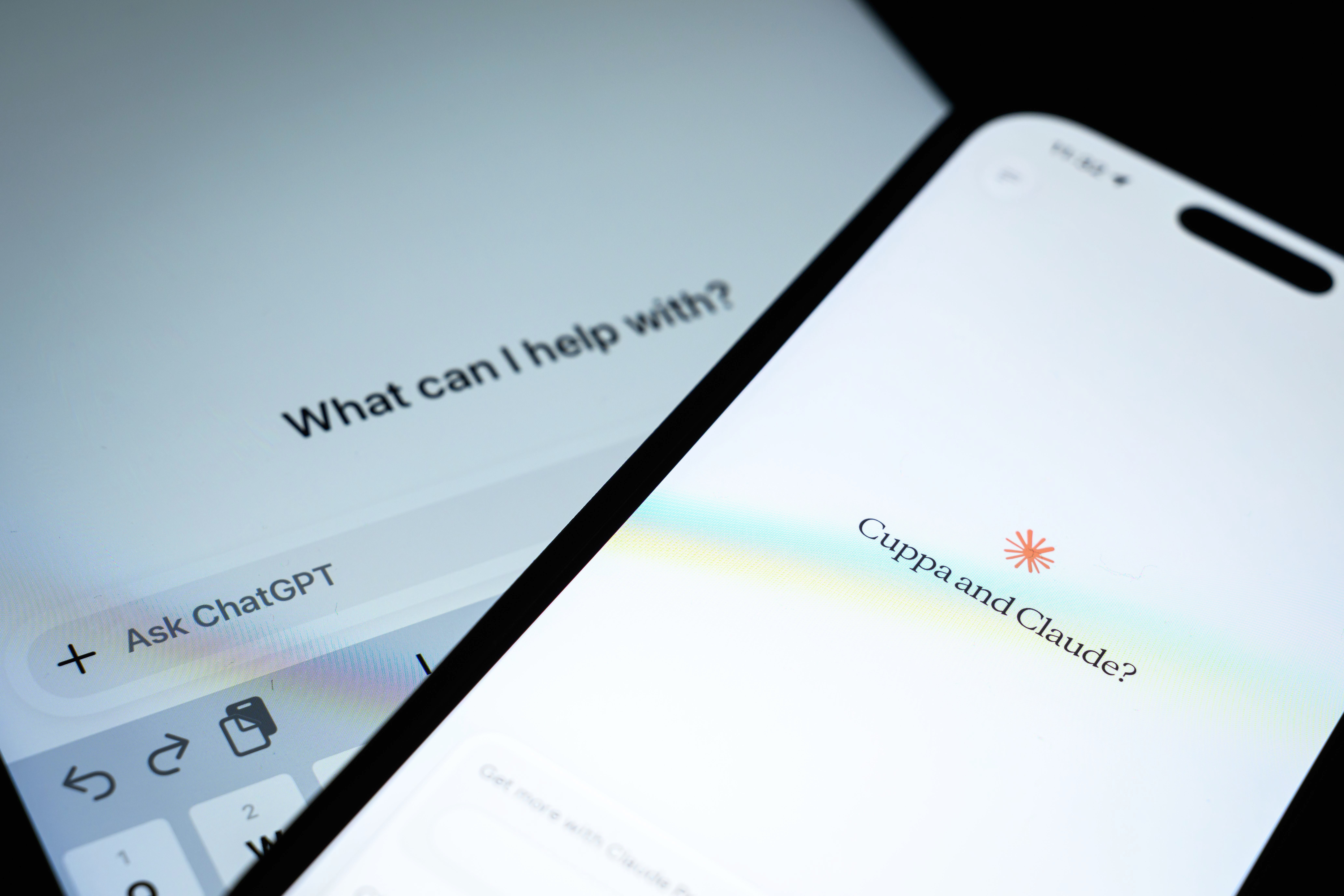 Screentime: AI tools face a clear obstacle in that much of life happens away from our phones and computer (Getty)
To fix both problems, almost all of the major tech companies are working on their own new hardware, designed around AI features, that makes it easier both for the products to understand the world and for their owners to interact with their products. Numerous companies including OpenAI are rumoured to be working on pendants to be worn around the neck or credit card-shaped objects that can be carried around; Meta is pitching its widely decried smart glasses as an AI interface, as well as putting its new Muse assistant into an upcoming Tamagotchi-like gadget; smartwatch pioneer Pebble makes a ring that can be used to take notes; Apple’s upcoming updates to the Apple Watch can turn it into a kind of always-on, ambient note taker that will feed information into Siri.
Some companies have already tried similar ideas. In 2018, for instance, two former Apple designers founded Humane; in 2024, it shipped its first product, the AI Pin, intended to be worn as a smart brooch that used cameras, microphones, a laser display and speakers to see the world around its owner and interact with them. It was hit with terrible reviews immediately, and the company struggled to sell the product. But the motivating idea behind Humane’s work has not died quite as quickly.
 Apple chief executive John Ternus was eager to frame the iPhone as the ultimate assistant-like technology at the recent launch (Reuters)
Perhaps unsurprisingly, Apple itself has not been quite so keen to shout about the death of the iPhone, even as it has moved towards a vision of a personal AI assistant itself. At the launch of the latest iPhone 18 Pro and iPhone Duo, new Apple chief executive John Ternus laid out a vision of an “intelligent personal hub” that sounds a lot like the pitch that others are making for their killers – but which keeps that device at its centre.
If you were designing “the ideal version of this hub from scratch”, you would make it able to be carried with you at all times, have a powerful processor for running on-device AI models, a big display to show information, cameras and microphones to see and hear the world around, have an all-day battery life and integrate with other devices and services. You would build, he suggested, an iPhone.
You would also want to ensure that the device understood your personal context by holding “the most private details of your daily life”, he said. “Others see that data as something to collect and store,” he warned, but Apple is committed to privacy so that you can trust that data would stay yours.
It was a convincing pitch. But it seemed as if he was arguing with someone he wouldn’t name, about something he wasn’t entirely specific about, perhaps the former Apple designer now working with OpenAI…
These questions of ethics and etiquette are only likely to become more pressing, as more companies produce these kinds of AI-feeding devices
At the same event, Apple introduced the new Apple Watch – and it includes a feature that might be the best clue to its plans yet.
Alongside new heart rate sensors and other updates, Apple launched a feature called “Siri Recap”, which takes audio through the Watch’s microphones, crunches it up with transcription, summarises it and stores it in the iPhone; the pitch is that it will give people a rundown of the important conversations of the day.
Apple may have chosen the Siri branding for its recap feature partly because it is looking to promote its own virtual assistant, and the dramatic changes to it that are coming this year, which use new AI features and aim to make it vastly more useful across a variety of different tasks. But it might also be a hint at why exactly it believes these recaps could be useful: if they are available to Siri, then that AI assistant will have much more context about its users’ life and be able to help them out in new and improved ways.
In launching the new version of Siri, for instance, Apple used the example of tracking a loved one’s arrival from another country: the system could find the flight details in a text message, work out when they are likely to land, and use that to calculate when you might want to leave. It’s easy to imagine how such use cases might become even more impressive if it had data on your whole life: even if your visitor had only mentioned their flight number in passing and in person, say, it would still be able to call that up.
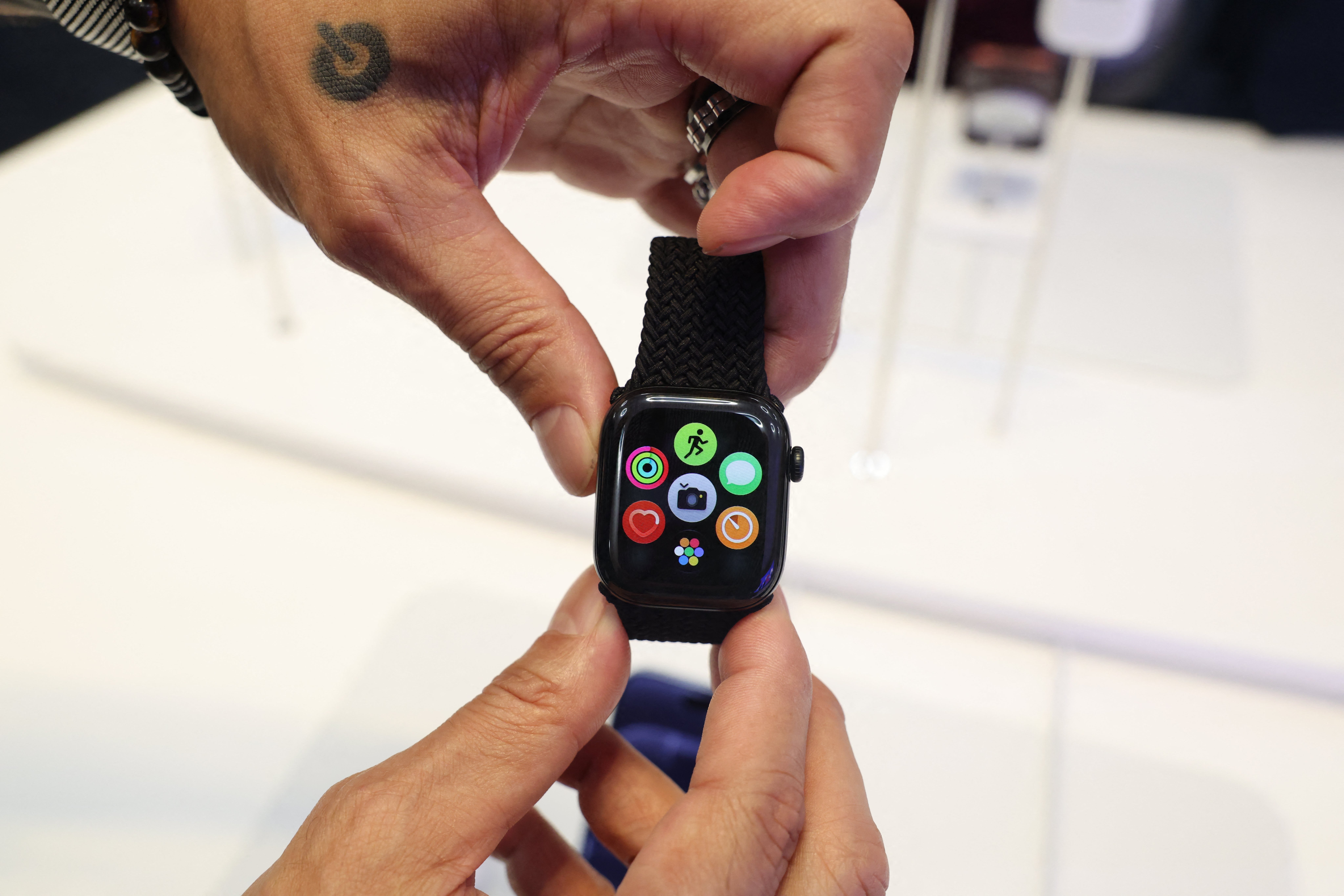 Apple launched their new watch, featuring tech that could give you a rundown of important conversations you’ve had during the day (AFP/Getty)
But that is also exactly where much of the controversy around the feature and about the technology more generally arose. It led to questions about whether such a technology would allow us to be less attentive and aware, given that our devices would be storing things people say to us anyway. Perhaps more immediately, it led to a flurry of concern about privacy.
Apple is keen to stress that the recordings remain secure and private: the watches do not capture any raw audio, and the transcripts are not accessible by Apple or anybody else. But that does not address the more specific privacy questions of how people might feel about having their potentially intimate and personal conversations captured by someone else’s Watch, written down in a summary that they might choose to save forever.
Even Apple seemed to be aware of this trouble as it released the feature. It can be automatically switched off at night, for instance, and a page on the company’s website describing the “Audio Intelligence” features tells users to “be mindful of those around you”: “while audio is not recorded and stored, and no speakers are attributed, consider those around you where conversations might be private or sensitive”.
This, it seems, is just the start for Apple, given its statements about the “intelligent personal hub” and rumours that it is working on other AI-enabled devices such as Siri screens for the home and smart glasses that include cameras. Those will presumably do much the same job of gathering data on the real world to help with AI requests.
These questions of ethics and etiquette are only likely to become more pressing, as more companies – many of which have less firm commitments to privacy than Apple – produce these kinds of AI-feeding devices. In Ternus’s speech about the intelligent personal hub, Ternus looked to separate Apple from other companies who see your data “as something to collect and store”, and there are certainly many competitors who would be more keen to have user information to train their systems as well as for advertising.
Meta for instance has been keen to brand its own smart glasses as being about artificial intelligence features. The marketing has largely failed to make them be seen that way – and even still they have been derided as “pervert glasses”, because of the relatively straightforward and intentional feature of taking photos and videos.
There is backlash against this “always on” tech in other places too, namely against AI transcription and summarising. This week, the company Devaillance launched a new tool it calls Kalypta. “Become inaudible to AI,” it promises.
When a user of the software is in a meeting, it alters their voice so that it becomes inaudible to transcription services. Early versions of the software, shared online, suggest that the speakers’ voice is still largely audible to other people in the meeting though has obviously been changed, but Devaillance says that it will block out two out of three words to AI transcribers such as Google Meet and Zoom.
Even as it is only in relatively limited situations and by devices that remain for now largely theoretical, people are already rebelling against having their data captured for AI. Apple’s new watch transcription tools are not even here yet and include every privacy protection possible while still maintaining their central function, and still have led to outcry. It all suggests that there might be something more fundamentally controversial about the very fact of this kind of data collection, a problem not with the implementation but with the idea.
Those pushing this future occasionally point to the fact that recording is not new: there are plenty of apps for the Apple Watch that could be switched on and actually record a meeting, for instance. And, besides, concerns about privacy are often more about the principle than the practice; plenty of people deride Meta for its loose privacy protections but are happy to store deeply personal information in Facebook and other products.
But the company’s smart glasses will stand as a warning to anyone making those kinds of arguments and relying on those kinds of comforts. Its a warning the tech industry would do well to take note of.