
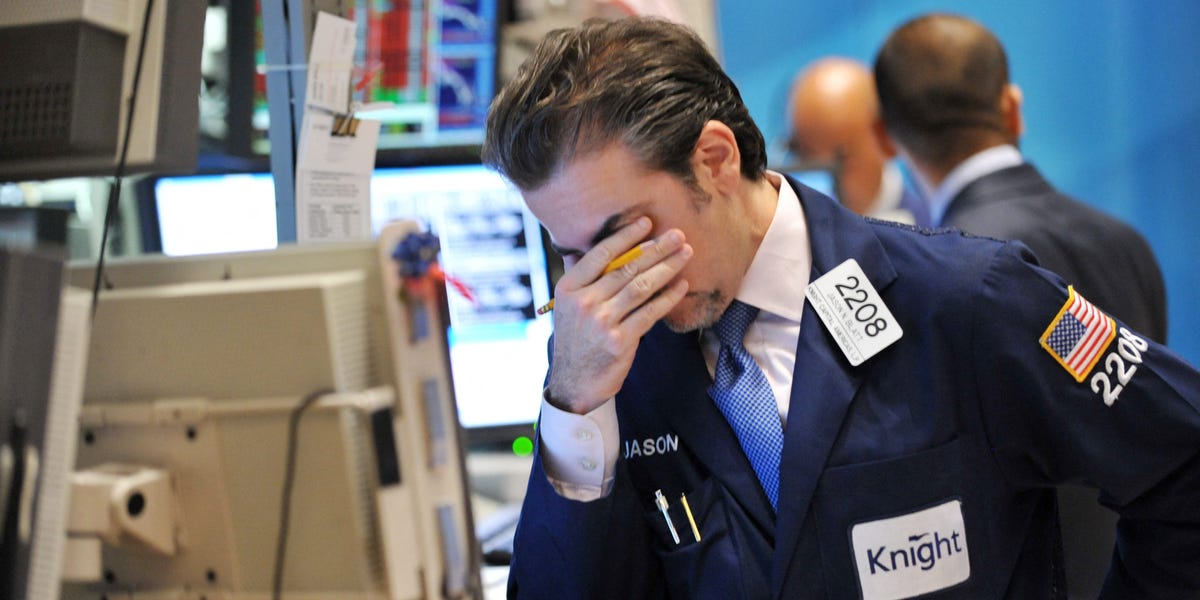
Rising long-term bond yields are once again pestering stocks, and BNP Paribas says it’s only going to get worse.
In a client note published Tuesday, the bank said it sees yields on the 30-year Treasury bond rising to 5.6% in the months ahead. As of Thursday afternoon, yields sat at 5.43%, up from 4.83% at the start of the year. When yields rise, bond values fall.
Higher long-term bond yields tend to weigh on stock performance as investors compare Treasurys’ risk-free returns to long-term projected earnings yields. Yields have risen due to rising oil prices and associated inflation concerns, worries about ballooning government debt, and elevated borrowing demand from both the government and AI hyperscalers.
BNP’s call for rates to continue rising centers around rising debt concerns, and that three catalysts would soon inflame the market’s misgivings, BNP said.
First is the Federal Reserve’s new rate-hike cycle. The central bank raised rates by 25 basis points in September, and is expected to hike possibly twice more in 2026, and again by April 2027.
This will “substantially” boost the amount of interest the US government has to pay on what it borrows, BNP said, because the Treasury does most of its borrowing on the short end of the yield curve.
“If the Fed delivers the four hikes priced in by the market, the Treasury’s interest burden will go up by USD116bn in the first year, and about USD168bn by year two,” Guneet Dhingra, BNP’s head of US rates strategy, wrote in the note. “For context, a USD168bn increase in interest expense will erase all the incremental tariff revenues collected in 2025.”
Second, the government’s budget deficit is beginning to widen again.
This is due to tariff rollbacks and refunds, as well as rising long-term interest rates in recent months — creating a self-reinforcing feedback loop.
Want more Business Insider in your news feed?
Add BI in Google so our reporting is easier to find when you’re searching for what matters.
Third, investors may be underestimating the government’s fiscal spending appetite after the US midterm elections. With Democrats expected to take power back in the House of Representatives, or even the House and the Senate, BNP said that expectations may be for spending to decline given a lower level of collaboration between the executive branch and Congress.
But that may not be the case. When this outcome occurred after 2018 midterm elections, high spending levels continued, the bank said.
On top of this, defense spending is set to rise, with the bipartisan Senate Armed Services Committee already having approved a $250 billion increase in the defense budget.
“Given all the aforementioned fiscal risks, we think the path of least resistance is still for higher back-end yields,” Dhingra said.