
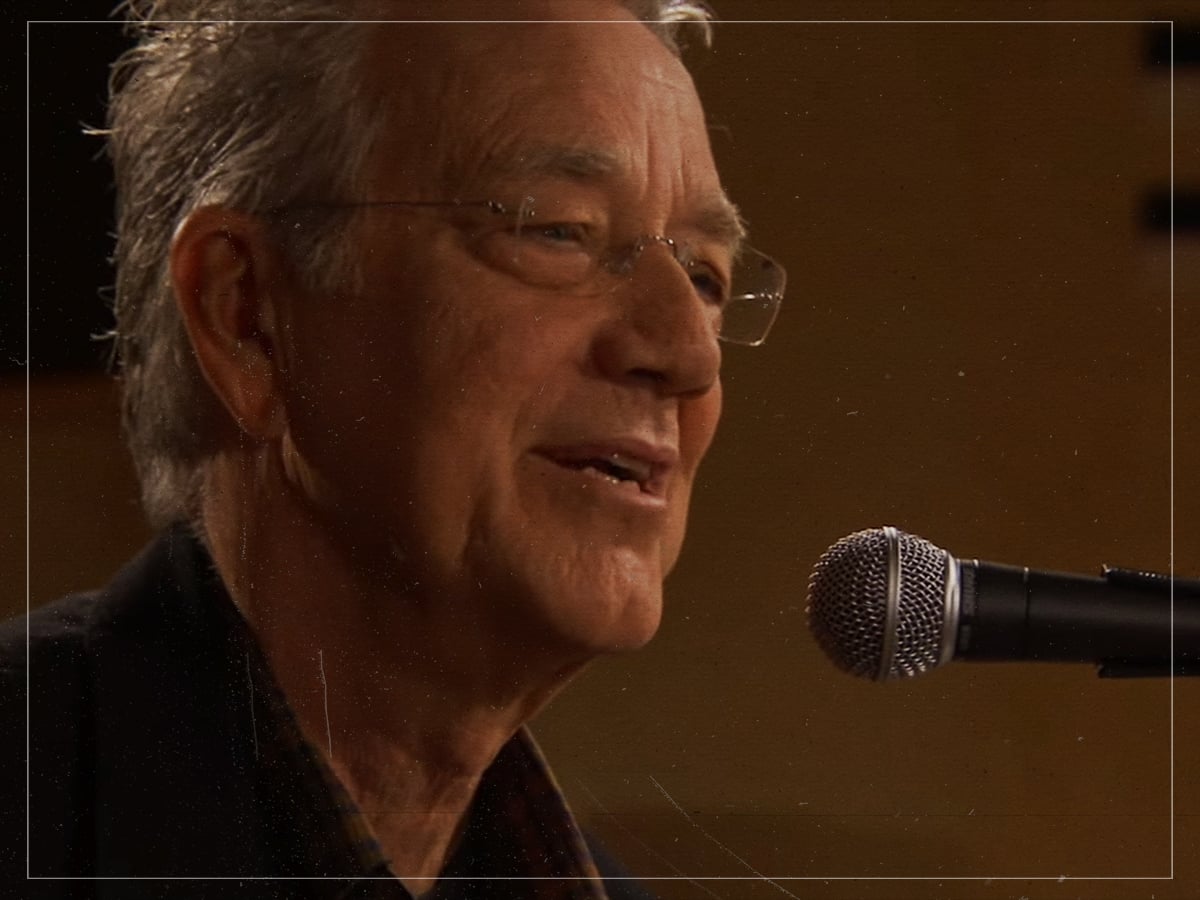
Credit: Far Out / YouTube Still
Sat 26 September 2026 0:00, UK
There’s a common misconception about the formation of The Doors that a crew of three laid-back, life-long LA dudes basically stumbled upon a mystical, well-travelled army brat on the beach and made him their frontman.
Actually, that’s pretty accurate aside from the fact that keyboardist Ray Manzarek, unlike guitarist Robby Krieger and drummer John Densmore, wasn’t born and raised in Los Angeles. Despite later coming across as the living embodiment of West Coast vibes, he spent his formative years on the South Side of Chicago in the 1950s, at the very same time that the city was becoming the epicentre of the new sound of electric blues.
“Man, that’s what really did it to me,” Manzarek told the Honolulu Star-Bulletin in 2000, “It’s made me everything I am. Just hearing Muddy Waters and Howlin’ Wolf and John Lee Hooker and Magic Sam on the radio killed me.”
Manzarek didn’t quite go the extra mile that fellow Chicagoan Mike Bloomfield did, as he didn’t tend to go to the black blues clubs as a teenager, let alone dare to ask to play alongside the masters. Instead, after teaching himself to play some piano-based blues as a high school kid, his attention was suddenly diverted to a new variation of that music.
“I was taking piano lessons the whole time and getting good at playing the blues and improvising,” he told journalist Danielle Zelisko in 2006, “Then I heard rock and roll, and that was it! Elvis Presley on television and Carl Perkins’ ‘Blue Suede Shoes’; Jerry Lee Lewis and ‘A Whole Lotta Shakin’ Going On’, ‘Great Balls of Fire.’ Then on the other side, Little Richard, what a maniac!”
While rock and roll would eventually come to be associated first and foremost with the electric guitar, many of the original superstars of rock were piano players, which timed up perfectly with Manzarek’s early development on the instrument. That included Lewis, Little Richard, and the great Fats Domino, whom Manzarek described as being particularly “influential” on his playing.
“Fats Domino’s left hand on ‘Blueberry Hill’ . . . [Sings] ‘I found my thrill…’ and the right hand would go tink tink tink tink tink tink, and the left hand would go bom, bom, bom, bom, dun dun dun [imitates ‘Blueberry Hill’ melody]. That’s Doors music!” Manzarek said, “It’s almost ‘Light My Fire’. ‘Light My Fire’ is dun dun don dun don dun dun don dun dun, so it’s just a little bit different, but it’s, you know, 90 per cent of what I played with The Doors was Fats Domino, Jerry Lee Lewis, Little Richard-inspired.”
Further reading: From The Vault
Domino’s iconic 1956 recording of ‘Blueberry Hill’ was actually a cover of an old World War II era tune, but his adaptation became the gold standard and one of the most celebrated songs of early rock. 11 years later, when The Doors scored their first number one single with 1967’s ‘Light My Fire’, not many people were drawing a direct line from Manzarek’s keyboard playing to Fats’s tinkling of the ivories.
Had he been playing a standard piano, though, the old school rock and roll roots of the song probably would have been more apparent. Instead, that unique Doors sound, created through a combo of Ray’s melodic line on a Vox Continental organ and bass line on a Fender Rhodes bass keyboard, felt like something completely fresh on the rock landscape.
It didn’t hurt, of course, that Manzarek had also recruited his fellow UCLA film student Jim Morrison as a singer and lyricist, giving the band a sort of perfect, dangerous combination of Elvis, Sinatra, and Howlin’ Wolf, all wrapped in a modern beatnik surfer package. Chugging along in the background of every one of those songs, though, in a band without a bass player, was Ray Manzarek, the Chicago blues kid turned LA rockstar.
