 NEW DELHI: India has an opportunity to play a defining role in shaping the global spectrum framework for sixth-generation (6G) mobile networks, particularly in the “golden band”, said Abhay Karandikar, member, NITI Aayog.
The “6G golden band” refers to the upper 6 GHz (6.425 GHz-7.125 GHz) and the 7-8 GHz frequency spectrum.
“India has an opportunity to play a defining role in shaping the global spectrum framework for 6G, i.e., the upper 6 GHz (6.425–7.125 GHz) and 7–8 GHz frequency spectrum, by building an early national consensus around the 6G golden band and taking a coordinated position in international forums,” said Karandikar at a high-level stakeholder meeting in the national capital.
His comments come as the industry prepares for the World Radiocommunication Conference 2027 (WRC-27), scheduled to be held in October 2027 in Shanghai, China.
He also called for a coordinated national approach to support India’s ambition to lead in 6G development and deployment, adding that NITI Aayog would bring national stakeholders together to take the golden band dialogue forward as a national mission.
He also stressed the importance of coexistence studies and careful planning to protect existing fixed, satellite, and other services while progressively making spectrum available for future technologies.
Ravi Gandhi, president and chief public policy & regulatory officer, Reliance Jio, underscored the need for substantially greater mid-band spectrum.
Gandhi argued that the golden band can be a potential backbone for 6G, combining wide-area coverage with the capacity needed for rapidly growing data demand.
Ashish Garg, director (spectrum & policy – APAC), GSMA, said that while technologies such as advanced MIMO and AI-enabled radio networks would improve network efficiency, they could not substitute for additional mid-band spectrum.
Garg stressed the importance of internationally harmonised 200-400 MHz channels to support emerging 6G applications, including immersive communications, XR and integrated AI services, while creating economies of scale and affordable device ecosystems.
Bharat Bhatia, president, IAFI, said, “The golden band offers the coverage, capacity and contiguous bandwidth that 6G will need. India should therefore build a clear national position, backed by strong technical studies and protection of incumbent services, and work with APT countries to build regional support.”
IAFI also advocated a study-led and collaborative approach under which the 6425-8400 MHz range, or appropriate portions of it, could evolve into a regional and global tuning range for 6G, while giving administrations the flexibility to address national requirements and protect incumbent spectrum users.
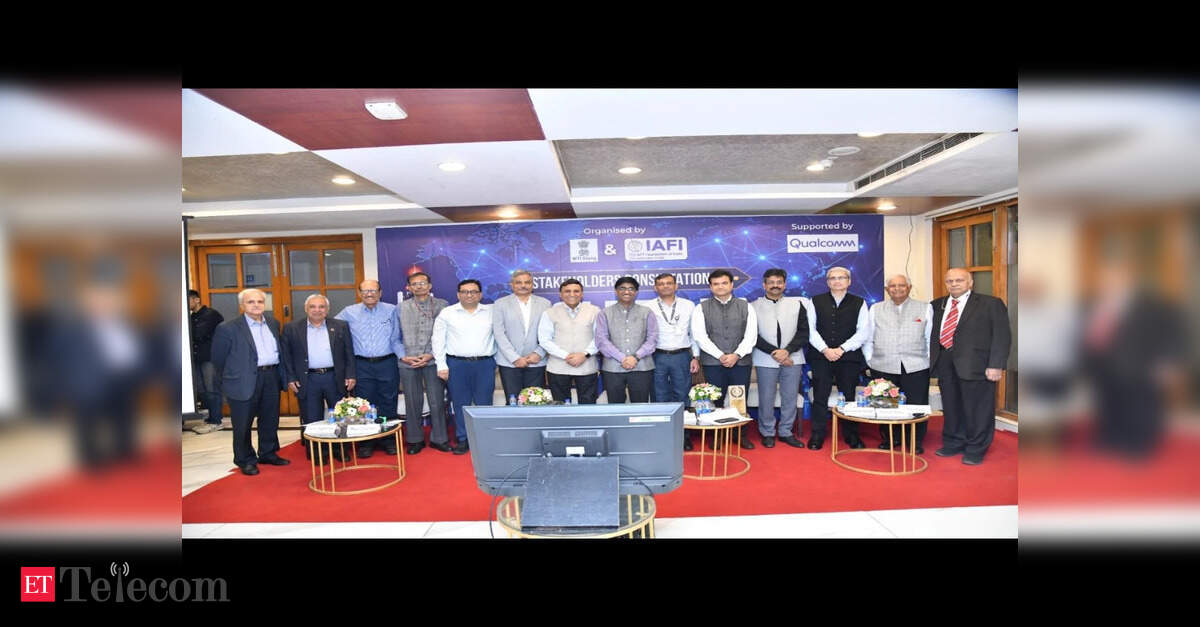
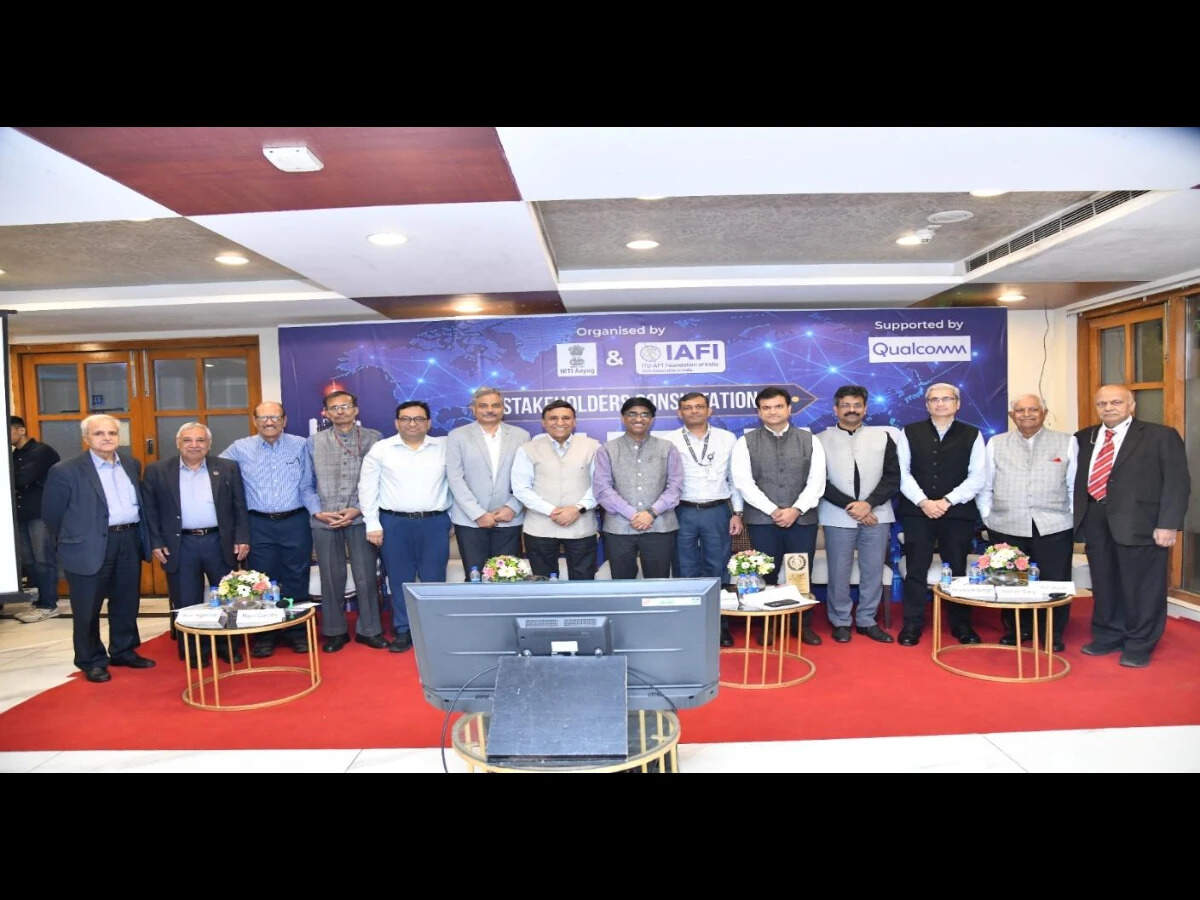
The consultation meeting was jointly organised by NITI Aayog and the ITU-APT Foundation of India (IAFI). It brought together senior representatives from NITI Aayog, Department of Telecommunications, Wireless Planning Commission (WPC), Telecom Regulatory Authority of India (TRAI), Indian Space Research Organisation (ISRO), Ministry of Defence, Reliance Jio, Qualcomm, GSMA and IAFI, along with representatives from government, industry and academia.
Discussions focused on the 6425-8400 MHz range, increasingly seen as an important upper mid-band spectrum resource for 6G. The band offers a valuable combination of coverage, capacity, and large contiguous bandwidth, potentially supporting 200-400 MHz channels required by future 6G networks.
Published On Sep 26, 2026 at 01:17 PM IST
Join the community of 2M+ industry professionals.
Subscribe to Newsletter to get latest insights & analysis in your inbox.
All about ETTelecom industry right on your smartphone!