
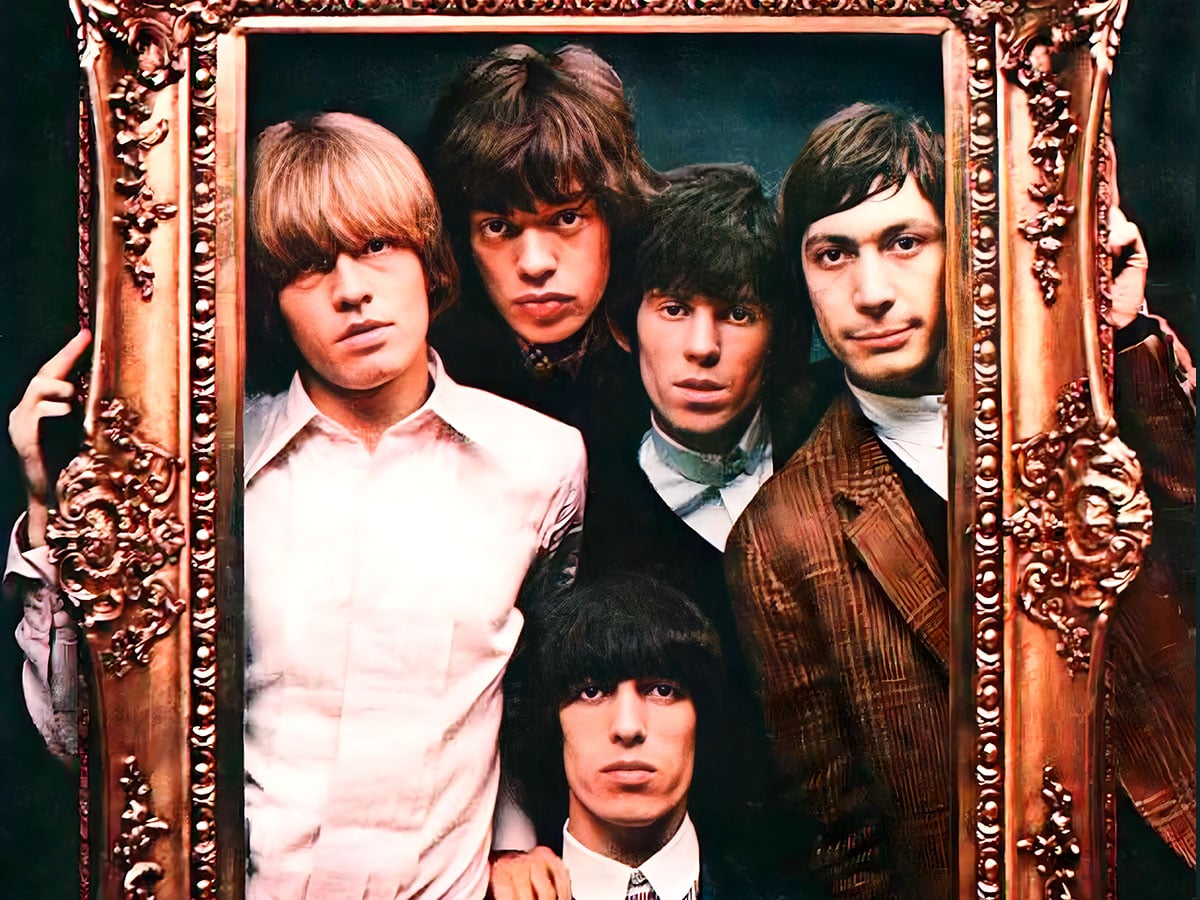
Credit: Bent Rej
Sat 26 September 2026 11:05, UK
It says a lot about The Rolling Stones’ 1960s heyday that even their jokes were catapulted to number one during the period.
They were so profusely creative, releasing in excess of 100 songs in their first seven years, that they could gild even pithy little studio gags into gleaming hits that, over half a century later, still prove to be among their most iconic works. They were the shake-up that made bands fear the British Invasion, and they were taking it all one laugh at a time.
‘Paint It Black’ is a very dark song. That darkness stretches beyond the fact that Mick Jagger yells about wanting everything cast into monochrome. Behind the literal surface is a song about shutting out the sun and wallowing in the darkness of loss. How such a song could be rooted in a joke seems unfathomable, but Keith Richards explained that the origin of the music was lighter than the heavy result.
“Mick wrote it,” Keith Richards told Rolling Stone, “I wrote the music, he did the words. Get a single together. What’s amazing about that one for me is the sitar. Also, the fact that we cut it as a comedy track.” That’s some very dark comedy, indeed. But the guitarist isn’t twisting the truth; tomfoolery truly was the crux of this 1966 classic.
Eric Easton was the band’s manager at the time, and the iconic fast-paced organ playing on the tune was Bill Wyman’s attempt to make a mockery of his manager’s stylings. “Bill was playing an organ, doing a take-off of our first manager who started his career in show business as an organist in a cinema pit,” Richards explained.
Now, it’s often omitted from the lore of the Stones – perhaps because it doesn’t fit their wayward image – but they were hugely hard-working. The ragtag group spent countless hours in studios, and with that comes a touch of play.
“We’d been doing it with funky rhythms,” Richards continues, “And it hadn’t worked.”
Further reading: From The Vault
Exasperated by the efforts, Wyman decided to have a laugh, but while they were poking fun at their manager, something seemed to click. “Everybody got behind it,” Keef goes on. “It’s a two-beat, very strange. Brian playing the sitar makes it a whole other thing.”
The gathering pace of the song certainly adds a sense of drama to the track and colours the downbeat lyrics with a viscerally emotional edge. It’s textbook teenage rage. In the end, we are left with Jagger’s spellbinding, frenzied incantation that the song swells into, reaching its inevitable ranting, raving end. It’s like a man rhythmically screaming in the street.
If the organ playing had its origins in a theatre pit, then the resultant ‘joke’ is certainly cinematic. In fact, it could easily have soundtracked Rebel Without a Cause had it been released 11 years earlier.
This spoof, however, was not the only influence on the eventual sound of the song. Jagger also drew inspiration from the compositions of Jewish Wedding songs, most notably ‘Hava Nagila’. While the melody is certainly similar, the psychedelic edge that ‘Paint It Black’ exhibits is all down to the Stones and their desire to dip their toe in the spiralling zeitgeist.
In his 2002 book, Rolling with the Stones, Bill Wyman explained that the Aftermath album, which sports ‘Paint it Black’ as its opening tune, was intended to be the soundtrack for the never-filmed movie Back, Behind, and In Front. Mick Jagger met with the proposed director, Nicholas Ray – the man, ironically enough, behind the iconic James Dean movie Rebel Without A Cause – and he didn’t like him, so the project was scrapped.
This surely serves as another reminder of how easily opportunities were arising for the band at the time. Their debut album had only arrived two years earlier, and now they were turning down iconic directors and finding enough time to “joke” their way to classics in the studio.
The song remains one of The Rolling Stones’ best, and it is testimony to the band’s talent that it all stemmed from casually mucking around. From churlish beginnings, the band achieved stellar results; if only all creative feats could be accomplished so simply.
Alas, the highest irony of all comes from the fact that the band Big Star would later write a song joking about how serious ‘Paint it Black’ is.
ADD AS A PREFERRED SOURCE ON GOOGLE  The Far Out Classic Rock Newsletter
All the latest Classic Rock content from the independent voice of culture.
Straight to your inbox.