
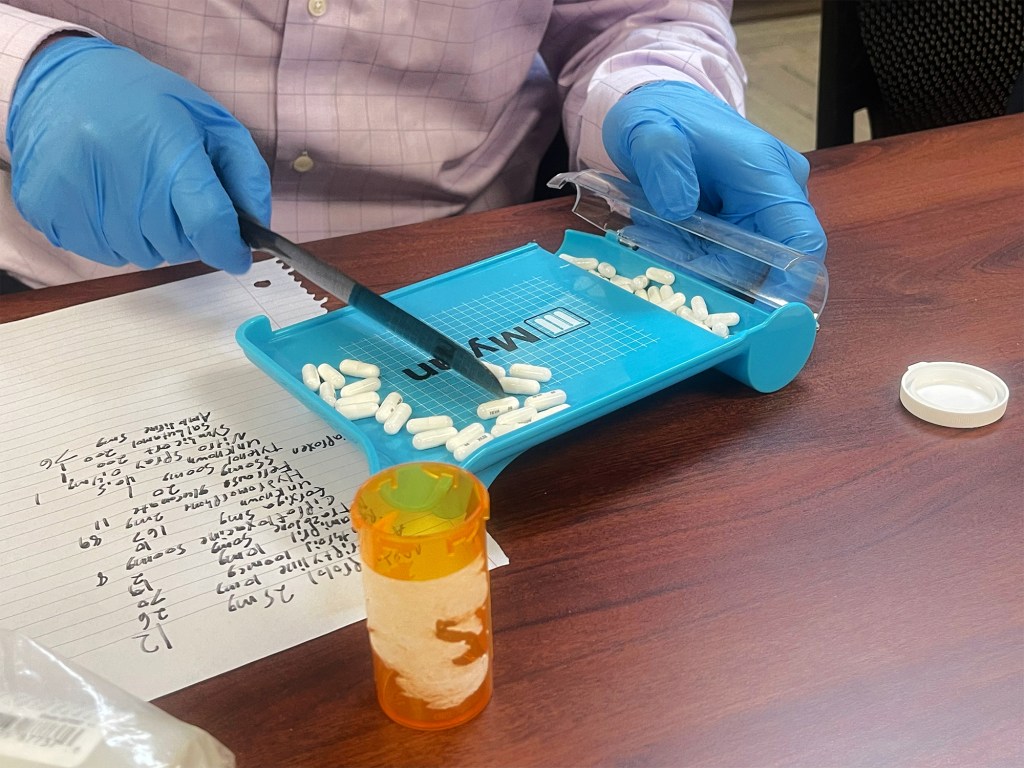
Twenty civil society groups are calling on the Correctional Service of Canada (CSC) to bring back access to medications commonly used to treat depression, attention deficit hyperactivity disorder (ADHD), and other conditions for people in federal prisons, raising concerns about the impact of medication restrictions on prisoners’ health and well-being.
In an open letter to CSC, the groups stated that the medications were removed from its national formulary list at the beginning of May without any meaningful consultation with patients, external subject-matter experts or civil society organizations serving people in federal prisons and without an adequate evidentiary basis for doing so.
The medications include bupropion (Wellbutrin), used to treat major depressive disorder, among other things, and as of Oct. 1, immediate-release psychostimulants (Ritalin and Dexadrine) used to treat attention-deficit/hyperactivity disorder. Instead, long-acting psychostimulants (Foquest and Vyvanse) would be administered, but restricted to patients with a confirmed ADHD diagnosis.
“These are across-the-board restrictions affecting all patients, being implemented without any consideration of individualized need or how patients have been benefitting from their medication. This approach is contrary to principles of person-centered care and will further erode the already mistrustful relationships between many incarcerated people and their health providers,” read the letter, in part.
In February, many of the organizations also raised concerns about the changes to the provision of opioid agonist treatment for those living with opioid use disorder, specifically the delisting of Suboxone, which comes in the form of a daily tablet. Instead, the group said the change forced hundreds of patients to move to Sublocade, a monthly injection. Many incarcerated people reported being abruptly switched without warning, explanation, or opportunity to consult with their prescribers.
“Many reported a variety of painful and debilitating side effects, and described feeling that their bodily autonomy had been violated,” read the letter.
The HIV Legal Network is one of the civil society groups that signed the letter citing a lack of transparency and evidentiary basis.
“I think we can all relate to how hard it can be to find a medication that works for you, particularly for things like depression or ADHD or other kinds of mental health concerns. For Correctional Services Canada to remove access to some of those medications without really justifying it or consulting, we thought that that warranted pushback and immediate pause on the policy change,” said HIV Legal Network policy analyst Anne-Rachelle Boulanger.
According to CSC, bupropion was removed following a review of its efficacy, safety profile and risks associated with misuse. In its place, CSC said it has issued clinically appropriate alternatives, including first and second-line antidepressants recommended in current Canadian treatment guidelines.
“A six-month implementation period was established to support continuity of care and allow health-care providers to transition patients, where necessary,” wrote CSC in a supplied statement.
According to Boulanger, CSC has provided no evidence of misuse. Instead, she said they have take an individual problem to punish everyone instead of investigating as to why people might be sharing medication.
“Think about how the population or how people would react if doctors started saying you can’t have this medication because of the potential that you might share it. Because your neighbor shared it or because someone in your community shared it. I think there would be so much outrage, because it’s so counter to the basic principles of health care. It has to be individualized, it has to be patient centered,” said Boulanger, whose concern is taking people off of the medication that might be the best fit for them, especially in the case of psychostimulants.
“Those long-acting psychostimulants might be great for some people, that doesn’t mean they’re great for everyone. We’re glad they’re not getting rid of everything, but it certainly doesn’t fix the issue that they’re now creating by destabilizing all these folks,” added Boulanger.
One of the biggest concerns for Boulanger, and the other organizations, is the impact it will have on people’s emotions and demeaner moving forward.
That is a sentiment shared by Nicole Kief, the executive director of Prisoners Legal Services, a legal aid clinic that assists people with legal issues, along with rights violations for those in custody such as health care, placement in segregation and unjustified use of force by officers, to name some.
On a typical day, Kief said the clinic receives 30 to 50 calls a day from incarcerated people in regards to issues they are facing.
More recently, the concerns her team has been hearing have been restrictions to medications.
“For years and years, health care and mental health care is something we’ve heard a lot of concerns about. This relates specifically to the federal system, but for years we’ve been hearing that people are not treated with respect, with dignity, and it’s very difficult to access medical providers.
“It’s not easy to get an appointment with your doctor, and when you do get to meet with your doctor, it is generally very quick, very transactional, not patient-centered, not compassionate. Not to paint every doctor with the same brush, but these are the sort of recurring themes that we hear, that people are restricted to bringing up one, only one issue in an appointment and that you don’t get to spend a lot of time and there isn’t a lot of follow-up,” Kief said.
She said many of their clients often feel like guinea pigs, especially when they get moved around to different institutions and the doctors are constantly changing, which commonly results in medications being switched up.
“They either come into a federal institution or they’re already there and they get a new doctor and the doctor says, ‘Well, I’m not really a fan of this medication, I want you to try something else,’ and they say, ‘Well, I’ve tried those things, they don’t work for me or they make me feel worse’ or ‘They don’t address my symptoms’ or whatever, but they have little recourse,” said Kief. “It’s really that sort of a take-it-or-leave-it approach.”
One of her team’s biggest concerns is the switch in this key medication that people rely on could lead incarcerated people seeking drugs elsewhere, not knowing of the consequences it could have on them.
Kief added that prison is not a place where people want to be trialing different forms of medication.
“We know that there are unregulated street drugs coming into the institutions and you know, no matter what, people are going to find them and that is really dangerous,” noted Kief. “There’s a similar risk with these other medications. If you are not getting your mental health needs met through prescription medication, you may well turn to other alternatives and that creates a lot of safety issues for the person, including a risk of an overdose.”
According to CSC, it does support patient safety and care through individualized care plans and recognizes the importance of continuity in mental health treatment.
It added that in respect to ADHD medications, long-acting psychostimulants, which typically last twice as long as short-acting psychostimulants, will remain available for patients with a confirmed diagnosis.
“Requests for medications that are not included in the CSC National Formulary, including short-acting psychostimulants, may be submitted through CSC’s non-formulary review process. These requests are assessed on a case-by-case basis by CSC pharmacists and physicians. Non-stimulant treatment options also remain available,” said a statement from CSC.
Collectively, the civil society groups are calling on CSC to pause any further changes to the national formulary and restore medications that have been removed pending a comprehensive review with external experts, consult with stakeholders including the incarcerated, and provide clarity on how CSC arrived at the decision to make the changes.
In addition, they have also asked CSC to separate health care decision-making from operational interests by transitioning its health services to the Ministry of Health or provincial health authorities.
“Incarcerated people are also part of our communities, our family and our loved ones and will rejoin our communities again,” said Kief. “We don’t need to define them by the worst thing that they may have ever done, especially when we’re talking about something like health care. When you’re providing health care to somebody, they’re your patient and your obligations to them, your ethical relationship is the same regardless of who they are.”
“People who are in prison don’t give up their right to access health care. In fact, the government has an obligation to ensure that people in prison have health care that’s at least equivalent to what’s in the community. What Correctional Services Canada is doing right now is in direct conflict with that obligation, so I’d really like to emphasize that they are not acting in line with their statutory and legal obligations,” said Boulanger.
Other groups that have signed the letter formulated to CSC include the Canadian Mental Health Association, The John Howard Society of Canada, and Queen’s Prison Law Clinic, just to name a few.
Since sending the letter, the group of civil society organizations says it has not heard back from CSC.

Editor’s Picks