
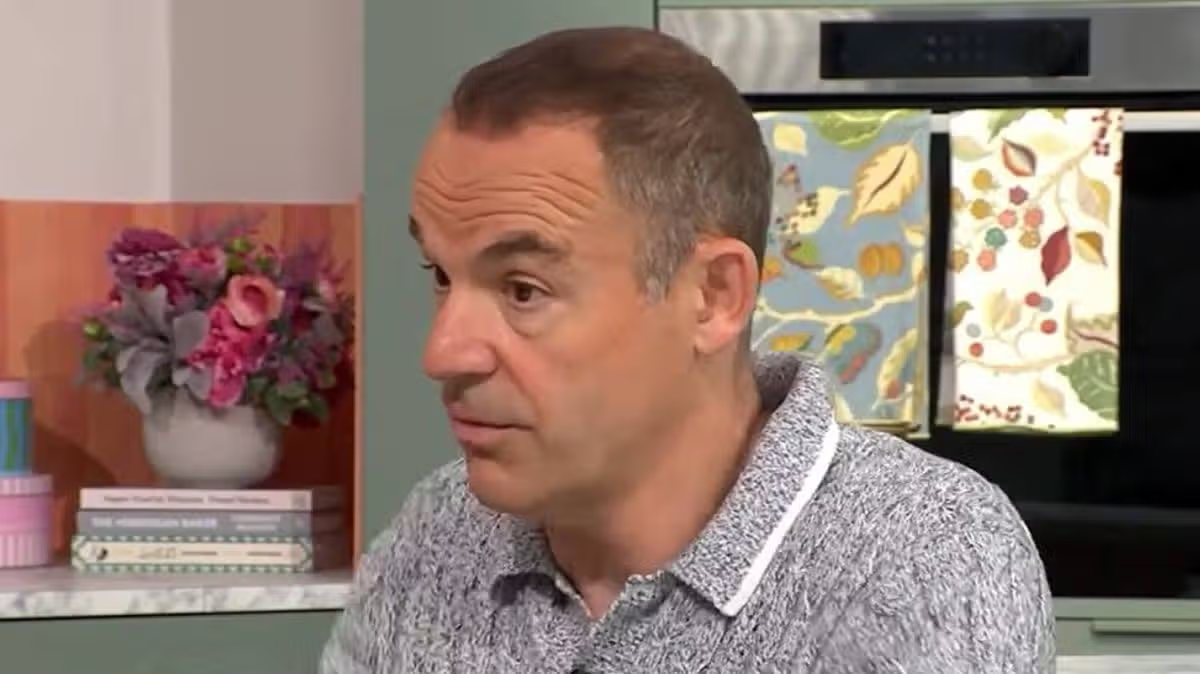
Martin Lewis has issued an urgent warning to customers of major banks and building societies, including Lloyds, Nationwide Building Society, NatWest Group, Santander, Barclays and HSBC UK, urging them to act without delay. With interest rates poised to rise, countless savers are now weighing up the best course of action for their finances.
This week, the Governor of the Bank of England cautioned that soaring energy prices will make it “harder” to keep interest rates at their present levels and prevent a further rise. Andrew Bailey suggested that the Bank may be forced to push interest rates higher if energy prices “remain higher” due to pressures connected to the Middle East conflict.
Inflation is broadly anticipated to keep climbing in the months ahead as rising energy costs filter through the wider economy, with households bracing for an approximately 4% increase in the energy price cap from next week. The Bank has forecast that inflation will rise to roughly 3.7% in the fourth quarter of this year and 4.2% in the first quarter of 2027.
With this in mind, personal finance expert Mr Lewis said: “UK interest rates look like they’re going to rise this year. No surprise, lots of people asking me, should I be using any spare cash to save or should I be trying to overpay my mortgage?”
He set out a simple ‘rule’ to help people decide which option makes most sense: “There’s a simple rule of thumb here. If your mortgage rate is higher than the after-tax rate you can earn on savings, you’re generally better off overpaying the mortgage. If your savings rate is higher than you’re paying on your mortgage, you’re generally better to save. A couple of extra points.
“First of all, always make sure there aren’t any penalties for overpaying your mortgage.
“Most people can overpay 10% a year without a problem. And second, always keep an emergency fund. 3 to 6 months’ worth of bills aside before you overpay the mortgage, because the fact that you’ve overpaid the mortgage, if something happened that you couldn’t pay it in future, it wouldn’t stop them putting you in arrears,” reports the Liverpool Echo.
“It’s also worth noting if you’re coming up to a time when you’re going to remortgage, especially if you’re borrowing a high proportion of your house’s value, your LTV is high, that it’s worth remembering when you come to remortgaging if you’re borrowing less, you might be able to get a better mortgage deal. So, you might want those savings, if you are saving, accessible to reduce the mortgage at the time you remortgage.
“Lots more information on this, and I’ll be going into full detail about what is likely to happen to interest and mortgage rates over the next year in the podcast.” Sign up for the North Wales Live newsletter sent twice daily to your inbox
Financial experts have broadly forecast that the central bank is set to raise interest rates later this year in an effort to bring inflation back down to the Bank’s 2% target level.
Speaking on Thursday, Clare Lombardelli, a deputy governor at the Bank, said during a speech in Warsaw that energy price pressure could drive rate-setters to tighten fiscal policy unless there is particular weakness in the economy.
She said: “The longer higher energy prices persist, the greater the risk that indirect effects build and that inflation expectations, wage bargaining and price-setting behaviour begin to adjust in response.
“On that basis, policy is increasingly likely to need to tighten if elevated energy prices persist, absent clear evidence of disinflation or weaker activity.”