
Public debates surrounding restrictions on face-covering garments such as the niqab in European public spaces and schools are often framed through the lens of political ideology, secularism, religion, or national identity. Still, politics is more than abstract doctrine or ideology; it is also a way of organizing human bodies and minds.
Beneath the political debate lies a psychological question: What happens between us when we can see each other’s faces—and what changes when we cannot?
To explore this question, I want to look beyond politics to the intersection of philosophy, psychology, neuroscience, and trauma.
The Philosophy of the Face: From Levinas to Buber
Philosophy has long recognized the face as more than a physical feature.
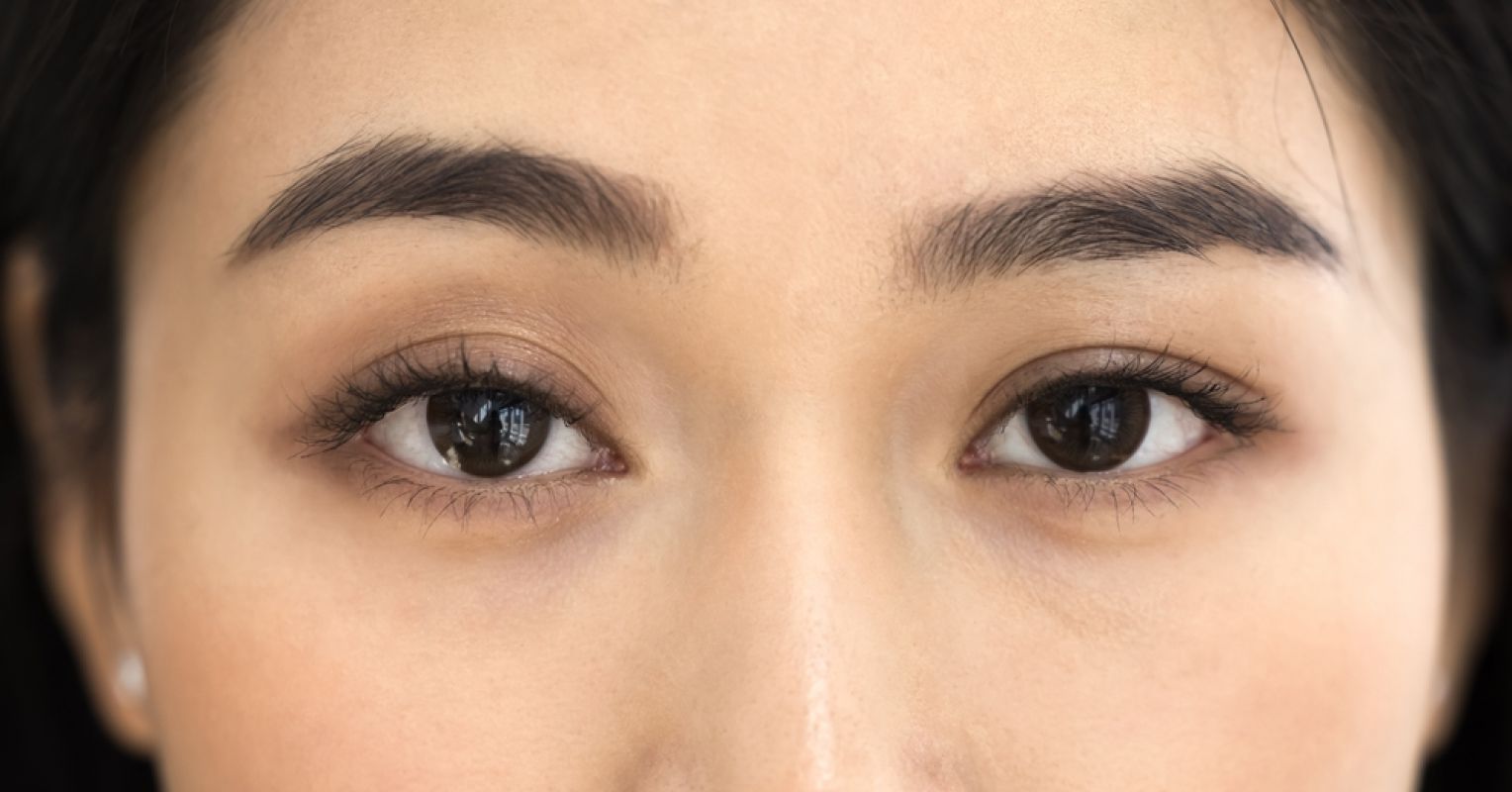
In Totality and Infinity (1961), Emmanuel Levinas places the face at the center of the ethical encounter. When I encounter another person’s face, the other is no longer simply an object in my field of vision. The face confronts me with another human being—with vulnerability, otherness, and a demand that I recognize that this person exists beyond whatever category I might place them in. In other words: The face makes the person more mysterious.
Another philosopher, Martin Buber develops a related idea in I and Thou (1923). For Buber, human beings move between two fundamentally different kinds of relationship. In an I-It relationship, the other becomes an object, a category, a function, or an instrument. In an I-Thou relationship, we encounter another person as a living subject.
The visible face does not automatically produce an I-Thou relationship. We can look directly at someone and still objectify them, Sartre illustrated this in Being and Nothingness. But the face gives us something important: presence. It makes another person’s emotional life more available to us.
Seeing someone blush, smile, hesitate, become sad, look away, or brighten with recognition is different from receiving information about them. The face makes the other person emotionally present. This matters on a dialogical level, whether in a community or a therapy session, because dialogue is only possible where an individual is prepared to act on the responsibility to respond to another human being.
The Psychology of Seeing
This is where the philosophical question becomes psychological.
Human beings are extraordinarily sensitive to faces. We continuously read facial expressions together with voice, posture, gesture, timing, and context. Much of this happens without conscious reflection. In a way, we are constantly asking, often without knowing that we are asking: Is this person available? Are they listening? Are they angry? Are they afraid? Are they interested in me? Can I relax? Am I safe?
A therapist knows this intuitively. A client may not be able to explain why a therapist suddenly feels distant, distracted, irritated, or emotionally unavailable. Yet something in the therapist’s face, voice, posture, or timing may register before the client has consciously understood it. Likewise, a therapist may notice a tiny change in a client’s expression before the client can put their own experience into words.
Our faces do not simply communicate information. They participate in the relationship itself.
The Face and the Nervous System
One influential way of understanding this relationship comes from Stephen Porges’s polyvagal theory. Porges proposes that facial expression, vocal prosody, listening, and autonomic regulation are interconnected within a social-engagement system.
Some of his neuroanatomical and evolutionary claims of polyvagal theory have been challenged. Still, the broader psychological question remains important: How does the human nervous system respond to cues from another human being?
We do not encounter other people through words alone. We hear the tone of their voice. We notice the rhythm of their breathing. We see whether their expression is relaxed or tense. We register whether their attention is with us or somewhere else. As he writes in The Pocket Guide to the Polyvagal Theory, “We wear our hearts on our faces.”
Philosophy Essential Reads
For Porges, this is largely unconscious detection of cues as neuroception: the nervous system’s assessment of whether a situation appears safe, dangerous, or life-threatening before conscious thought has fully interpreted it.
Most people will recognize this when they sense that something is wrong before they know exactly what it is. Another word might be intuition or gut feeling.
Think of a client forcing a smile and saying, “I am fine.” The mouth may be smiling, but the eyes often are not. The forehead is stiff. Something feels off. We may not consciously analyze the difference, yet we register it.
The same thing happens the other way around. If a therapist becomes distracted, irritated, emotionally absent, or triggered, a client will often sense the change before either person has named it.
This is why visibility matters. A visible face offers immediate access to a rich field of social information. It does not guarantee safety, nor does it eliminate danger—just as it does not make every encounter intimate. Yet, it provides everyone in the interaction with the essential cues through which human beings ordinarily attune to one another, offering a felt sense of presence, connection, and mutual understanding.
Trauma and Co-Regulation
This becomes especially important when we think about trauma.
People who have experienced trauma may become highly sensitive to changes in other people’s expressions, voices, movements, and availability. The nervous system can learn to scan the environment for signs of danger. People with trauma are often bad at this. They see danger where there is none, or see none where there actually is.
So healing does not only happen inside an individual. Much of human development and psychological recovery takes place in relationship. We regulate one another. In begins with our parents, kindergartens, schools, and so forth.
A calm voice can help another person settle. But the voice is always wrapped in the body—its face and expression communicate whether we are still present or whether we’re to be trusted.
A therapist’s attention can help a client stay with an experience that might otherwise feel overwhelming. This is what is meant by co-regulation: the way one person’s regulated presence can help another person regulate. If I am not safe, present, and attuned, it affects those I come into contact with—just as it affects them if they cannot read my face.
For people whose early experiences taught them that vulnerability was dangerous—or that another person (typically their parent) would not meet their emotions—being genuinely seen can become part of feeling safe.
Another person’s face can communicate something remarkably simple: I am here. I see you. I am not turning away.
This does not mean that an uncovered face automatically creates safety, or that a covered face automatically creates danger. Human relationships are too complicated for such a simple equation. However, it means that the face is one of the places where our vulnerability becomes visible to one another.
As Buber writes in I and Thou that “The psychotherapist, like the educator, must stand again and again not merely at his own pole in the bipolar relation, but also with the strength of present realization at the other pole, and experience the effect of his own action.” There is an equalization in showing one’s face.
From the Face to the Other
Maybe this is where philosophy and contemporary psychology meet.
The face is not merely something we look at. It is part of the relational space between us. When we see another person’s face, we access expressions that let us respond, adjust, empathize, withdraw, reassure, or repair. The face gives us a constantly changing picture of another person’s presence.
And this matters beyond therapy. It matters between parents and children, teachers, and students, friends and lovers, colleagues and strangers. It matters whenever human beings need to establish whether another person is listening, responding, or available. Showing one’s face is therefore not simply a cultural convention. Facial visibility is one of the ordinary conditions through which human beings encounter and regulate one another.
This is not a political claim but, as I see it, a psychological one. What happens to an encounter when one of its richest channels is removed? What do we lose when we cannot see another person’s expression? What does it mean for human beings to be visible to one another? The answers lie in individual responsibility to safety, trust, co-regulation, and equality.
The face does not simply tell us who someone is. It tells us that someone is there. I am here, you are here. I see you, you see me. I am not leaving. And yes, I am here with all my imperfections and flaws, but I am here.
In human relationships, being there for one another may be one of the most fundamental forms of safety we have.