
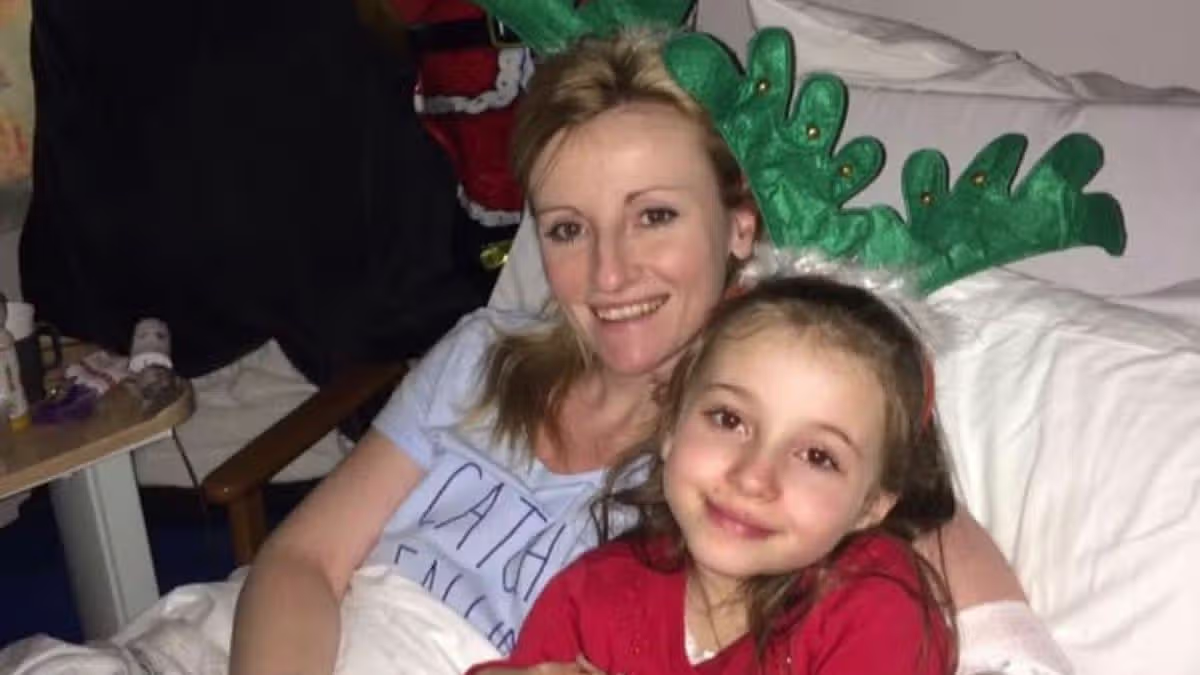
Her illness has left her permanently deaf and blind on the right side but she was determined to pull through for her daughter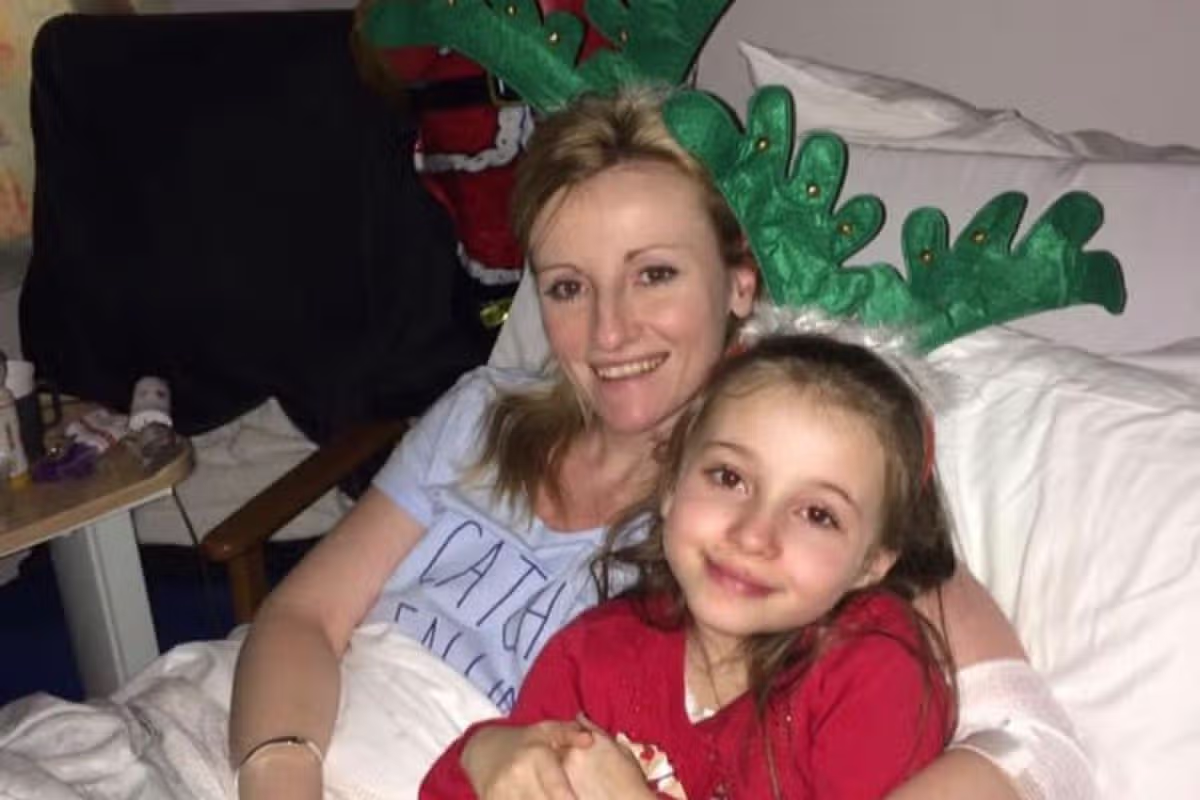
Rebecca Lewis and her daughter Sian in hospital at Christmas in 2016(Image: Rebecca Lewis )
When 33-year-old Rebecca Lewis collapsed in her flat late one night in December 2016, she had no idea it was the start of a life-threatening medical emergency.
Working two jobs while raising her seven-year-old daughter Sian, the Swansea single mother was accustomed to a demanding routine. She had been losing weight and suffering from worsening headaches but naturally chalked it up to stress and sheer exhaustion.
The reality was far more terrifying.
Rebecca said: “I can only describe the thunderclap headache. It sort of came up my spine and hit me in the head. I think I must have passed out because I woke up on the other side of my flat and I didn’t know how that had happened.”
Rebecca said she had been losing weight and experiencing increasingly bad headaches but at first simply believed they were the result of working long hours. Stay informed on the latest health news by signing up to our newsletter here
Her condition deteriorated rapidly when she attended a work Christmas party at the Celtic Manor in Newport. She said that night, her headaches became unbearable and the right side of her head and her right eye became severely swollen.
The following morning she called her parents and asked them to collect her. Her daughter Sian, who was seven at the time, was with them.
Despite knowing something was seriously wrong, Rebecca said she insisted on taking Sian to see Father Christmas before going to hospital.
“I knew I was really ill, you just know instinctually when something is really wrong. I remember thinking ‘This is really bad. I don’t know what it is, but I know it was really bad’.”
Rebecca said she could no longer walk in a straight line and had lost her balance by the time her and her family made the journey to Morriston Hospital.
“I was crying, trying not to show my daughter that I was,” she said.
At A&E, Rebecca said she was told she would have to wait for at least four hours. But after her parent’s pushed for staff to acknowledge how swollen and distressed Rebecca was, she was rushed into the resuscitation area and put on intravenous medication.
Despite what Rebecca has described as “her textbook symptoms”, meningitis was not immediately suspected. Doctors initially attributed her condition to stress or cluster headaches.
By this point, Rebecca said she was extremely sensitive to light and could barely tolerate the hospital lighting and so had to be placed in a dark room.
She was subsequently moved to a ward where her symptoms continued to worsen.
“I kept saying, ‘no, it is not that, I have no balance. Something is wrong with my brain. It feels like something is eating my brain,’” she said.
She repeatedly collapsed while attempting basic tasks like walking to the sink, overwhelmed by blinding light sensitivity, intractable pain, and violent vomiting.
“I remember once trying to walk to the sink to brush my teeth, and I would just collapse. I had no balance at all.”
Despite the deterioration, Rebecca said several days passed before she underwent a lumbar puncture. She described the procedure was traumatic and that she temporarily lost her sight when the needle was inserted. She also realised that she was struggling to hear what the consultant was saying.
“I didn’t realise I was going deaf because meningitis was eating the nerves in my ear,” she said.
Eventually, cerebrospinal fluid was collected. Staff noticed that the fluid appeared to sparkle when it was shown to her.
“I said, ‘Oh, it’s really sparkly. It’s like unicorn fluid. The nurse replied, ‘Yeah, it’s really not supposed to be sparkly. It means your brain is full of infection.’”
She was subsequently seen by a neurosurgeon, who told Rebecca’s brother that she was “gravely ill”.
Rebecca said her lymphocyte level was around 300, when it was supposed to be below 10. She had Lymphocytic Septic Meningitis.
She was moved to neurological care and treated with antibiotics and went on to spend six weeks in hospital and missed Christmas with her daughter.
“I truly believe I survived those weeks purely because I refused to leave my daughter without a mother,” she said. “I was living for her.”
Rebecca said she was discharged from hospital despite still feeling seriously unwell. A few days later she returned to hospital after collapsing at home. It was then that they discovered she had sepsis.
She said it was only after she had returned home that she developed the rash commonly associated with meningitis.
Her illness left her permanently deaf and blind on the right side. Though despite this, Rebecca said she is one of the lucky ones.
She said meeting the mother of an 18-year-old girl from Cardiff who died from meningitis last year prompted her to finally share her own experience. Rebecca believes that medical staff need to be more aware of the warning signs of meningitis, because doing so could save lives.
“A decade has gone past since mine and they’re still not doing the first-line checks on people and people are dying, or losing limbs,” she said.

Rebecca, now 43, with her daughter Sian, now 17.(Image: Rebecca Lewis)
“Meningitis is a medical emergency; it must be treated with the gravity it deserves.”
Rebecca says the warning signs for meningitis are bad headaches, nausea, a red or purple rash that stays even when you roll a glass over it, fever and being pained by bright lights.
On Sunday, she will walk 21 miles with her daughter Sian to raise money for Meningitis Now – a charity working towards a future where no-one in the UK loses their life to meningitis. You can donate to the cause by clicking here.
Today, Rebecca says she is “building a full and vibrant life in Wales, with her amazing family and friends” alongside her partner Emma, her daughter Sian, her stepson Isaac, and their lively household of five pets.