
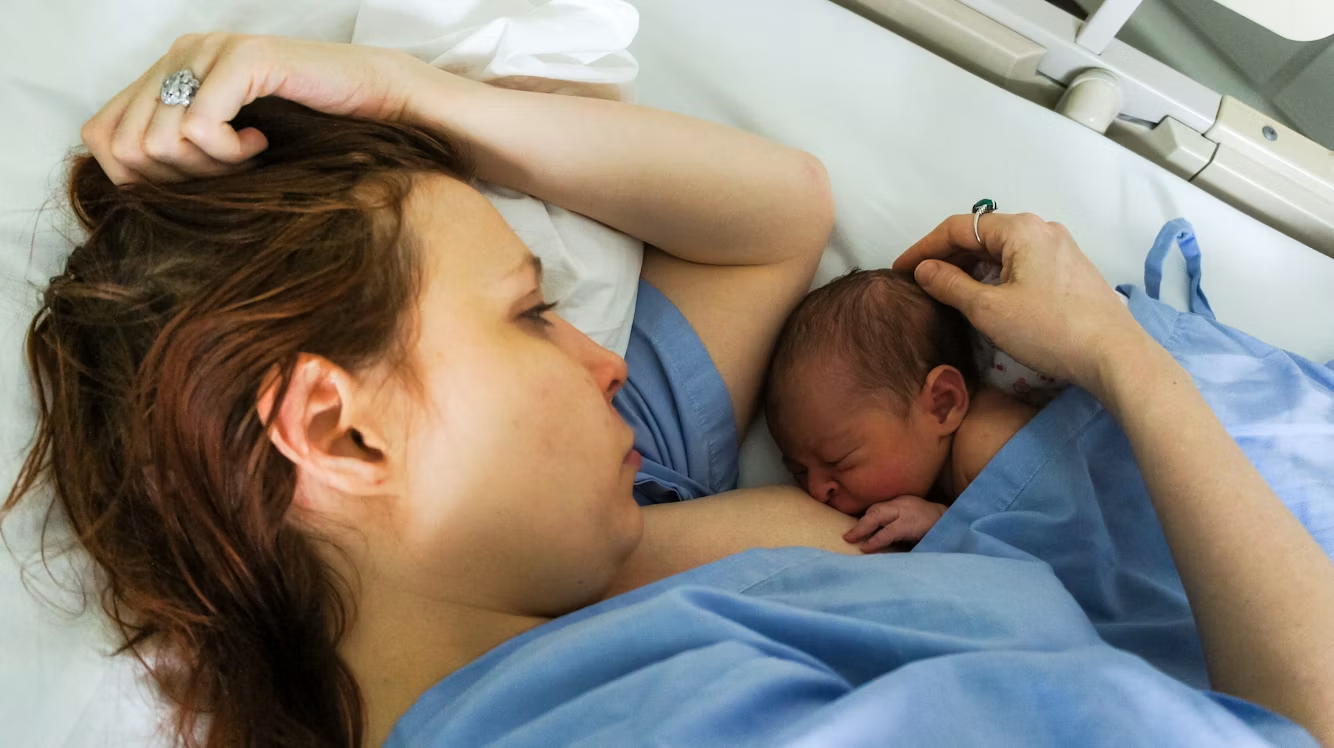
 Postpartum depression affects one in five women, according to local maternal healthcare providers. (Unsplash/David Veksler)
WILLIAMSBURG — Postpartum depression doesn’t always present as sadness or crying. For new mothers, symptoms can include anger, anxiety, difficulty concentrating, feelings of guilt or inadequacy, or changes in sleeping and eating habits. Other signs include inability to sleep while the baby sleeps and avoiding leaving the house due to anxiety.
About one in five women experience some degree of postpartum mood and anxiety disorder and it is the most common pregnancy complication, according to maternal health professionals in the region.
Stories from mothers experiencing postpartum depression describe difficulty getting out of bed, immense anxiety at being away from their child and feelings of isolation, according to The Office on Women’s Health.
While postpartum depression can start as soon as a few weeks after a baby’s birth, symptoms can present any time during the first postpartum year, according to Sarah Hall Lankford, a women’s health nurse practitioner and certified nurse midwife with Riverside Health.
Riverside Regional Medical Center recorded its 2,026th birth on Aug. 22, meaning more than 2,000 families have entered the postpartum period.
Lankford draws a distinction between “postpartum blues,” a condition which resolves on its own about two weeks after onset – and which she said up to 70% of moms will experience – and postpartum depression.
“When things last beyond that two-week time frame, they’re not likely to get better without some sort of intervention, whether that be medication, support groups, counseling [or] learning coping strategies,” she said.
She also said another misconception is the constant presence of symptoms.
“You may still have times where you can laugh, you know, enjoy things,” she said. “ It’s just you’re not optimally functioning.”
Lankford noted that family members and friends can help detect postpartum depression in new parents. Loved ones can also act as “another set of eyes and ears” in helping healthcare personnel identify when symptoms are occurring.
“Moms are expected to be the one that helps everybody else and not ask for help,” she said. “Sometimes moms need caring, too,” she said. “I think the more it’s talked about, that a lot of people will realize that it’s more common than they think. And that they’re not alone.”
Lankford pointed to charity Child Development Resources, which opened a Williamsburg location in June and has been designated one of the four perinatal health hubs in the state, as an option for mental health support. She also mentioned the National Maternal Health Hotline, which can be reached by call or text at 1-833-852-6262.
According to Kara Trahant, CDR’s program director for the Perinatal Health Hub, the organization provides perinatal education, mental health services, breastfeeding support and opportunities for social connection. Both she and the CDR’s Behavioral Health Director Amanda Wheeler noted that the postpartum period can be particularly isolating.
CDR’s Motherhood program offers activities such as Stroller Strides, where moms and babies meet every Friday morning in Colonial Williamsburg or meet at Frothy Moon Cafe for Babies & Brews.
“Knowing that you have somebody to ask a question to or just come hang out with other moms is really important,” Trahant said.
Wheeler said that, with every service CDR offers, they also do a mental health check-in to make sure moms aren’t overlooking their own well-being.
“I think a lot of people think, ‘Oh, self-care is a massage or it’s having my nails done or a pedicure,’ but self-care at that point is literally getting out of the house or walking to the mailbox, just getting some sunshine,” she said.
One area Lankford said she wished there were more specific resources for is military families.
“Sometimes the support person, somebody who we really lean on during these times, is gone in a way, so that can be really difficult when mom feels like everything is falling on her,” she said. “I think with the military population, it can be difficult finding a good fit for a therapist or a support group, and those things take some time to establish.”
Lankford emphasized that postpartum depression isn’t anyone’s fault or a reflection on the new parents, noting that, like with any major life change, it takes adjustment.
“Experiencing these symptoms has no correlation to how much you love your baby [or] mean that you’re inadequate,” she said. “It’s a major adjustment and there are factors outside of your control that contribute to that feeling and it is not at all your fault either.”