

Want to bookmark your favourite articles and stories to read or reference later? Start your Independent Membership today.
Already a member?
Log in
I’m in Montmartre, trying to turn back time. In front of me, four cobbled streets intersect to create a dimpled sheet of polished stones, and I imagine the many feet that have passed over here. In particular I think of Pierre-Auguste Renoir, the Impressionist painter who lived in and around the Parisian hill locals called the Butte, between 1873 and 1903.
Renoir came in search of the intimacy between men and women he needed to show in his art, and he found it in a semi-rural and often impoverished community where wine was cheap and the usual social rules were relaxed. That intimacy, and the artist’s frequent suggestion on canvas that things were about to get hot without ever quite painting it, is the theme of the Renoir and Love exhibition at the National Gallery.
According to the co-curator Chiara Di Stefano, the works created up here on the Butte allowed “sensual pleasure to take centre stage”. Repeating that might be tricky on a one-night solo city break. I am, though, hoping to find traces of the libertine and occasionally anarchic village Renoir knew.
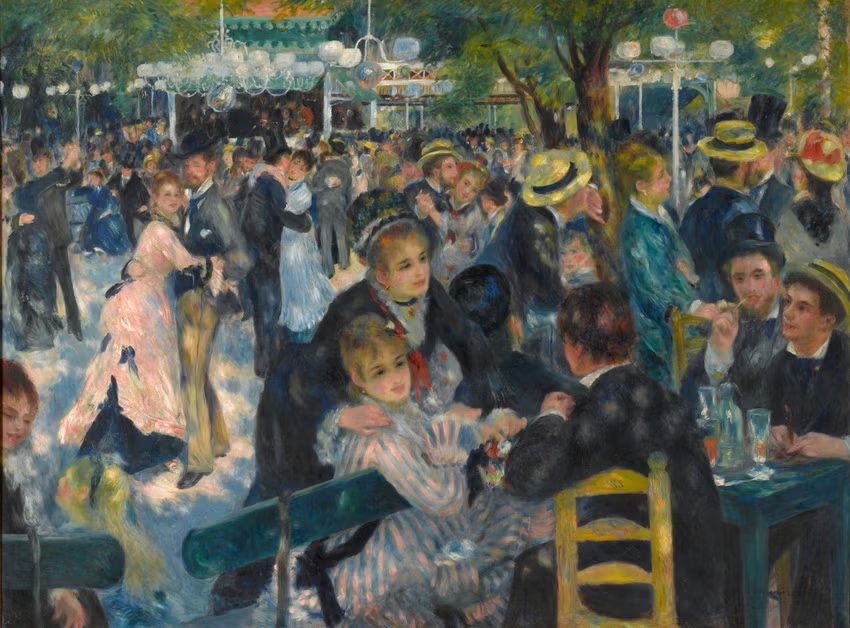 ‘Le Bal du Moulin de la Galette’, Pierre-Auguste Renoir (The National Gallery)
This means turning my back on the crowd taking in the panoramic view from the terrace beneath the cupolas of Sacré-Coeur. A celebration of conservative France’s bloody victory over the Communards in May 1871, the church was a building site during Renoir’s time and despised by Montmartre’s resentful revolutionaries (they’re still resentful; later I find the graffiti “Mai 1871” on an old boundary marker). Instead, I make my way past the restaurants on the Place du Tertre, and along the Rue Norvins. I peer down a narrow impasse or two, wondering what moments of snatched pleasure or radical fervour took place in the shadows, before the back slope of the Butte leads down to Rue Lepic and delivers me to a windmill on a corner, the famed Moulin de la Galette.
Read more: My pilgrimage through the Andalusian art trail
No need to guess at what happened here; it’s all in Renoir’s 1876 painting Le Bal du Moulin de la Galette, showing a Sunday afternoon dance populated by Montmartre characters, including young women who found employment as seamstresses, models and, occasionally, sex workers. It’s still a restaurant serving bistro classics, and others on the Renoir trail have turned up. I find two American art students beneath a faded reproduction of Le Bal du Moulin de la Galette at a table in the garden, convinced they’re sitting in what would have been the right-hand side of the composition. I’m not so sure. The garden is truncated and by my calculation much of it is now underneath the building next door. We do agree that the food is pretty good.
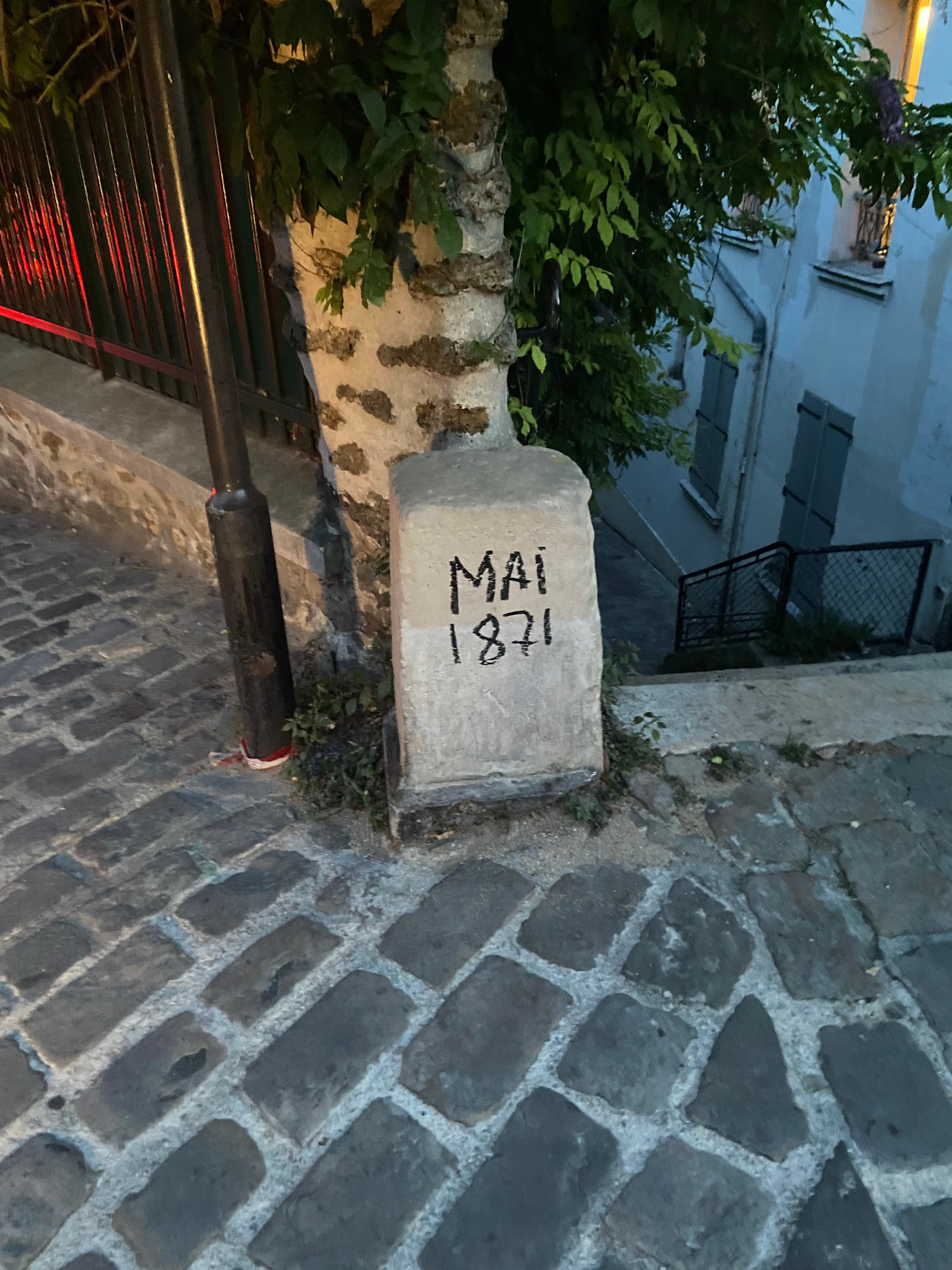 ‘Mai 1871’, a reference to a battle with the Communards, on an old boundary marker (Michael Hodges)
Whilst working, Renoir would march the canvas back and forth between the Moulin de la Galette and his studio on Rue Cortot, which is now the Musée Montmartre. It’s a short walk to a street that dips with the hill’s contours, its townhouses decorated with wisteria and ivy.
Entering the Museum courtyard, like Montmartre’s seamstresses before me, I immediately encounter the stucco house that held Renoir’s studio and beside it the formal gardens where he set La Balançoire (1876), a sexually ambiguous painting where a woman on a swing is observed by a man in a hat. There is a replica swing which I climb on and off, before taking a descending pathway through hillside gardens overlooked by a dense copse of large trees, once the playground of Montmartre’s young lovers. All of Paris is below, but here the only sounds are wood pigeons, branches creaking in the wind and, if you’re open to suggestion, the echo of long-ago laughter.
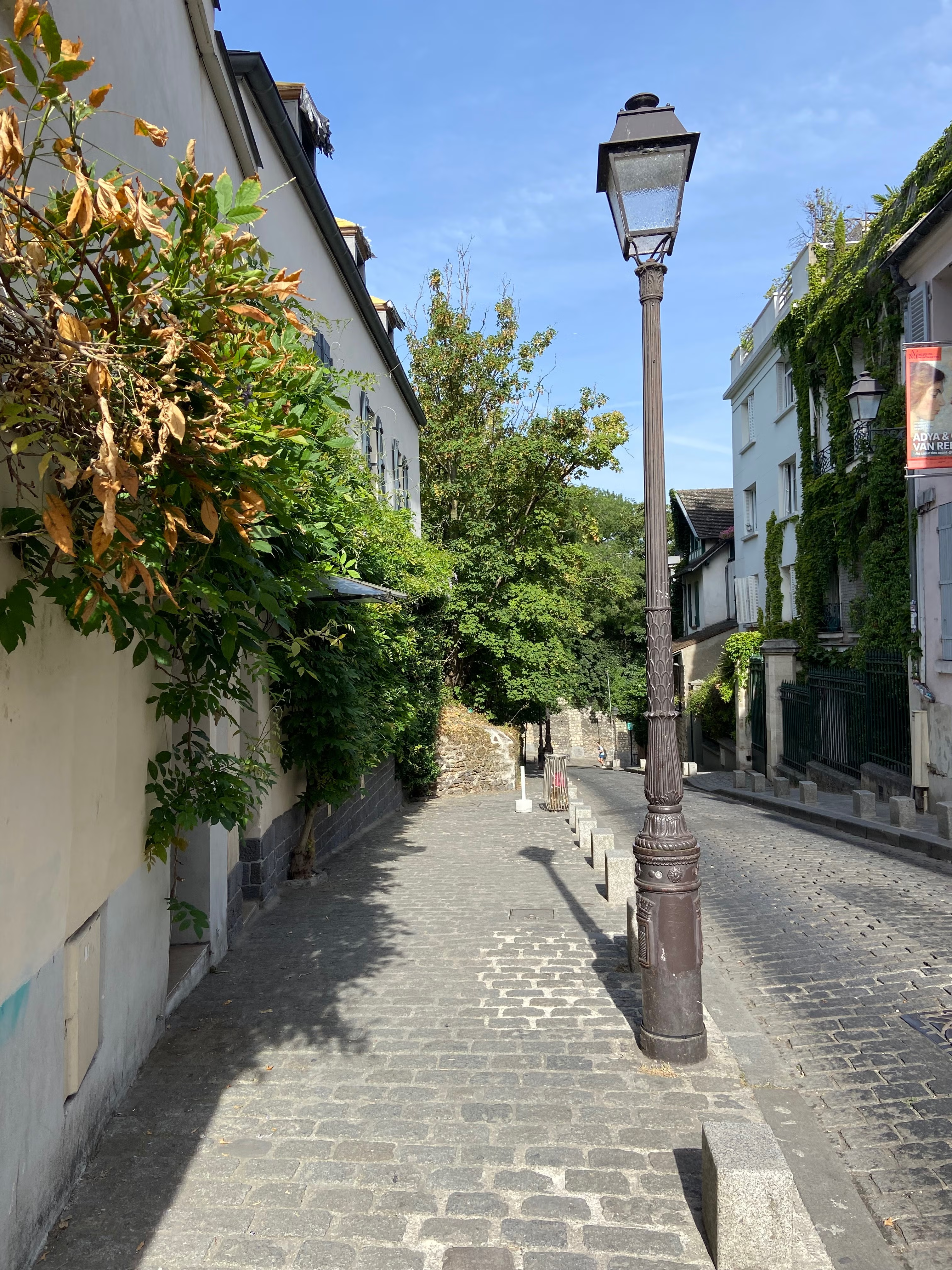 Renoir rented a studio and garden on Rue Cortot (Michael Hodges)
The garden’s boundary is marked by a chest-high brick wall, one Renoir perhaps clambered over when he went to the Lapin Agile, his favoured lunchtime bar. It later became – and still is – a cabaret venue; I can see the orange building just a minute’s walk away on the other side of a small vineyard, the Vigne du Clos, a reminder that Montmartre once grew its own grapes.
That evening I visit the Lapin but find it closed, so I follow the hill round to Rue Caulaincourt, where the older Renoir rented a studio at number 72 and painted the street in an impressionist haze in 1905. By then he was afflicted with rheumatoid arthritis, so he would have struggled with the long steep steps from Rue Caulaincourt to Rue Lamarck. Climbing down this precipitous time tunnel between the 19th-century terraces, I realise just how far above Paris Montmartre must have felt. At the bottom, Rue Lamarck is still in Montmartre, but enjoys its own micro community, a great boulangerie, a Portuguese bar and my bed in a three-star hotel – something Paris continues to excel at.
Read more: Exploring the French Riviera in the footsteps of Matisse and Picasso
In the morning, dizzy with pastries and coffee, I follow Renoir to Chatou (40 minutes to an hour by Metro and RER), and the narrow island in the Seine now known as the Île des Impressionnistes, which the artist called “the prettiest place in the environs of Paris”.
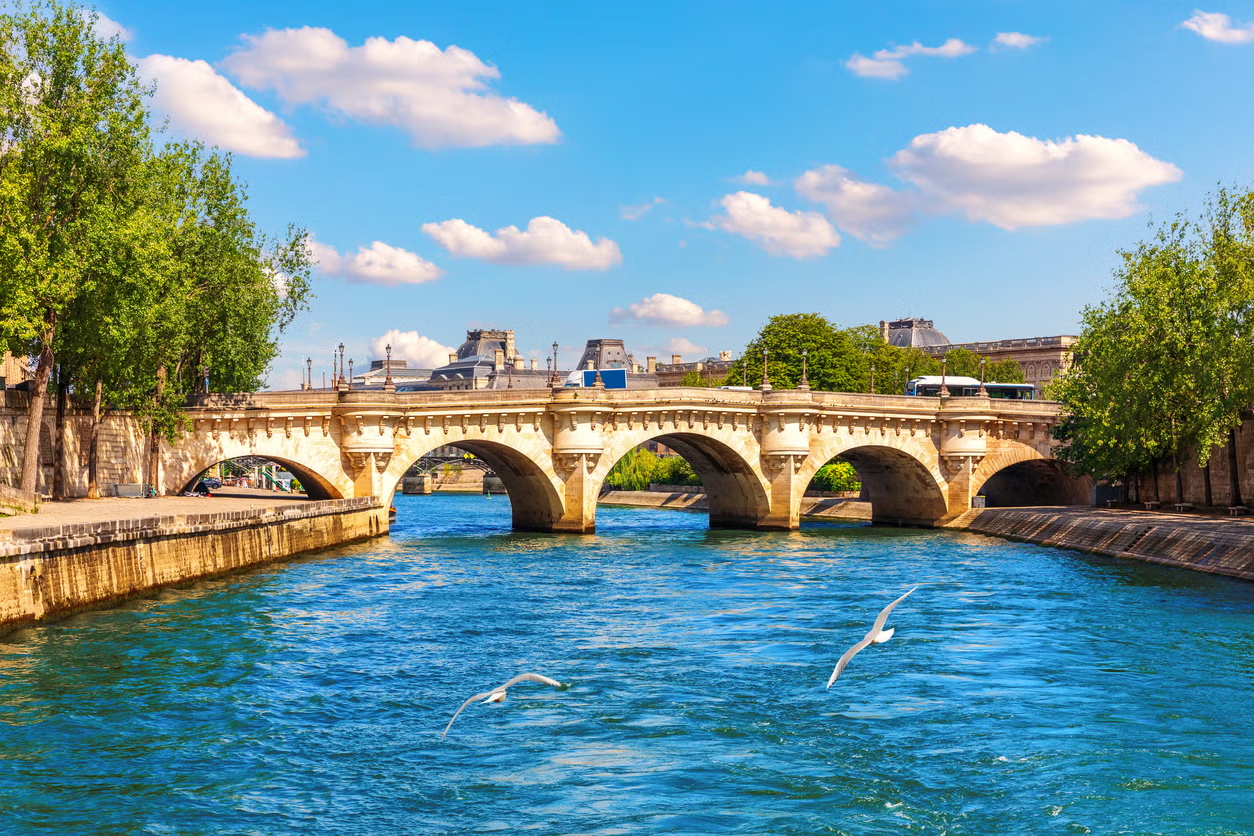 Good impressions: the Seine allowed painters like Renoir to capture the elegant interplay between light and water (Getty)
He came here on weekends, primarily to woo his future wife Aline, and would join journalists, politicians and artists like Gustave Caillebotte who gathered at the riverside restaurant Maison Fournaise. Other Impressionists explored the effect of light on water.
Renoir, being Renoir, painted people on the edge of physical engagement – most famously in Le Déjeuner des Canotiers, which catches the scene on the Maison Fournaise terrace just after lunch. It’s the cigarettes and digestifs stage, but as the men and women size each other up, other appetites are being aroused.
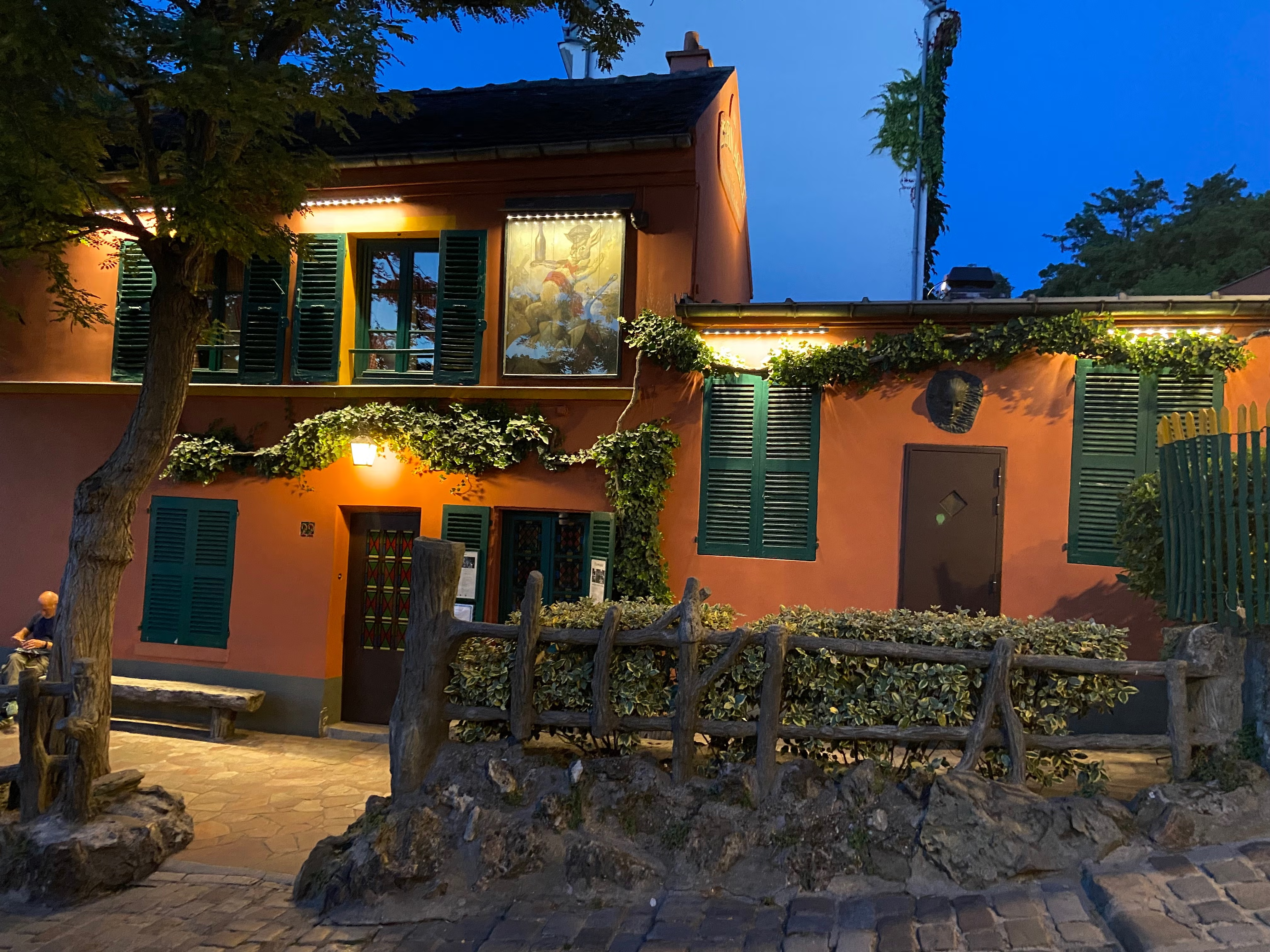 Lapin Agile was Renoir’s favoured lunchtime bar (Michael Hodges)
The meal which I enjoy out on the famous terrace is very good: crab roulade, and fish that I hope doesn’t come from the river, where a huge transport barge chugs by, churning up silt. The party celebrating a 60th birthday at the next table do not, to my disappointment, attempt to recreate the painting, but their laughter becomes the soundtrack to a lunch that stretches long into the afternoon. No lascivious looks come my way, but, as you’ll see at the National Gallery, for Renoir the possibility of an encounter is inevitably more thrilling than the encounter itself.
‘Renoir and Love’ runs at the National Gallery 3 October 2026 – 31 January 2027
Read more: Visiting Paris on a budget? These are the best affordable hotels