
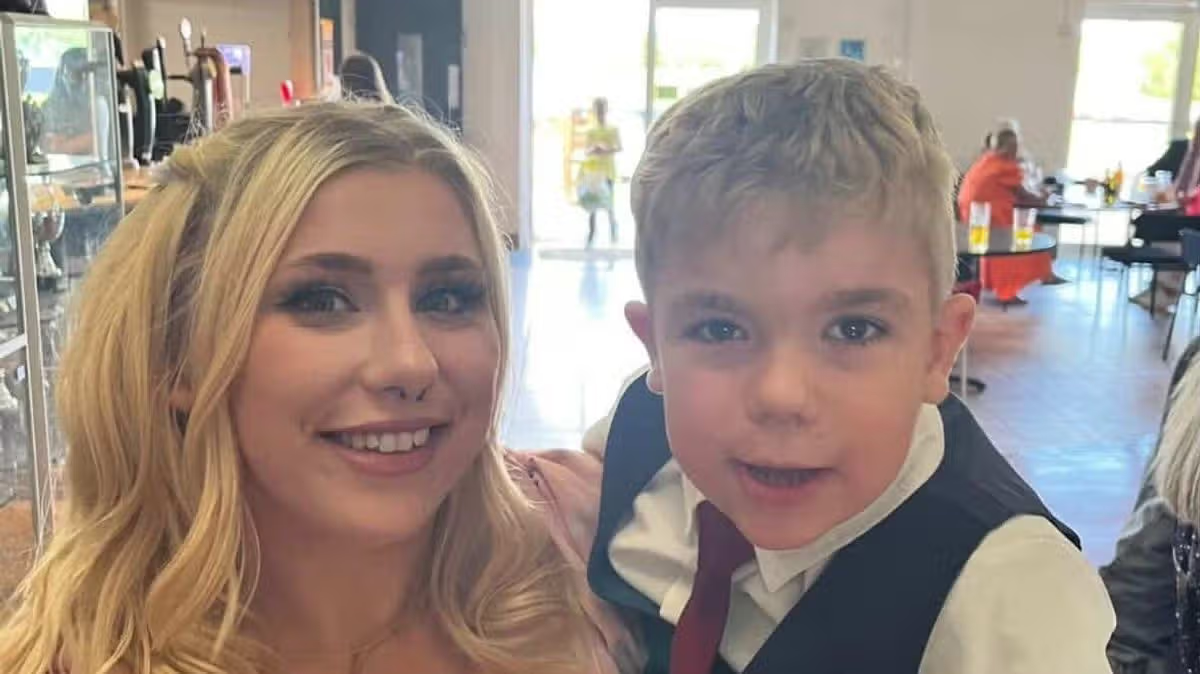
Georgia Nonas is fundraising for US treatment costing £2.95m for son Cody Carroll, eight, who has Sanfilippo syndrome type A.
11:03, 27 Sep 2026Updated 11:19, 27 Sep 2026
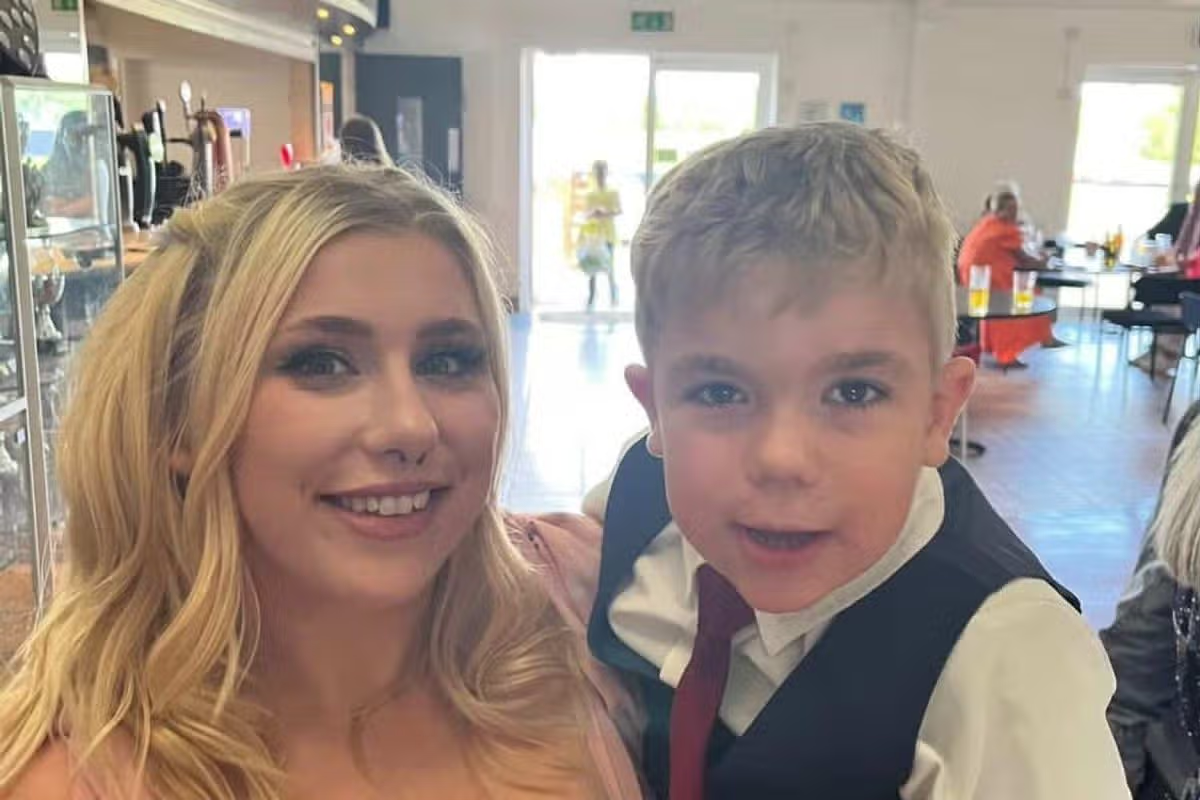
Cody with mum Georgia.(Image: Jam Press/@codys_fight)
The mother of an eight year old boy suffering from a heartbreaking condition referred to as ‘childhood dementia’ is in a desperate race to raise millions of pounds to secure his treatment.
The US Food and Drug Administration (FDA) last week approved the first gene therapy treatment for patients with Sanfilippo Syndrome Type A – the condition that young Cody Carroll has been diagnosed with.
His mum Georgia Nonas, 29, grew worried when her previously healthy toddler began experiencing recurring ear infections and hearing loss at just two years old, before subsequently receiving an autism diagnosis.
However, when a medical professional noted his “coarse features”, including thick eyebrows and a prominent forehead – characteristics commonly linked to Sanfilippo – further tests uncovered the heartbreaking reality.
The cruel rare disease, widely known as childhood dementia, leads to severe intellectual disability and, in most cases, death during the teenage years.
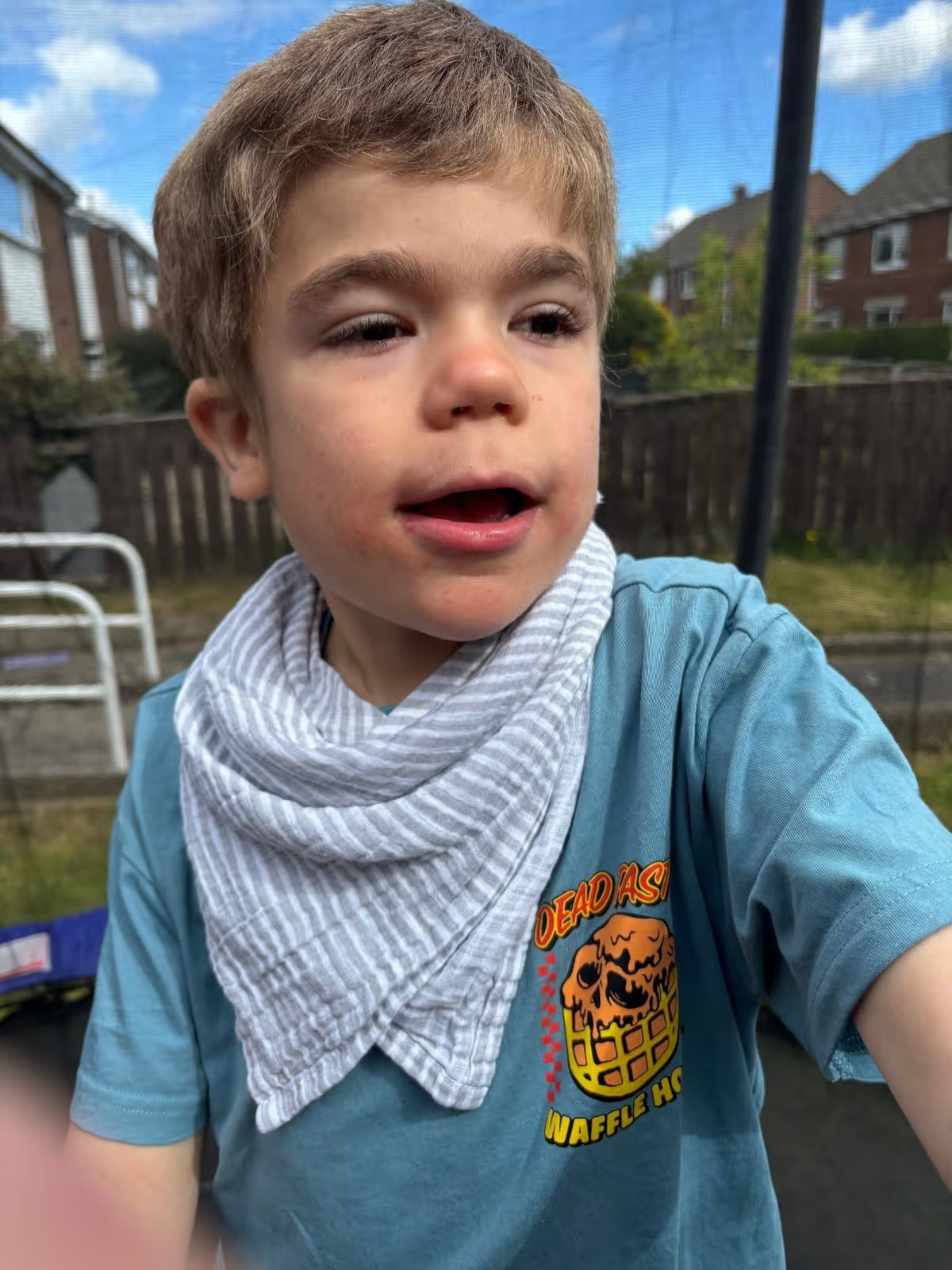
Cody Carroll – with mum Georgia Nonas. Cody has Sanfilippo syndrome.(Image: Handout)
Yet the approval of the treatment in the US has offered Cody’s family a glimmer of hope for the first time – albeit at an eye-watering cost of £2.95 million.
“It’s given us more hope than we’ve ever had,” said Georgia, from Gateshead, speaking to NeedToKnow.
“It has been completely overwhelming.
“I felt so many emotions at once [hearing that the treatment had been approved].
“There were lots of tears, so much joy and excitement, but also a sadness because, although the approval of UX111 is an incredible step forward, for families like ours it’s only the beginning of another battle.
“I’m incredibly happy for the families in America and for our whole Sanfilippo community, because this approval represents something we’ve been fighting and hoping for so long.
“But for us, it’s also very bittersweet because Cody is here in the UK and we still have to figure out how we can access the treatment and what that journey will look like for our family.
“One thing I said to my mum through tears was, ‘Maybe this means no other parents have to live with no hope’. And that thought made my heart so happy.
“When Cody was diagnosed, we were told there was no treatment and no cure. I will do absolutely everything in my power to get Cody there [to the US].

Cody with mum Georgia.
“We’ve been fundraising continuously leading up to the approval because we always knew that, if the treatment was approved, we would need to move quickly.
“The UK is not currently in a position to offer the treatment.
“We understand that discussions around UX111 aren’t even due to take place until April, and it could potentially be years before it is considered and made available here.
“With Sanfilippo, we simply don’t have years to wait.
“The sooner Cody can receive treatment, the more of him we hope we can preserve.”
Georgia, who cares for Cody full-time, launched a GoFundMe page where hundreds of supporters have contributed so far, raising £16,000.
However, a substantially larger sum will be required to cover the complete cost of the journey and treatment programme.
She said: “It’s an enormous amount of money, but we’re determined to explore every possible avenue.
“We’re planning to fundraise through a charity and apply for a range of medical grants and other sources of support to see if we can make this possible.
“We know it’s going to be a huge challenge, but we also know what is at stake.
“We have spent five years being told there was no treatment and no cure, and now there is an opportunity in front of us.
“We just can’t sit back and wait and wonder what might have happened if we’d acted sooner.”
The gene therapy, known as UX111, is a single-dose treatment developed to tackle the root cause of Sanfilippo, with the aim of slowing or halting the disease’s progression and providing children with additional time.
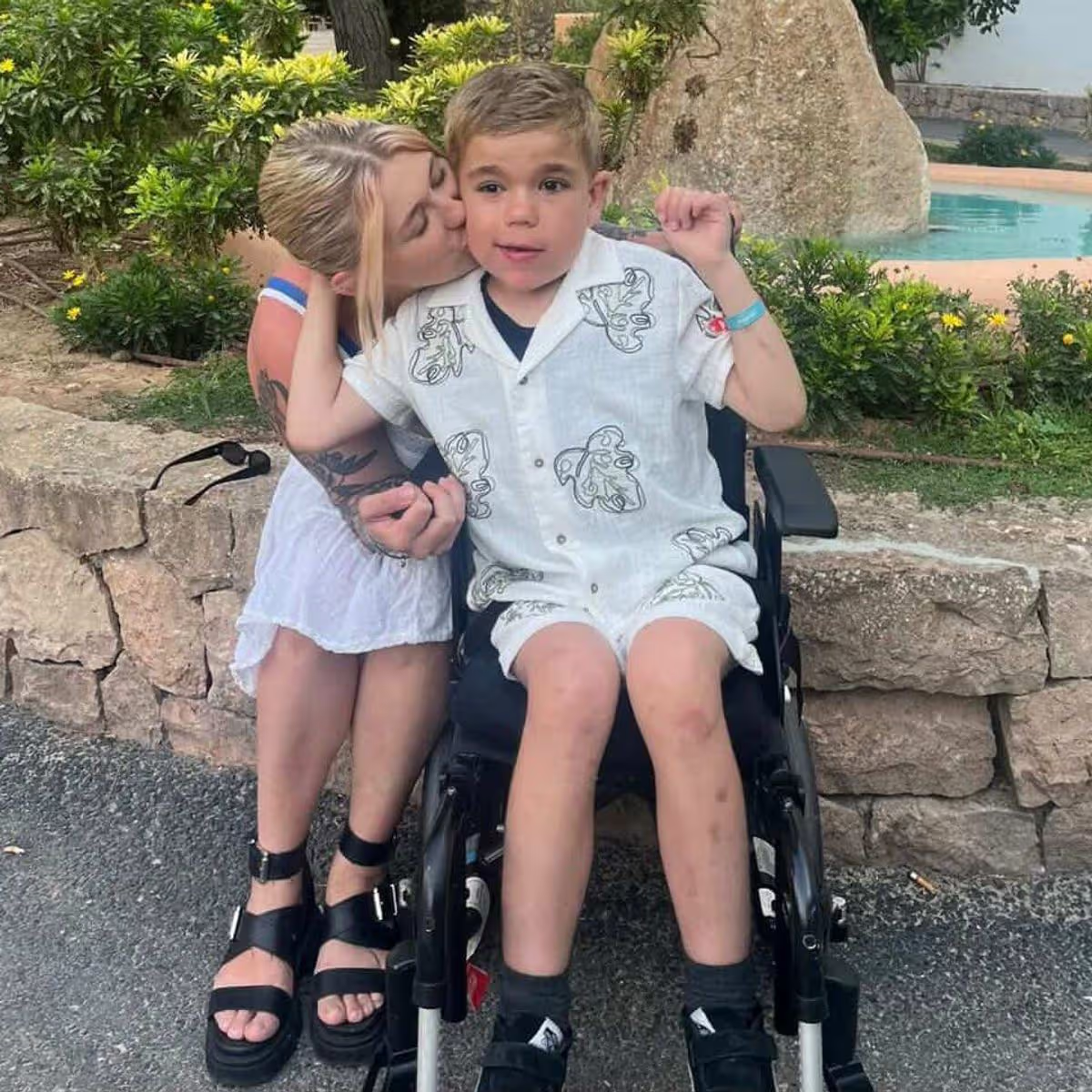
Story from Jam Press (Childhood Dementia)
Pictured: Cody with mum Georgia during a family holiday.
Im watching my boy, 8, fade away every day from DEMENTIA ear infections were little-known tell-tale sign of terrifying disease
A mum has spoken out to raise awareness after her son was diagnosed with childhood dementia at just three years old.
Little Cody Carroll was a healthy toddler when he started struggling with recurring ear infections and hearing loss at the age of two, and was given hearing aids.
But mum Georgia Nonas was concerned when she noticed other issues, including him starting to speak, and then becoming mute.
While Cody was diagnosed with autism, his parents and doctors believed something more could be at play, with one medic pointing out his coarse features like thick eyebrows and a prominent forehead which can be a sign of Sanfilippo syndrome.
The devastating rare disease, better known as childhood dementia, causes severe intellectual disability and, typically, death in the teenage years.
Georgia, 29, was devastated when further testing led to a diagnosis.
It was the worst day of my life, his mum, a full-time carer to Cody and based in Gateshead, told creatorzine.com.
I felt numb and was very much in denial.
Myself, Codys dad, Callin, and my mum sat in the room when they confirmed it, and it was silent.
I didnt process it for a long time.
I remember sitting at a family BBQ a few days later and I couldnt hold a conversation.
I was completely zoned out.
It was like in the movies when all you hear is ringing in your ears and you cant hear the noise around you.
When it started to hit me, I would act fine all day, and then as soon as I was alone, I would cry until I fell asleep.
Every morning I woke up, it hit me all over again.
The news came as a shock to Codys loving family, with his ear issues first starting when he was one.
Georgia said: We noticed his hearing wasnt very good, and he was having recurring ear infections.
This is a common tell-tale sign of Sanfilippo syndrome, but at the time, we didnt even know what that was.
He also started to show regression in his development.
He said mamma and baba, and then never spoke again.
Cody was diagnosed with autism in August 2020, but his consultant spotted the other signs that indicated he may have Sanfilippo.
Children with the inherited disease often have features that become more pronounced over time like a prominent forehead, bushy eyebrows, and a pronounced bottom lip.
Meanwhile physical symptoms, which tend to develop between the age of one and four, include speech and developmental delays, sleep disturbances, and recurrent ear, nose and throat infections.
Cody was diagnosed with type A, the most severe, with a life expectancy of mid-to-late teenage years.
Georgia said: I cant remember exactly how it was explained to me at the time its hard to concentrate when you receive news like that but over time and through countless appointments, I picked up what the diagnosis would mean.
Codys body is missing an enzyme, which means his body has a lot of waste it cant process, and this builds up on his spinal cord and brain.
Its progressive over time, the damage caused by the waste takes away his ability to communicate, eat, and walk, and it causes brain damage.
The doctors told me to take him home and give him all my love.
Since his diagnosis in July 2021, Cody has continued to decline, including his mobility, meaning he is often reliant on a wheelchair, and he can no longer swallow solid foods.
He also has daily painkillers due to muscular and joint pain, and is prescribed a sleeping aid as the condition severely affects sleep, as well as suffering epilepsy, which is common for children with Sanfilippo syndrome.
Georgia said: Daily life can be hard for Cody his sleep, communication, mobility, and even eating is affected.
As a parent, its incredibly difficult to see your child in pain.
Im constantly on edge, wondering when the next seizure is coming.
Anticipatory grief is a big part of being a parent to a child with Sanfilippo you start grieving your child the day you get that diagnosis.
Its a gut punch at random times in the day.
Im watching my child fade away every single day, and its enough to break a person.
Georgia has been vocal on social media with sharing Codys story, helping to raise awareness, having never heard of Sanfilippo syndrome before her sons diagnosis.
While there is no known cure, she is advocating for early diagnosis to be made as accessible as possible for other parents.
She said: I feel its important to share Codys story because, before his diagnosis, we had never heard of it.
When I went looking for a community online, I saw children who looked just like Cody I couldnt believe it.
I feel like if someone sees Codys story and thinks, Oh, my child has those features, it can lead to an earlier diagnosis which is so important so we can get them support and therapies to make their lives more manageable.
Alongside her advocacy work online, Georgia takes every day as it comes with her son who she describes as the most loving little boy.
She added: Everyone who meets him is just amazed by him, and I couldnt be prouder to be his mama.
When Cody was diagnosed we lived in a world with very little hope, however in the coming years, were very focused on time.
We are waiting for the FDA to approve UX111, a gene therapy in America that could mean a much longer future for Cody.
It isn’t a ‘cure’ in the traditional sense, but it is a way to slow down the clock.
Our biggest wish is to get him to that treatment so we can hold onto the boy he is today for as long as possible to keep his smile, his laugh, and his spark from being taken away too soon.
I dont want birthdays to be a sad day, a reminder of the clock ticking.
Im currently in talks with his MPS team in Manchester to see if this would even be possible, and if we will be eligible.
Hope is all we can hang onto at the moment.
Cody is the light of my life I want to travel and explore the world with him.
We have a trip to Disneyland Paris booked this July we have to make the most of Codys time so I just want to make as many memories as possible!
ENDS
EDITORS NOTE: Video Usage Licence:(EXCLUSIVE) We have obtained an exclusive licence from the copyright holder. A copy of the licence is available on request.
Video Restrictions: None.
Georgia said: “For us, that means the possibility of having more time with our baby and more time with the Cody we know and love.
“For other children, I hope they can access this treatment as early as possible and have the chance to live longer lives with less of the heartbreak that comes with Sanfilippo.
“The earlier children can be treated, the more hope there is that they can preserve more of the skills and abilities the disease would otherwise take from them.”
Cody began displaying signs of developmental regression at the age of two and has not spoken since, having received his diagnosis in July 2021.
The condition stems from the body lacking a crucial enzyme, causing it to produce waste that it is unable to process, which subsequently accumulates on the spinal cord and brain.
The disease is progressive, meaning the damage inflicted by this build-up gradually strips away the ability to communicate, eat and walk, while also causing significant brain damage.
Cody’s life expectancy extends to his mid-to-late teenage years, and his condition is expected to continue to deteriorate.
Georgia said: “[When he was diagnosed] the doctors told me to take him home and give him all my love.”
The heartbroken mother has been “watching him fade away every single day”, yet the recent approval of a new treatment has offered a glimmer of hope.
Georgia added: “With Cody, I honestly don’t know yet what this treatment could mean for him, and I think that’s one of the hardest parts.
“But it gives us more hope than we’ve ever had, and I’m trying to be as positive as humanly possible.
“I desperately hope the treatment can eventually become available in the UK too, particularly for younger children who may have the opportunity to benefit from it at an earlier stage of the disease.
“For our family, this approval doesn’t mean the fight is over; it means, for the first time, that we have something real to fight for.”