
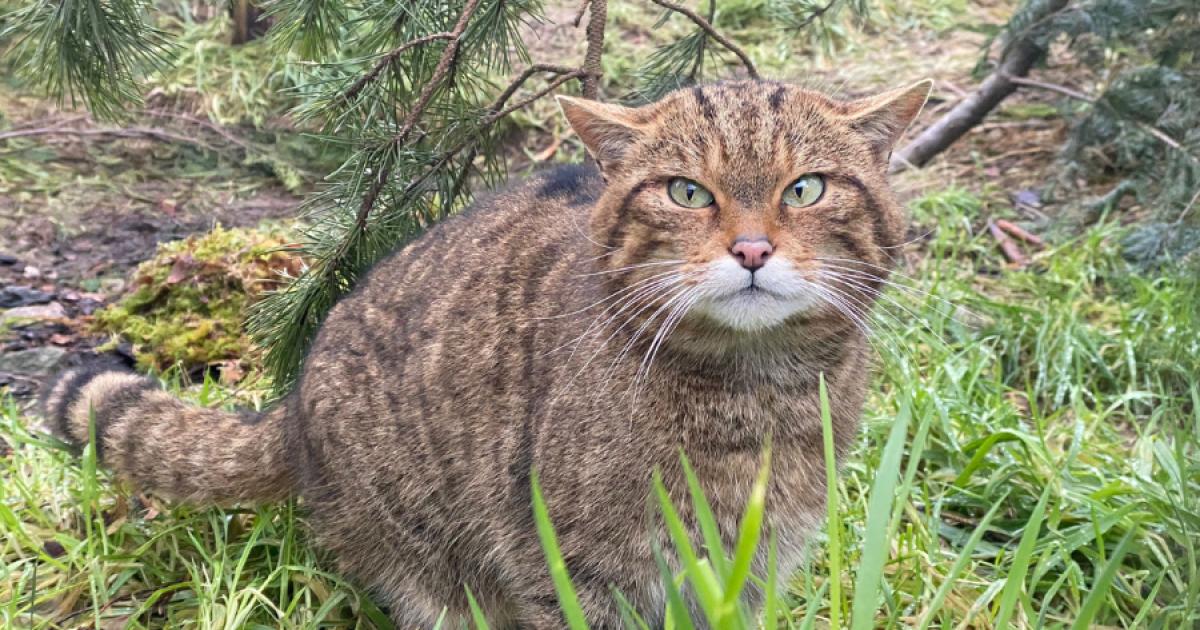
On Monday, the Saving Wildcats project confirmed four wildcats were released into the Cairngorms National Park this summer, bringing the total number released since 2023 to 50.
The programme, led by the Royal Zoological Society of Scotland (RZSS), aims to prevent the extinction of the species in Scotland by re-establishing a viable wild population in the Highlands.
File image of a Scottish wildcat (Image: Saving Wildcats)
Conservationists say there are encouraging signs the project is succeeding, with female wildcats giving birth in the wild for three consecutive years.
The programme has recorded 11 deaths among released wildcats, including five animals killed in road traffic collisions, which conservationists said was considered a “highly successful” mortality rate when compared to similar projects.
READ MORE: BBC removes Horrible Histories sketches which break children’s programmes guidelines
Many of the wildcats killed survived in the wild for several years and produced litters before their deaths, Saving Wildcats said.
Despite the progress, conservationists warn the species remains critically endangered and faces a range of threats, particularly from climate change.
The project plans to continue releases in the coming years to increase both population numbers and genetic diversity.
Future releases will include animals bred with Spanish wildcats, which are considered the closest living genetic relatives of Scotland’s wildcat.
Dr Sarah Henshall, head of conservation for the Cairngorms National Park Authority described the achievement as “a monumental step for the recovery of this iconic Scottish species”.
She added: “It is a testament to the partnerships and communities that are working to ensure wildcat survival in Scotland.
“We are proud but we all remain conscious of the difficulties wildcats still face.”
READ MORE: Humza Yousaf reveals why he didn’t sue Elon Musk after bitter online feud
Dr Helen Senn, head of conservation and science programmes at RZSS, said: “The wild is a tough place for wildcats and that is before the added pressures of climate change.
“Just look to this summer where wildfires caused extensive damage to known wildcat habitats in the Cairngorms National Park.
“It is important to continue bolstering the wildcat population through releases. Establishing a diverse gene pool will help the population adapt to changing conditions over the coming century.
“This will support a healthy and sustainable population and give wildcats the best chance of long-term survival.”