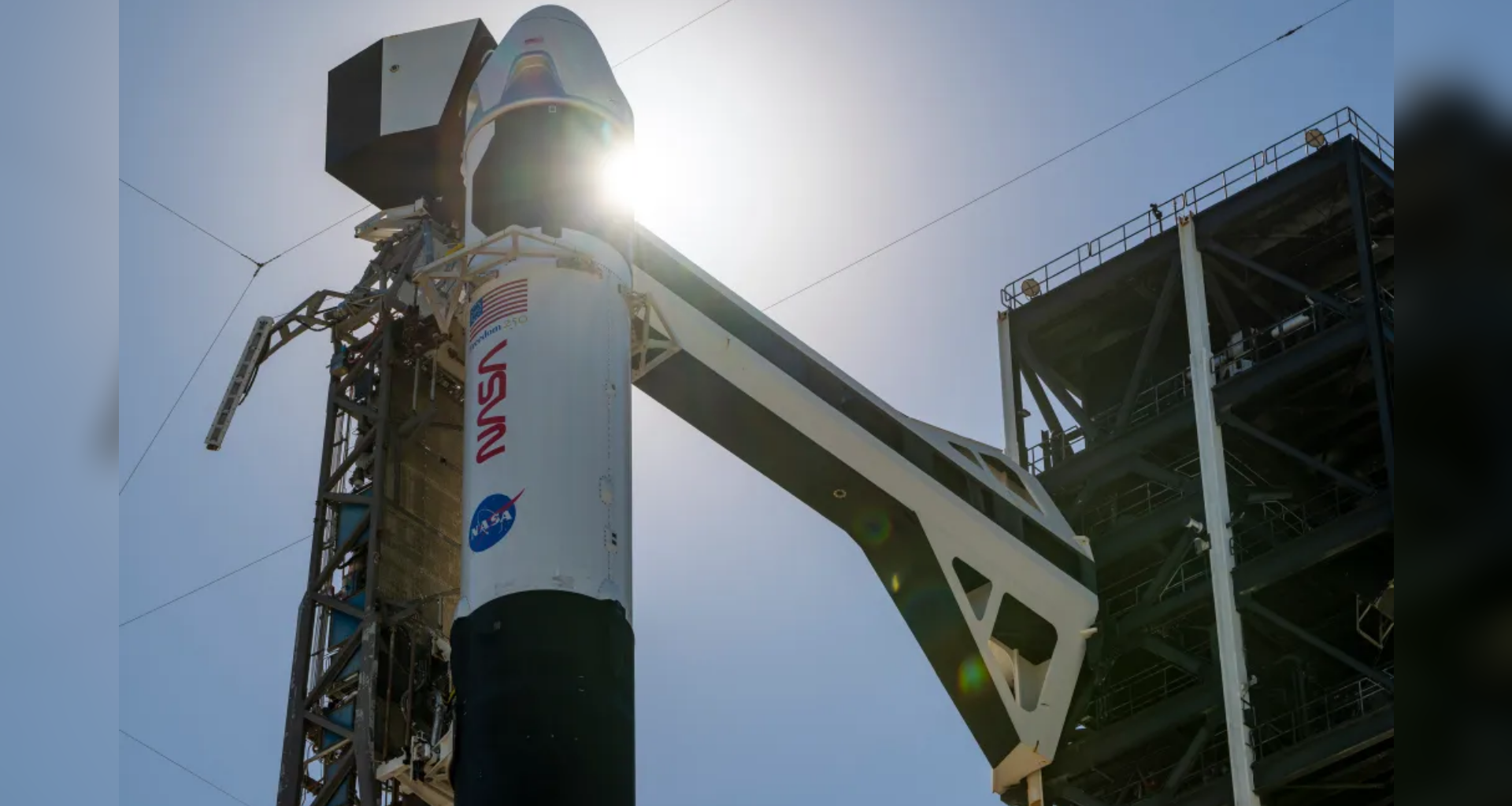
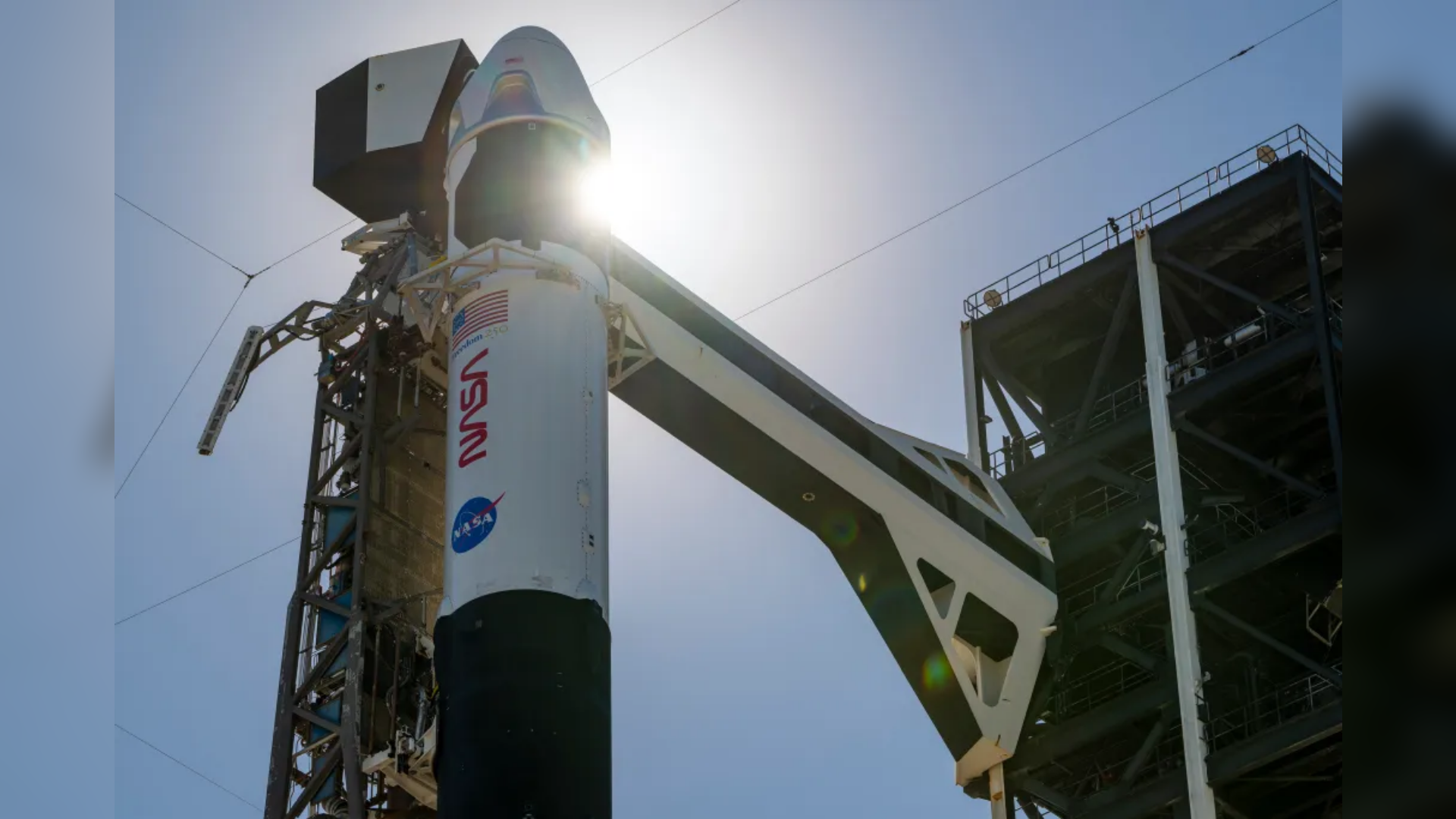
NASA’s SpaceX Crew-13 rocket and spacecraft sit on the launch pad. (Image credit: SpaceX)
A SpaceX Falcon 9 rocket now sits on the launch pad, ready to blast off carrying NASA’s Crew-13 mission aboard a Dragon spacecraft.
Coming up on Thursday (Oct. 1), NASA will launch its Crew-13 mission to the International Space Station. The mission will launch a crew of astronauts aboard a Crew spacecraft atop a Falcon 9 rocket.
In this new snapshot, you can see the Dragon spacecraft and Falcon 9 rocket stacked and sitting on the launch pad ready to go. in this configuration, mission teams conducted a static fire test with the rocket, checking an important item off of the pre-launch list.
Crew-13 will launch a group of astronauts including NASA astronauts Jessica Watkins and Luke Delaney, Canadian Space Agency astronaut Joshua Kutryk and Roscosmos cosmonaut Sergey Teteryatnikov to the space station. This will be the second spaceflight for Watkins and the first spaceflight for Delaney, Kutryk and Teteryatikov.
Crew-13 is the next mission of NASA’s Commercial Crew Program. This ongoing collaboration has brought the space agency together with commercial partners like SpaceX to continue sending a sustained human presence to the space station. It’s not so simple sending humans into orbit to live and work, but this partnership between government and the commercial sector has helped to enable more of these crewed missions.
You may like
Missions like this send astronauts into orbit to conduct research, test technology and do critical work on the space station on spacewalks. And Crew-13 is no exception.
“During the mission, the crew will help researchers treat heart disease and Parkinson’s disease by studying human stem-cell derived tissues that can help improve medicine, disease modeling, and pharmaceutical testing,” Dana Weigel, manager of NASA’s Low Earth Orbit Program at NASA’s Johnson Space Center in Houston, said in a statement. “They also will explore crop production, which is important for longer-duration spaceflight missions, help us better understand blood flow abnormalities that we see in space, and test new diagnostic medical equipment for monitoring crew health.”