
Credit: Far Out / Alamy
Tue 29 September 2026 16:00, UK
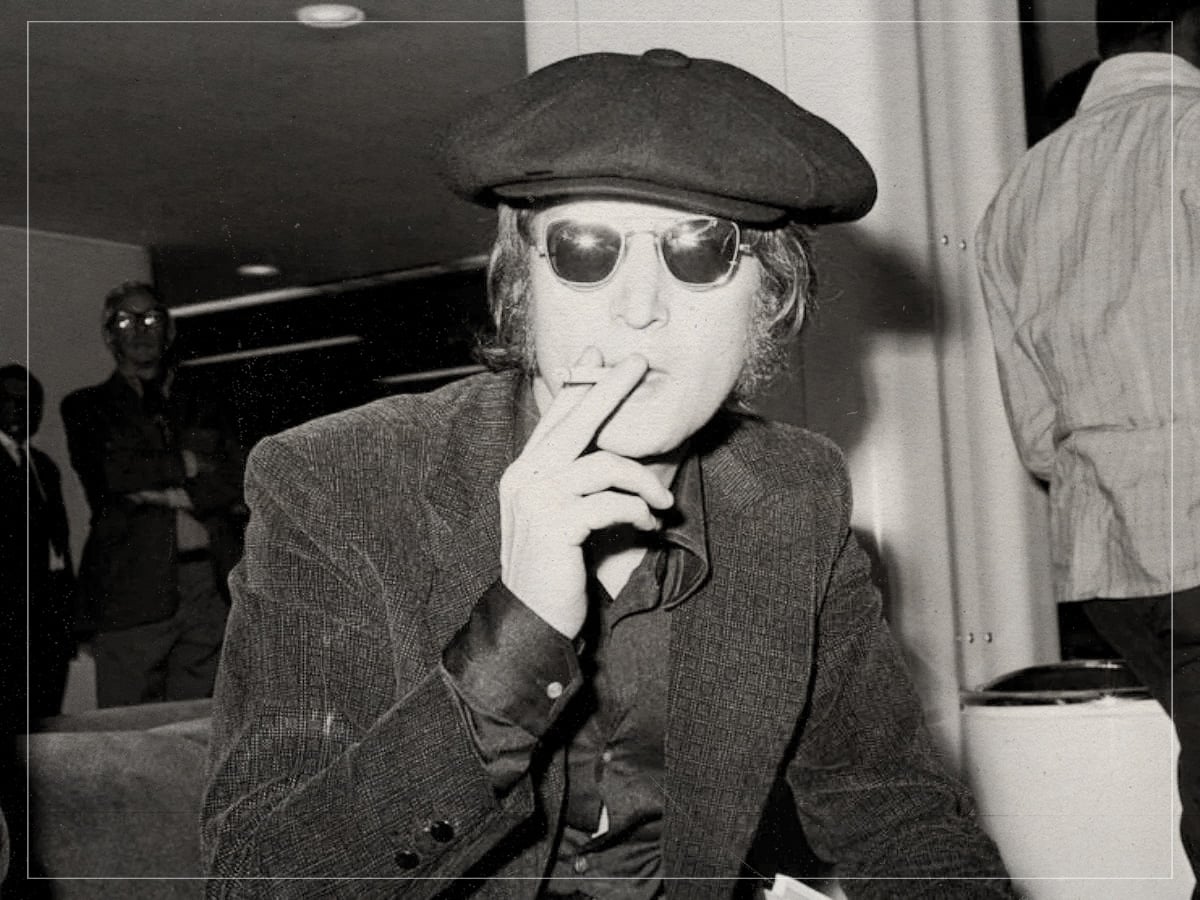
It’s no revelation to anyone that John Lennon was a fan of psychedelics, and you only need to hear The Beatles’ music from the mid to late 1960s to understand that he, and the rest of the band, frequently partook in the mind-altering substance.
But if there was one song he believed belonged on the soundtrack to an acid trip, it was ‘A Whiter Shade of Pale’ by Procol Harum, such that, in 1967, he reportedly told journalist Ray Coleman that it was a “dope song” and explained, “You play it when you take some acid and… Whoooooooo”, an unusually enthusiastic response from someone who was not exactly short of his own ideas about psychedelic music.
Released in May 1967, ‘A Whiter Shade of Pale’ was the debut single from Procol Harum, which saw Gary Brooker’s soulful vocal and piano sitting alongside Matthew Fisher’s Hammond organ, while Keith Reid supplied lyrics that existed somewhere between poetry and complete nonsense.
The melody drew from Bach, although Brooker’s arrangement also owed some to the rhythm and soul music the band had been listening to, making for an unlikely combination for a pop single, yet the record was enormous, reaching number one in the UK in June 1967 and staying there for six weeks.
One of the defining sounds of the ‘Summer of Love’, its success was partly down to the fact that it sounded different to everything else around at the time, which is perhaps why Lennon responded so well to the track; the song had the qualities of psychedelic music, including unusual sounds, dream-like imagery and a floating song structure, and yet it became a massive pop hit.
By this point, Lennon was already well acquainted with the effects of LSD, first introduced to it in the spring of 1965 at a dinner party at the home of his dentist, John Riley, where he was joined by George Harrison and their respective wives, when Riley ostensibly slipped liquid LSD into their after-dinner coffee.
The group then embarked on a chaotic, surreal night, venturing from a London nightclub to Harrison’s home, and while Lennon had taken the acid unknowingly, the experience clearly stayed with him, as he later recalled, “God, it was just as terrifying as it was fantastic”.
Further reading: From The Vault
The change was particularly apparent when the band made Revolver in 1966, with ‘Tomorrow Never Knows’ marking the first Beatles track written under lysergic influence, and it sounded unlike anything the group had produced before; with tape loops, distorted vocals and a droning, sitar-like texture, the song shared some of the Procol Harum songs’ key features.
The Beatles’ psychedelic experimentation did not stop there either, and they later wrote and recorded ‘Lucy in the Sky with Diamonds’, whose surreal imagery led to widespread speculation that its title was a coded reference to LSD (with even the abbreviation of the song matching the drug name), although Lennon maintained that it was inspired by a drawing made by his son, Julian.
Nevertheless, the band had become fully immersed in the psychedelic culture, and yet Lennon’s fascination with ‘A Whiter Shade of Pale’ was not simply about drugs, as he appears to have genuinely loved the record. Gary Brooker later recalled encountering Lennon on New Year’s Eve in 1967, with the Beatle sitting in his Rolls-Royce and playing ‘A Whiter Shade of Pale’ on a portable record player.
While it is a strange and unsettling piece of music, it ultimately became one of those records that he could not stop listening to.
ADD AS A PREFERRED SOURCE ON GOOGLE  The Far Out Beatles Newsletter
All the latest stories about The Beatles from the independent voice of culture.
Straight to your inbox.