
Breakfast has a reputation problem. It gets treated as either optional or reduced to a bowl of sugary cereal, when in reality what you eat first thing sets your blood sugar, energy, and hunger for hours afterward. A breakfast built on refined carbs alone spikes blood sugar fast and drops it just as fast, leaving you hungry well before lunch. The fix isn’t complicated: pair protein, fiber, and a little healthy fat, and your morning changes completely. Here are six that do exactly that.
What Actually Makes a Breakfast Healthy
Nutrition experts generally point to the same formula: roughly 15 to 20 grams of protein, at least 5 grams of fiber, and whole-food ingredients with minimal added sugar. That last part matters more than people expect, since plenty of “healthy-looking” breakfasts like flavored yogurt, granola, or juice can quietly carry 30 to 40 grams of added sugar before 9 a.m. Building each meal around a protein source, a fiber source, and a fat source is a simple enough rule that you stop needing exact recipes once it clicks.
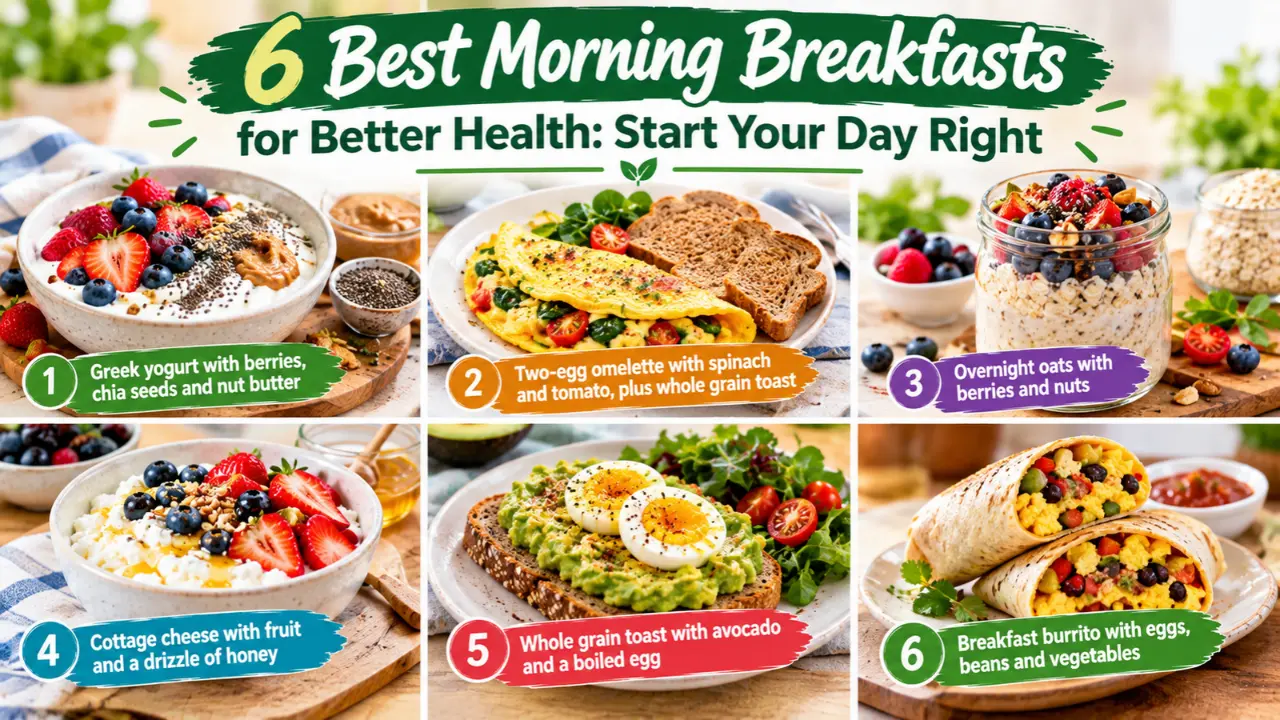
 6 Best Breakfasts for Better HealthGreek yogurt with berries, chia seeds, and nut butter — protein from the yogurt, fiber from the berries and chia, healthy fat from the nut butterTwo-egg omelette with spinach and tomato, plus whole grain toast — a classic combination covering protein, fiber, and micronutrientsOvernight oats with berries and nuts — beta-glucan fiber from oats helps steady blood sugar and supports heart healthCottage cheese with fruit and a drizzle of honey — high in protein with minimal prepWhole grain toast with avocado and a boiled egg — healthy fat and protein on a fiber-rich baseBreakfast burrito with eggs, beans, and vegetables — a heartier option that still hits the protein-fiber formulaOats: The Reliable Standby
Oatmeal deserves its staple status. It’s highly filling thanks to its fiber content, and it contains a specific type of soluble fiber called beta-glucan, which can help lower blood glucose levels and may reduce the risk of heart disease and diabetes over time, according to registered dietitians. Overnight oats made with berries, chia seeds, and a scoop of protein powder or Greek yogurt turn a basic bowl into a genuinely balanced meal, and they can be prepped the night before for busy mornings.
Why Protein Matters So Much at Breakfast
Protein is the piece most breakfasts skip, and it’s the one doing the heaviest lifting for satiety. A breakfast heavy on refined carbs alone tends to leave you hungry within a couple of hours, while 20 to 30 grams of protein helps you stay full and steady until lunch. Eggs, Greek yogurt, cottage cheese, and beans are the easiest, most accessible ways to hit that target without needing a protein shake.
 The Gap Most Breakfasts Leave Open
Even solid choices like eggs, oats, toast, and breakfast burritos tend to be strong on protein but light on actual fruits and vegetables, and most people don’t get enough produce in a typical day. A simple fix is deliberately pairing your protein-forward breakfast with a piece of fruit or a handful of vegetables added into the meal itself, like spinach in an omelette or berries stirred into oats, rather than treating produce as an afterthought.
 Quick Reference TableBreakfastProtein SourceFiber SourcePrep TimeGreek yogurt, berries, chia, nut butterYogurtBerries, chia seeds~5 minVeggie omelette + toastEggsWhole grain toast, vegetables~10 minOvernight oats with berries and nutsOats, optional protein powderOats, berries~5 min (prep ahead)Cottage cheese with fruitCottage cheeseFruit~2 minToast, avocado, boiled eggEggWhole grain toast, avocado~10 minBreakfast burrito with eggs and beansEggs, beansBeans, vegetables~10 minBuilding Your Own Breakfast
Once the protein-fiber-fat formula clicks, you don’t need to follow a recipe every morning. Pick one protein source (eggs, yogurt, cottage cheese, beans), one fiber source (oats, whole grain bread, fruit, vegetables), and one fat source (avocado, nut butter, olive oil, nuts), and combine them however suits your taste and schedule. This flexibility is what makes a healthy breakfast sustainable long-term, rather than something that only works with specific recipes.
FAQs
How much protein should breakfast actually have?
Many nutrition experts suggest aiming for 15 to 20 grams, though some recommend up to 20 to 30 grams for better satiety, especially if you’re active or trying to manage hunger through the morning.

Is oatmeal a good breakfast for blood sugar control?
Yes — oats contain beta-glucan fiber, which can help slow glucose absorption and support more stable blood sugar levels compared to refined-carb breakfasts.
Can a healthy-looking breakfast still be high in sugar?
Yes — flavored yogurt, granola, and juice can carry surprising amounts of added sugar despite seeming health-conscious. Checking labels or choosing plain, unsweetened versions helps avoid this.
What if I don’t have time to cook breakfast?
Options like Greek yogurt with berries, cottage cheese with fruit, or overnight oats prepped the night before all take minimal or no morning prep while still hitting the protein-fiber formula.