



Members Only
Can the UCI stave off revolution by accepting evolution?

Cor Vos
If you want to know how professional cycling will look a few years from now, you could do worse than looking at the 40-page report published by the Union Cycliste Internationale (UCI) last week, entitled Future of Cycling.
The report’s publication is in response to various team-led reform efforts in the past five years — one of which, the Collective Cycling Group (CCG), is ongoing and hopes to launch imminently with up to 22 teams — and was ostensibly set up to lay out suggestions of how the UCI can lead the sport’s push for progress.
In total, the UCI reported it received 55 submissions from teams, national federations, race organisers, riders, businesses, and media titles. Most of the ideas will be reviewed in the coming months by a number of key players, with those proposals deemed most desirable and feasible presented to all stakeholders at December’s WorldTour seminar in Benidorm, Spain. It is the UCI’s intention to introduce changes for the start of the 2029 season.
The next battle to reform pro cycling is here
Collective Cycling Group has garnered deeper team support than prior efforts. Will ASO and the UCI finally come to the bargaining table?

Escape Collective has dissected the chunky PDF to pick out the key takeaways and highlight the subtleties — and pointed remarks — that indicate the general direction of travel that the UCI favours.
In summary: while the UCI does not explicitly reject the teams’ own oft-spoken-about desires, it intends to remain firmly in control of the sport’s development. The Switzerland-based body will not permit a breakaway top-tier league, nor will it force existing race organisers to share revenue with teams. Instead, the governing body is hoping and planning for teams to reduce their dependency on title sponsors (the report says most teams are 90% dependent on their primary and secondary partners) by generating entirely new commercial streams.
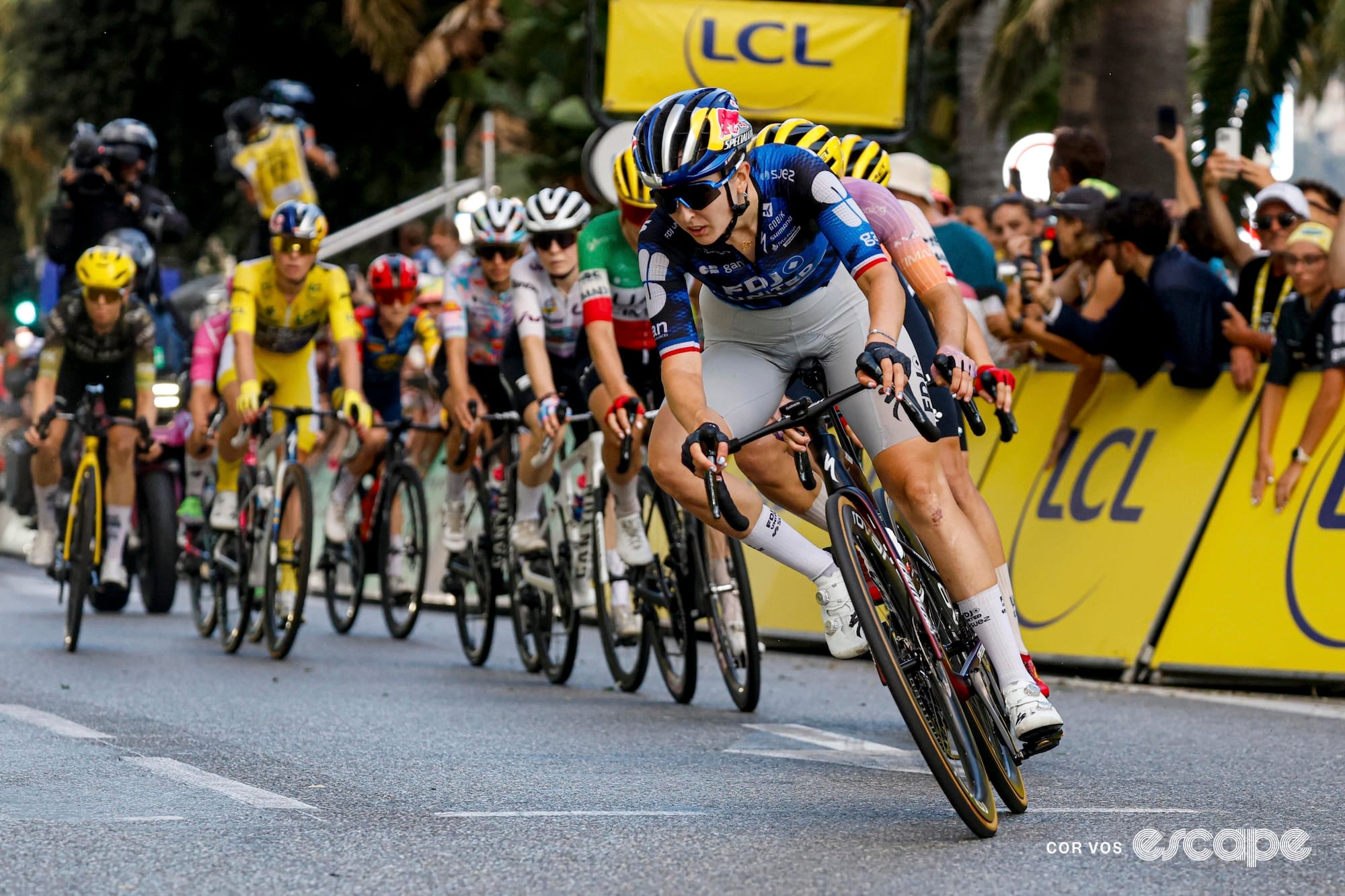 Can interventions now help women’s cycling avoid the pitfalls of the men’s side? The Tour de France Femmes, Stage 9 to Nice. Breaking the report down
The report is divided into five pillars: calendar, economic model, fan engagement, safety, and integrity. Continuing to grow women’s cycling sustainably and avoiding the pitfalls that afflict men’s cycling sits at the heart of every chapter.
This post is for paying subscribers only
Subscribe now
Already have an account? Sign in
Did we do a good job with this story?
Yep
Nope