
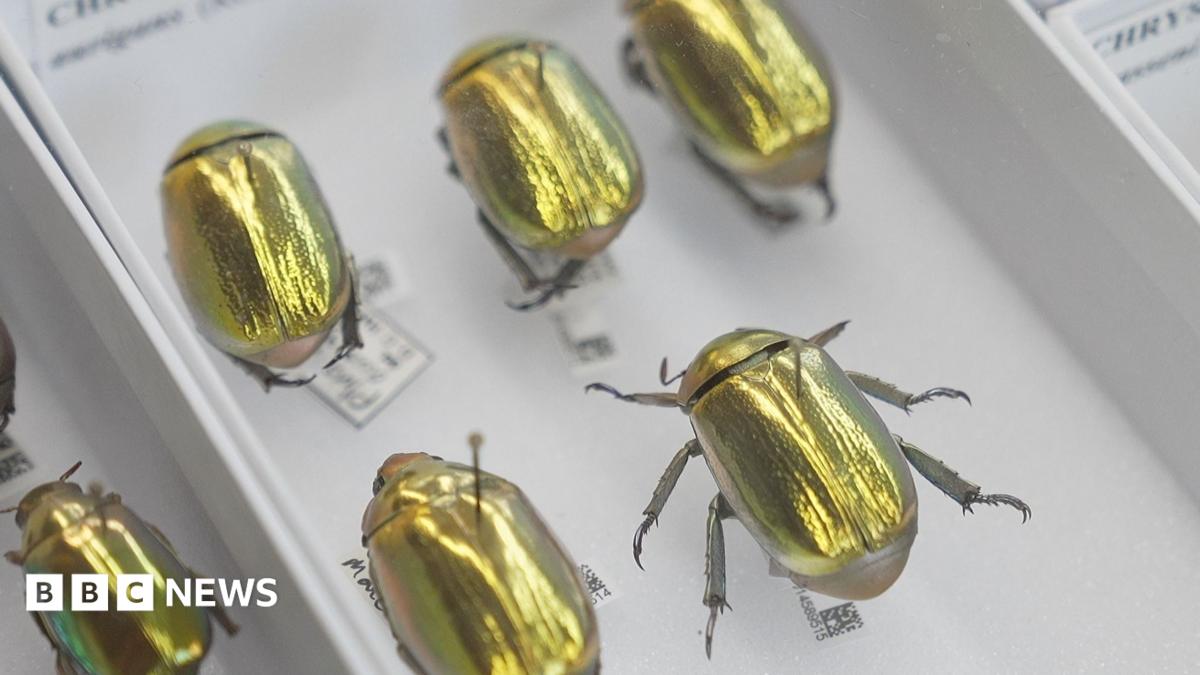
Scanning the specimens is not a trivial process. Not only does each one need to be photographed, but the tiny labels containing important scientific information, often handwritten, sometimes centuries ago, also have to be recorded.
The team involved calculated that it would have taken hundreds of years to do this manually, but using robots and AI this process can now be done in a decade, according to Sarah Addezio, the DiSSCo UK’s programme delivery director.
“What we’re able to do now is connect and analyse that information at a scale that’s unprecedented and has not been possible before.”
One hundred museums, botanic gardens, universities and other organisations are involved in the project.
The specimens to go under the cameras will not be the big beasties: there are no whales or dinosaurs in the opening phase, which begins in Wales and Scotland.
Beetles, butterflies, moths, flies, pressed flowers and ferns will go first – the small, less glamorous material that actually hold the best record of how the country around them has changed.
In Cardiff, the team will scan around half a million insect and plant specimens, from large, showy butterflies down to flies you could lose on a fingertip, which turn out to be among the most sensitive indicators of a healthy landscape.
In Scotland, the Royal Botanic Garden Edinburgh and National Museums Scotland hold 13 million specimens between them, the UK’s second-largest natural science collection.
Together with 50 smaller Scottish collections, the collections span from sea level to the tops of mountains – two centuries of change in the plants and insects of every kind of Scottish landscape.
Jenny Geroni, who is the head of Natural Sciences and Research at the Amgueddfa Cymru – Museum Wales, said it will be a chance to showcase material from across the country.
“Each collection is unique. We have a lot of Welsh material that is not held anywhere else.
“By taking material from across the UK, it also allows us to build a good picture of what is going on across the whole country. And everyone adding their world collections will build a much stronger picture of what is going on elsewhere,” Geroni told BBC News.