
Credit: Far Out / Apple Corps / Kimi95
Thu 1 October 2026 3:30, UK
As ever, The Beatles were able to pluck inspired pop from whatever upheaval was thrown at them.
While no one had quite confirmed it yet, everyone knew the Fab Four story was coming to a close when the band entered EMI Studios for the Abbey Road sessions in 1969. It’d been a dizzying ride.
Forming a central thread across the decade’s pop evolution, The Beatles’ trajectory served as a narrative for the whole countercultural explosion, thrust from wide-eyed teenybop posterboys to global superstars, Merseybeat chart toppers to the psychedelic vanguard and back around the later roots rock revivalism.
However, the camaraderie was beginning to ebb. The old mop-tops were approaching their 30s, a world away from their Beatlemania unity as the maturer men were beginning to seek pastures anew, away from the band that, in John Lennon, Paul McCartney, and George Harrison’s case, had been members of in some form since their school days.
Lennon was the Beatle itching to spread his wings the most, lost in his relationship with artist and muse Yoko Ono and eager to explore art and politics too radical for the Fab Four fold. But Harrison’s fatigue had set in earlier. Reportedly, a walkout nearly happened back in 1966, when Beatlemania’s punishing touring schedule prompted Harrison to set out an ultimatum of their cessation of live shows lest he quit. Jump three years, and the Apple Corps venture only added further headaches on top of fracturing relationships and delaying the band’s inevitable demise.
For respite, Harrison sought sanctuary in pal Eric Clapton’s garden at his Hurtwood Edge residence in Surrey. Plagued by business woes, unsure of The Beatles’ future, and relieved by the spring sunshine severing an unusually extended winter chilliness into 1969, the seeds of one of his most beloved songs took natural, effortless shape.
“…One day I decided I was going to sag off Apple and I went over to Eric Clapton’s house,” Harrison reflected in 1980’s I, Me, Mine autobiography, “The relief of not having to go see all those dopey accountants was wonderful, and I walked around the garden with one of Eric’s acoustic guitars and wrote ‘Here Comes the Sun’.”
Further reading: From The Vault
He was already swinging major songwriting clout by the time Abbey Road was cut. Not only was ‘While My Guitar Gently Weeps’ standing as grade-A Beatles material, but his immortal ‘Something’ love song was already floating around among the band in unfinished form. ‘Here Comes the Sun’ only cemented the ‘Quiet Beatle’s’ emerging confidence as a contributor to The Beatles’ hallowed songbook, as well as introducing the team to the latest innovations in electronic music.
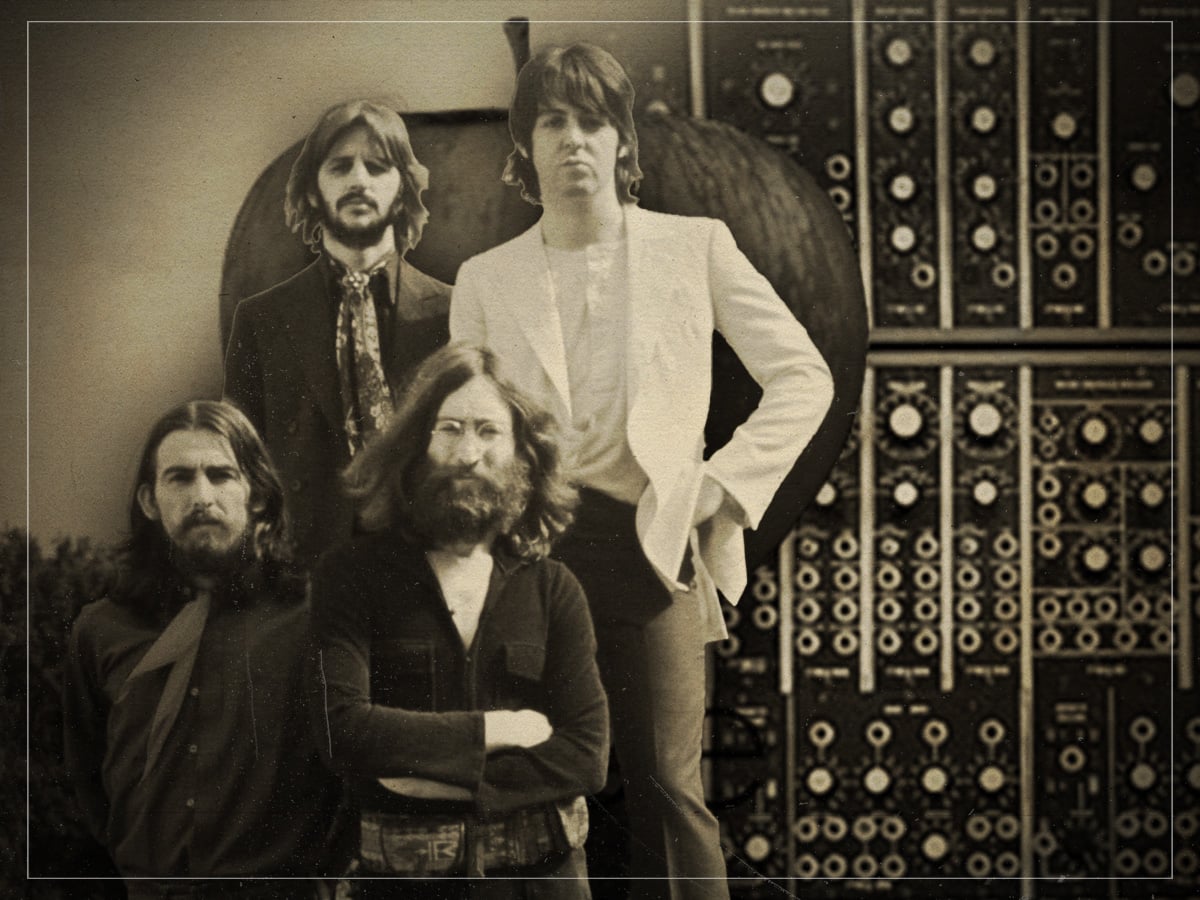
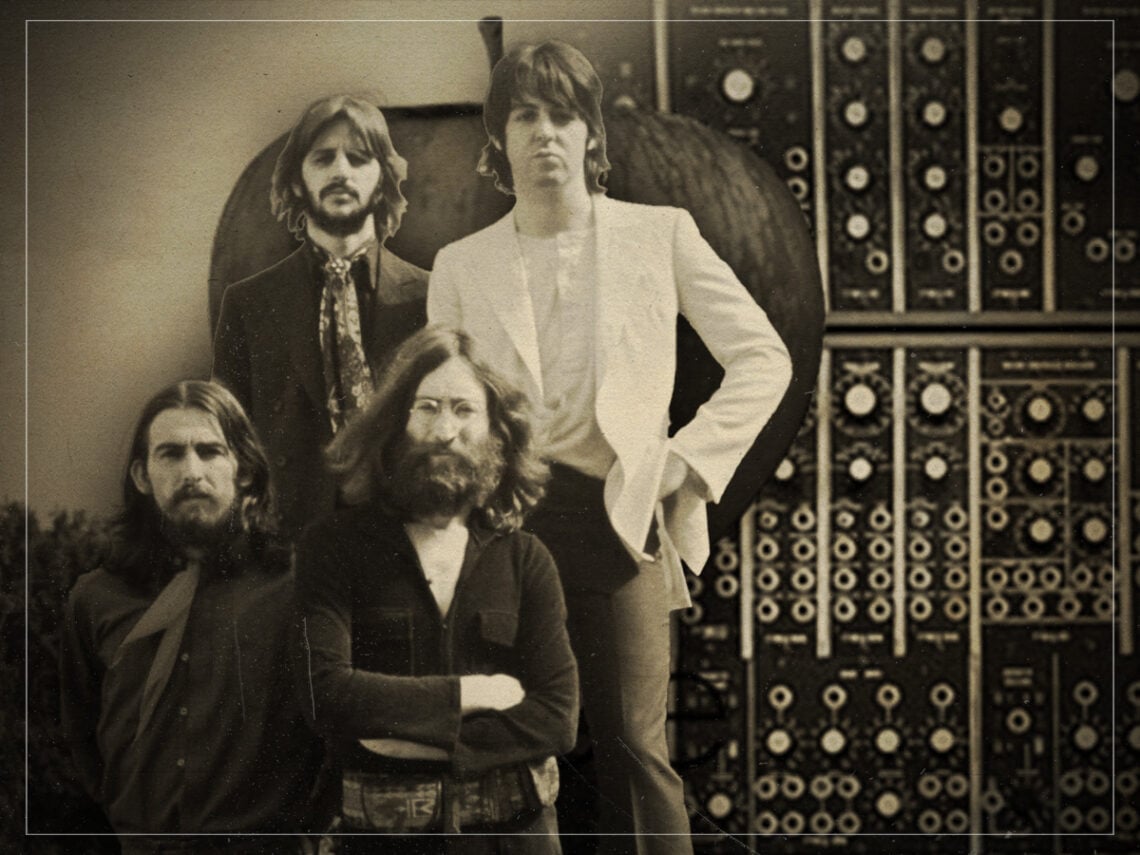
It was in Los Angeles that Harrison first spotted Dr Robert Moog’s namesake synthesiser. First wielding the modular unit while producing Jackie Lomax’s Is This What You Want?, he forked out for a IIIp model and had it shipped across the Atlantic to his Esher home, where his analogue experiments were captured on 1969’s Electronic Sound solo record.
The Moog was transported over to EMI’s Room 43 and saw, for the first time, a synth on a Beatles record; a magnetic tape keyboard, the electronic instrument’s synthetic tonalities colouring Abbey Road‘s ‘Because’, ‘Maxwell’s Silver Hammer’, and the epic ‘I Want You (She’s So Heavy)’. Yet, the machine’s glittering patches, low-pass filters and piquant envelope settings all gleam the most cheerfully on ‘Here Comes the Sun’s’ bright folk pop, acting as the choral of woodwind and chunky bass that elevates Harrison’s lyrical ode to a higher power.
Remarkably, the track was never issued as a single, but would endure as a much-loved number in the Beatles canon, straddling a perfectly accessible line of immaculate songwriting and an all-ages invite not too far away from the likes of ‘Yellow Submarine’. For many, ‘Here Comes the Sun’ stands as the definitive Fab Four offering, to this day racking up nearly two billion streams on Spotify, as well as standing as the number one most-played Beatles song on the streaming platform, above even ‘Yesterday’ and ‘Hey Jude’.
ADD AS A PREFERRED SOURCE ON GOOGLE  The Far Out Beatles Newsletter
All the latest stories about The Beatles from the independent voice of culture.
Straight to your inbox.